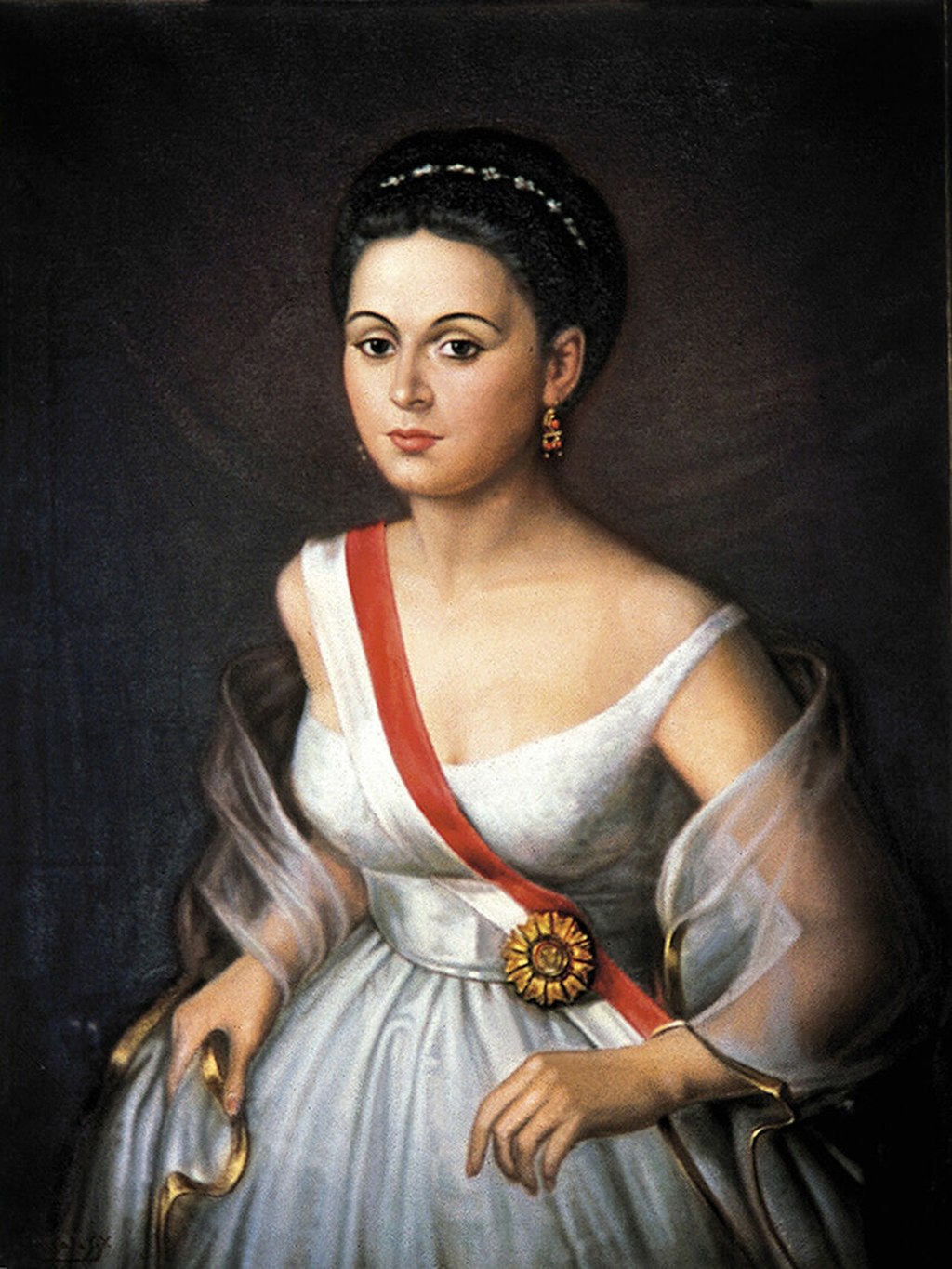
マヌエラ・サエンス
Manuela Sáenz de
Vergara y Aizpuru, 1797-1856
☆マヌエラ・サエンス・デ・ベルガラ・イ・アイズプル[Manuela Sáenz de
Vergara y Aizpuru]
(1797年12月27日、キト、ヌエバ・グラナダ副王領生まれ、1856年11月23日、ペルーで死去)は、南米のエクアドルの革命のヒロインであり、
情報収集、ビラ配布、女性の権利のための抗議活動を通じて革命運動を支援した。マヌエラは、革命における功績を称えられ、太陽勲章(「カバジェレサ・デ
ル・ソル」または「太陽の貴婦人」)を授与された。
サエンツは1817年に裕福な英国人医師と結婚し、ペルーのリマで社交界の人となった。これが政治や軍事に関与するきっかけとなり、彼女は革命運動の支援
に積極的に取り組んだ。1822年に夫と別れた後、彼女はすぐにシモン・ボリバルと8年にわたる協力関係と親密な関係を築き、それは1830年にボリバル
が亡くなるまで続いた。1828年にボリバルに対する暗殺未遂を阻止し、彼の脱出を手助けした後、ボリバルは彼女を「解放者の解放者
(Libertadora del
libertador)」と呼び始めた。彼女が書いたある手紙の中で、彼女は「解放者は不滅である」と主張しているが、実際には彼の生存は彼女のおかげ
だった。[1]
マヌエラの革命における役割は、20世紀後半までほとんど注目されていなかったが、現在では19世紀の独立戦争のフェミニストの象徴として認識されてい
る。
| Manuela Sáenz de
Vergara y Aizpuru (Quito, Viceroyalty of New Granada, 27 December 1797
– Peru, 23 November 1856) was an Ecuadorian revolutionary heroine of
South America who supported the revolutionary cause by gathering
information, distributing leaflets and protesting for women's rights.
Manuela received the Order of the Sun ("Caballeresa del Sol" or 'Dame
of the Sun'), honoring her services in the revolution. Sáenz married a wealthy English doctor in 1817 and became a socialite in Lima, Peru. This provided the setting for involvement in political and military affairs, and she became active in support of revolutionary efforts. Leaving her husband in 1822, she soon began an eight-year collaboration and intimate relationship with Simón Bolívar that lasted until his death in 1830. After she prevented an 1828 assassination attempt against him and facilitated his escape, Bolívar began to call her "Libertadora del libertador" ("liberator of the liberator"). In an unknown letter she wrote, she claimed that "the Liberator is immortal", despite the fact that she was responsible for his survival.[1] Manuela's role in the revolution after her death was generally overlooked until the late twentieth century, but now she is recognized as a feminist symbol of the 19th-century wars of independence. |
マヌエラ・サエンス・デ・ベルガラ・イ・アイズプル(1797年12月
27日、キト、ヌエバ・グラナダ副王領生まれ、1856年11月23日、ペルーで死去)は、南米のエクアドルの革命のヒロインであり、情報収集、ビラ配
布、女性の権利のための抗議活動を通じて革命運動を支援した。マヌエラは、革命における功績を称えられ、太陽勲章(「カバジェレサ・デル・ソル」または
「太陽の貴婦人」)を授与された。 サエンツは1817年に裕福な英国人医師と結婚し、ペルーのリマで社交界の人となった。これが政治や軍事に関与するきっかけとなり、彼女は革命運動の支援 に積極的に取り組んだ。1822年に夫と別れた後、彼女はすぐにシモン・ボリバルと8年にわたる協力関係と親密な関係を築き、それは1830年にボリバル が亡くなるまで続いた。1828年にボリバルに対する暗殺未遂を阻止し、彼の脱出を手助けした後、ボリバルは彼女を「解放者の解放者 (Libertadora del libertador)」と呼び始めた。彼女が書いたある手紙の中で、彼女は「解放者は不滅である」と主張しているが、実際には彼の生存は彼女のおかげ だった。[1] マヌエラの革命における役割は、20世紀後半までほとんど注目されていなかったが、現在では19世紀の独立戦争のフェミニストの象徴として認識されてい る。 |
| Life Early life Manuela was born in Quito, Viceroyalty of New Granada, the illegitimate child of Maria Joaquina Aizpuru from Ecuador and the married Spanish nobleman Simón Sáenz de Vergara y Yedra (or Sáenz y Verega). Her mother was abandoned by her modest family as a result of the pregnancy and her father paid for young "Manuelita" to go to school at the Convent of Santa Catalina where she learned to read and write. While there, she encountered a microcosm of the Spanish colonial caste system, with white nuns ruling over a large group of mestiza and native servants and maids. She kept in contact with the upper class nuns of Santa Catalina for much of the rest of her life, and they provided counsel to her. She was forced to leave the convent at the age of seventeen, allegedly because she was discovered to have been seduced by army officer Fausto D'Elhuyar, the son of Fausto Elhuyar and nephew of Juan José Elhuyar, who were the co-discoverers of tungsten.[2] |
人生 幼少期 マヌエラは、エクアドルのマリア・ホアキナ・アイズプルと、既婚のスペイン貴族シモン・サエンス・デ・ベルガラ・イ・イェドラ(またはサエンス・イ・ベレ ガ)の間に、ニューグラナダ副王領のキトで非嫡出子として生まれた。母親は妊娠を理由に貧しい家族に見捨てられ、父親は幼い「マヌエリタ」をサンタ・カタ リーナ修道院の学校に通わせる費用を出した。そこで彼女は読み書きを学んだ。その間、彼女はスペイン植民地時代のカースト制度の縮図のような状況に出くわ した。白人の修道女たちが、メスティゾや先住民の出仕人、メイドたちからなる大勢の集団を支配していたのだ。彼女は、その後の人生の大半において、サン タ・カタリーナの貴族階級の修道女たちと連絡を取り続け、彼女たちから助言を受けていた。17歳のとき、彼女は修道院を去らざるを得なかった。その理由 は、軍将校ファウスト・デルフヤール(ファウスト・エルフヤールとフアン・ホセ・エルフヤールの息子であり、タングステンの共同発見者)に誘惑されたこと が発覚したためとされている。[2] |
| Early participation within the revolution For several years, Manuela lived with her father, who in 1817 arranged for her marriage to a wealthy English doctor, James Thorne, who was twice her age. She married Dr. Thorne out of obedience, not out of love.[1] The couple moved to Lima, Peru, in 1819 where she lived as an aristocrat and held social gatherings in her home where guests included political leaders and military officers. These guests shared military secrets about the ongoing revolution with her, and, in 1819, when Simón Bolívar took part in the successful liberation of New Granada, Manuela Sáenz was radicalized and an active member in the conspiracy against the viceroy of Perú, José de la Serna e Hinojosa during 1820.[3] As part of this conspiracy, Manuela, her friend Rosa Campuzano, and other women who were pro-Independence attempted to recruit colonial troops from the royalist defense arsenal in Lima, guarded by the vital Numancia regiment. The conspiracy was a success, with much of the regiment, including Manuela's half brother, defecting to the anti-Spanish army of José de San Martín.[4] Saenz was described as a heroine and known for her patriotism. This patriotism was noticed in her sympathies for the creole uprising against the Spanish control in South America.[5] Jose De San Martin after proclaiming Peru’s independence in 1821 awarded Manuela Saenz with the highest distinction in Peru, which was the title of signet ring of the Order of the Sun of Peru.[6] In her early periods she would hold secret gatherings, where she would pass information as a spy.[7] Manuela Saenz participated in the negotiations with the Numancia battalion.[7] |
革命への早期参加 マヌエラは数年間、父親と暮らしていた。1817年、父親は彼女の結婚を、彼女の倍の年齢の裕福なイギリス人医師、ジェームズ・ソーンと取り決めた。彼女 は愛ではなく従順からソーン医師と結婚した[1]。夫婦は1819年にペルーのリマに移住し、彼女は貴族として暮らし、自宅では政治指導者や軍将校らを招 いた社交集会を開いた。これらの客たちは進行中の革命に関する軍事機密を彼女に共有した。そして1819年、シモン・ボリバルがヌエバ・グラナダの解放に 成功した際、マヌエラ・サエンスは急進化し、1820年にはペルー副王ホセ・デ・ラ・セルナ・イ・イノホサに対する陰謀の積極的なメンバーとなった。 [3] この陰謀の一環として、マヌエラは友人ロサ・カンプサノら独立支持の女性たちと共に、王党派防衛兵器庫(リマ)から植民地軍兵士の引き抜きを試みた。この 兵器庫は重要なヌマンシア連隊によって守られていた。陰謀は成功し、マヌエラの異母兄弟を含む連隊の大半が、ホセ・デ・サン・マルティンの反スペイン軍へ 寝返った。[4] サエンツはヒロインとして描かれ、その愛国心で知られていた。この愛国心は、南米におけるスペイン支配に対するクレオール人の反乱に対する彼女の共感にも表れている。[5] 1821年にペルーの独立を宣言したホセ・デ・サン・マルティンは、マヌエラ・サエンスにペルー最高の栄誉であるペルー太陽勲章の印章指輪の称号を授与し た。[6] 彼女は初期の頃、スパイとして情報を伝える秘密の集会を開催していた。[7] マヌエラ・サエンスはヌマンシア大隊との交渉に参加した。[7] |
| Relationship with Simón Bolívar (1822–1830) In 1822, Sáenz left her husband and traveled to Quito, where at a ball she met Simón Bolívar, eventually becoming romantically involved. Bolívar's life was much more exciting and dangerous than Dr. Thorne's, and thus Sáenz was drawn to him. Their shared vision of freedom for Spanish colonies was the driving force that kept their relationship adventurous. However, her husband missed her and begged to return to him, with the promise that he would forgive her for leaving him. She wrote to him and explained that she was not interested in restoring their marriage. She thought that he was far too serious, and that their relationship lacked passion. The qualities that she loathed in her husband were evident in Bolívar. Therefore, even through Bolívar's absence, she remained in constant contact with him.[1] She exchanged love letters with him and visited him while he moved from one country to another. Bolívar referred to her as la amable loca, the kind madwoman.[8] 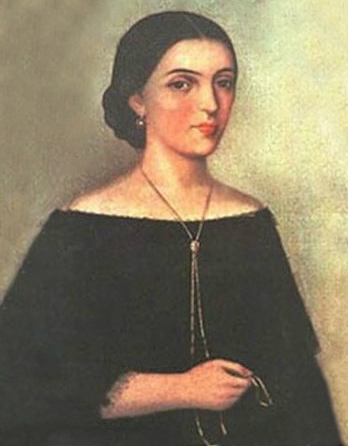 Painting of Manuela Saenz at the time Manuela supported the revolutionary cause by gathering information, distributing leaflets, and protesting for women's rights. As one of the most prominent female figures of the wars for independence, Manuela received the Order of the Sun ("Caballeresa del Sol" or 'Dame of the Sun'), honoring her services in the revolution. In public she often wore a colonel's uniform, accompanied by her two black servants Jonatás and Nathán, also attired in soldier uniforms.[8] During the first months of 1825 and from February to September 1826, she lived with Bolívar near Lima, but as the war continued, Bolívar was forced to leave. During the anti-Bolivarian conspiracy led by Colombian Colonel José Bustamente, Manuela was a key member of the Pro-Bolivarian forces. On January 25, 1827, significant portions of the Colombian Army's Third Division mutinied in Lima, arresting senior officers and seizing key locations in the city, demanding better food and pay as General Santa Cruz and the conspirators suspended the Bolivarian Constitution. Manuela had remained behind in Lima, trusted by Bolívar to look after his affairs, and moved to stop the mutiny. Presenting in full uniform, she addressed troops of the Third Division and begged them to remain loyal to Bolívar.[4] Afterwards, she began bribing sergeants and corporals in the hopes of outbidding the conspirators, to some success. This continued until she was captured by the new Peruvian government on February 7, and imprisoned in a convent. She protested her treatment under both Bolivarian laws and new Peruvian laws, and this agitation would eventually see her released from prison in March, and forced into exile in April. As a result of this agitation, she was now beginning to be known as the Libertadora,[4] a public legend to match Bolívar in the minds of some. Manuela now followed Bolívar to Bogotá. On 25 September 1828, mutinous officers attempted to assassinate Bolívar. Woken by the sound of fighting, Bolívar intended to investigate, but Sáenz, who was sharing his bed, persuaded him to leave by a window while she confronted the intruders. She then convinced them that Bolívar was somewhere in the building and proceeded to lead them to various rooms, affecting to lose her way and even stopping to attend one of the wounded. Eventually the would-be assassins lost patience and beat her before departing.[8] Her actions led Bolívar later to call her "Libertadora del Libertador". After the assassination attempt, Manuela proved to be a key part of identifying the loyalties and reliabilities of army officers, attempting to help Bolívar maintain control of the disintegrating Gran Colombia.[4] Bolívar left Bogotá in 1830 and died in Santa Marta from tuberculosis while he was in transit, leaving the country to exile. His death left her without fortunes, and as the political target for the national government.[5] Historians often link the last few years of Bolívar's decline to Manuela's reputation.[5] On his deathbed, Bolívar had asked his aide-de-camp, General Daniel F. O'Leary to burn the remaining, extensive archive of his writings, letters, and speeches. O'Leary disobeyed the order and his writings survived, providing historians with a vast wealth of information about Bolívar's liberal philosophy and thought, as well as details of his personal life, such as his longstanding love affair with Manuela Sáenz. These letter's in part cleared her reputation by disproving the stereotypes used to exaggerate the importance of Bolívar.[5] Shortly before her death in 1856, Sáenz augmented this collection by giving O'Leary her own letters from Bolívar.[4] Francisco de Paula Santander, who returned to power after Bolívar's death then exiled Manuela. She went to Jamaica for the early years of her exile.[3] She remained politically active until the mid-1840s before becoming disillusioned.[8] |
シモン・ボリバルとの関係(1822年~1830年) 1822年、サエンスは夫のもとを離れキトへ旅した。舞踏会でシモン・ボリバルと出会い、やがて恋愛関係に発展した。ボリバルの人生はソーン医師のそれよ りもはるかに刺激的で危険に満ちており、サエンスは彼に惹かれたのだ。スペイン植民地の解放という共通の理想が、二人の関係を冒険的なものに保つ原動力と なった。しかし夫は彼女の不在を嘆き、許すから戻ってこいと懇願した。彼女は手紙で、結婚生活を修復する気はないと説明した。夫はあまりに真面目すぎて情 熱に欠けると考えたのだ。夫に嫌悪した性質は、ボリバルには見られなかった。だからボリバルが不在でも、彼女は絶えず連絡を取り続けた[1]。愛の手紙を 交わし、彼が国から国へ移動するたびに会いに行った。ボリバルは彼女を「優しい狂女(ラ・アマブレ・ロカ)」と呼んだ[8]。 当時のマヌエラ・サエンスの肖像画 マヌエラは情報収集、ビラ配布、女性の権利を求める抗議活動を通じて革命運動を支えた。独立戦争における最も著名な女性の一人として、マヌエラは革命への 貢献を称えられ、太陽勲章(「太陽の騎士」または「太陽の貴婦人」)を授与された。公の場では大佐の軍服を着用し、二人の黒人従者ジョナタスとナタンも兵 士の制服を身にまとって同行した。[8] 1825年の初頭から1826年2月~9月にかけて、彼女はリマ近郊でボリバルと共に暮らしたが、戦争が継続する中、ボリバルは退去を余儀なくされた。 コロンビア人将校ホセ・ブスタメンテが主導した反ボリバル派の陰謀において、マヌエラは親ボリバル派勢力の主要メンバーであった。1827年1月25日、 リマでコロンビア軍第三師団の大部分が反乱を起こし、上級将校を逮捕し、市内の重要拠点を占拠した。サンタ・クルス将軍と陰謀者たちがボリバル憲法を停止 したため、兵士たちはより良い食糧と賃金を要求したのである。マヌエラはリマに残留し、ボリバルから事務を任されていたため、反乱を鎮圧するために動い た。正装で第三師団の兵士たちに演説し、ボリバルへの忠誠を保つよう懇願した[4]。その後、陰謀者たちを上回る買収を目論み、軍曹や伍長への賄賂を開始 し、一定の成果を上げた。この活動は2月7日に新ペルー政府に捕らえられ、修道院に投獄されるまで続いた。彼女はボリバル派の法律と新たなペルーの法律の 両方に基づいて自身の扱いを抗議し、この抗議活動が最終的に3月の釈放と4月の強制亡命につながった。この抗議活動の結果、彼女は今や「解放者(リベルタ ドーラ)」[4]として知られるようになり、一部の人々の心の中ではボリバルに匹敵する公的な伝説となった。マヌエラはその後ボリバルに従ってボゴタへ向 かった。 1828年9月25日、反乱を起こした将校たちがボリバル暗殺を図った。騒ぎの音で目を覚ましたボリバルは現場を確認しようとしたが、同じベッドで寝てい たサエンスが窓から脱出するよう説得し、自ら侵入者たちに対峙した。彼女は侵入者たちに「ボリバルは建物のどこかにいる」と信じ込ませ、様々な部屋へ誘導 しながら道に迷ったふりをし、負傷者の手当てまで見せかけた。遂に暗殺未遂者たちは忍耐を失い、彼女を殴打して去っていった[8]。この行動により、後に ボリバルは彼女を「解放者の解放者」と呼んだのである。 暗殺未遂事件後、マヌエラは軍将校たちの忠誠心と信頼性を見極める上で重要な役割を果たし、崩壊しつつあった大コロンビアの統制をボリバルが維持するのを助けようとした。[4] ボリバルは1830年にボゴタを離れ、亡命途中のサンタ・マルタで結核により死去した。彼の死はマヌエラに財産を残さず、国民政府の政治的標的となった。 [5] 歴史家たちは、ボリバルの衰退期の数年間をマヌエラの評判と結びつけることが多い。[5] 死の床でボリバルは副官ダニエル・F・オレアリー将軍に、残された膨大な著作・書簡・演説の文書を焼却するよう命じた。オレアリーはこの命令に背き、文書 は現存した。これにより歴史家たちはボリバルの自由主義的哲学や思想、マヌエラ・サエンスとの長年の恋愛関係といった個人的な詳細について、膨大な情報を 得ることとなった。これらの書簡は、ボリバルの重要性を誇張するために用いられた固定観念を覆すことで、彼女の評判を一部回復させた[5]。1856年に 死去する直前に、サエンスは自身がボリバルから受け取った書簡をオリアリーに譲り渡し、このコレクションを充実させた[4]。ボリバル死後に権力を取り戻 したフランシスコ・デ・パウラ・サンタンデールは、マヌエラを追放した。彼女は亡命生活の初期をジャマイカで過ごした。[3] 彼女は1840年代半ばまで政治活動に関わっていたが、やがて幻滅した。[8] |
Years in exile and death (1835–1856)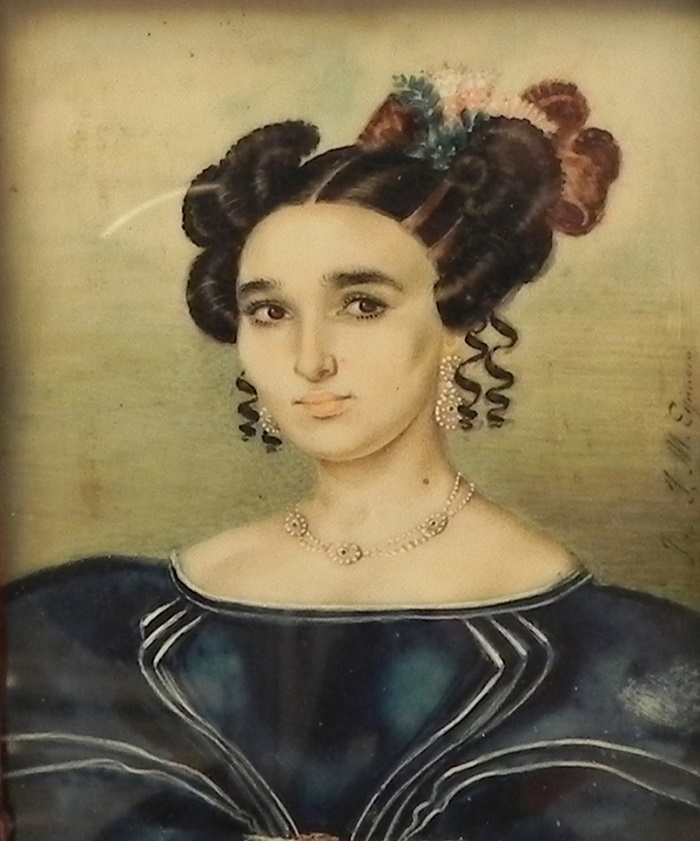 Portrait of Manuela Sáenz (1830) - Bogotá. When she attempted to return to Ecuador in 1835, the Ecuadorian president, Vicente Rocafuerte, revoked her passport. She was charged with conspiracy against the Spanish crown, and was thus exiled, despite the fact that she did not get a trial.[9] Rocafuerte justified his order to exile Sáenz by stating “It is the women who most promote the spirit of anarchy in these countries".[10] She then took refuge in northern Peru, living in the small coastal town of Paita. She remained politically active and frequently wrote letters to other revolutionaries.[11] She descended into poverty and for the next twenty-five years, a destitute outcast, Manuela sold tobacco and translated letters for North American whale hunters who wrote to their lovers in Hispanic America. While there, she met the American author Herman Melville, and the revolutionary Giuseppe Garibaldi. Saenz would establish The Society of Patriotic Ladies and decorating the members with the slogan “To the patriotism of the most sensitive" Manuela Sáenz and other women partook in conspiracies against Spanish rule in her years of exile.[12] In 1847, her husband was murdered in Pativilca and she was denied her 8,000 pesos inheritance. Disabled after the stairs in her home collapsed, Manuela died in Paita, on 23 November 1856, during a diphtheria epidemic. Her body was buried in a communal, mass grave and her belongings were burned. The items that did survive, personal letters and artifacts, contributed later to the legacy of both her and Simon Bolívar. |
亡命と死の年々(1835–1856) マヌエラ・サエンスの肖像(1830年) - ボゴタ。 1835年にエクアドルへの帰国を試みた際、当時の大統領ビセンテ・ロカフエルテは彼女の旅券を取り消した。スペイン王室に対する陰謀の罪で告発され、裁 判も受けずに追放されたのである[9]。ロカフエルテはサエンスを追放する命令を「この国々で無政府主義の精神を最も煽るのは女性たちだ」と正当化した [10]。その後彼女はペルー北部に逃れ、パイタという小さな沿岸の町で暮らした。政治活動は継続し、他の革命家たちへ頻繁に手紙を書いた[11]。貧困 に陥り、その後25年間、無一文の追放者として、マヌエラはタバコを売り、北米の捕鯨船員たちがラテンアメリカにいる恋人に宛てた手紙を翻訳した。その地 で彼女はアメリカの作家ハーマン・メルヴィルや革命家ジュゼッペ・ガリバルディと出会った。 サエンスは「愛国婦人会」を設立し、会員を「最も繊細なる愛国心に」という標語で飾った。マヌエラ・サエンスと他の女性たちは、亡命時代を通じてスペイン支配に対する陰謀に加担した。[12] 1847年、彼女の夫はパティビルカで殺害され、彼女は8,000ペソの相続を拒否された。自宅の階段崩落で身体を不自由にしたマヌエラは、1856年 11月23日、ジフテリアの流行中にパイタで死去した。遺体は共同墓地に埋葬され、所持品は焼却された。残された個人的な私信や遺品は、後に彼女とシモ ン・ボリバルの遺産形成に寄与することとなった。 |
| Feminist contribution During Saenz's time, women's realm consisted of private and domestic spaces while politics and warfare spaces were for men. She found various ways physically and symbolically to take part in masculine spheres of activity yet also take part in the feminine arenas of her period. She used feminine behaviours to have some influence in these masculine spaces, usually using her intimate relationships as tools.[13] She did not feel constrained by gendered conventions of what was considered proper feminine behaviour. She smoked, she dressed up in masculine clothes, was trained for military action.[14] Saenz was an erotic symbol with her passion for Bolivar.[14] Saenz was often described as an eccentric woman, a lesbian, who "would dress up during the day as an official and during the night she went through a metamorphosis with the help of some wine."[15] Saenz is usually identified as an emancipated woman with a conviction for liberty and independence as well as a woman who breaks the status quo.[15] She developed a discourse of friendship while in exile to give women some empowerment. This discourse of friendship was used to justify the influence of women in politics. Her work opposed the exclusion of women from politics by connecting friendship with female companionship.[16] Seeing elite women as friends, instead of wives and mothers, goes against the issues surrounding the notion of “republican motherhood” which Saenz was familiar with at her time.[10] This notion of motherhood focused on the idea that women were better as wives and mothers than as companions and collaborators. The praise of republican motherhood showed that there was fear and distress with the idea that women could influence and undermine the state if they are left on their own.[16] Through the friendship discourse women would be seen as friends and peers to men, as companions and collaborators. Manuela Sáenz did not protest women’s exclusion from politics, but used that exclusion as a reasoning and personal interest into an affirmation of reliability and trustworthiness of women.[17] Friendship, therefore, became a tool for independent women, which gave them a degree of influence greater than they were previously seen before this friendship discourse.[18] Saenz believed that friendship would create stability and consistency. Sáenz switched the gendered icons within ideology at the time by encouraging friendship and the association of it with women.[19] Lastly, by putting aside the view of motherhood or “woman problem,” Saenz work and image encouraged women to demand respect from politicians and intellectuals as individuals and not just as icons of their sex.[20] |
フェミニストの貢献 サエンスの時代、女性の領域は私的・家庭的な空間に限定され、政治や戦争の領域は男性のものだった。彼女は身体的・象徴的に様々な方法で、当時の男性的な 活動領域に参加しつつ、女性的な領域にも関わる方法を見出した。女性的な振る舞いを利用してこれらの男性的な空間で影響力を発揮し、通常は親密な関係を手 段として用いた。[13] 彼女は、適切な女性的行動とされるジェンダーによる慣習に縛られることはなかった。喫煙し、男性的な服装をし、軍事行動の訓練を受けた。[14] サエンツはボリバルへの情熱によって、官能的な象徴となった。[14] サエンスはしばしば風変わりな女性、レズビアンとして描写され、「昼間は役人として装い、夜になると酒の助けを借りて変貌を遂げた」と言われる。[15] サエンスは通常、自由と独立への信念を持つ解放された女性、そして現状を打破する女性として認識される。[15] 亡命中に彼女は女性へのエンパワーメントを目的とした「友情」の言説を展開した。この友情論は女性の政治的影響力を正当化する手段として用いられた。彼女 の活動は友情を女性同士の連帯と結びつけることで、女性の政治排除に反対したのである。[16] 上流階級の女性を妻や母ではなく友人として捉える視点は、当時のサエンスが熟知していた「共和主義的母性」概念を巡る問題意識に反するものだった。 [10] この母性観は、女性が伴侶や協力者よりも妻や母としての役割に優れているという考えに焦点を当てていた。共和主義的母性の称賛は、女性が独り立ちすれば国 家に影響を与え、弱体化させるかもしれないという恐れと不安を示していた。[16] 友情言説を通じて、女性は男性にとっての友人であり対等な存在、伴侶であり協力者として見られるようになる。 マヌエラ・サエンスは女性の政治排除に抗議しなかったが、その排除を根拠と個人的関心として活用し、女性の信頼性と誠実さを主張した。[17] したがって友情は、独立した女性たちのための手段となり、この友情論以前よりも大きな影響力を彼女たちに与えた。[18] サエンスは友情が安定性と一貫性をもたらすと信じていた。サエンスは友情を奨励し、それを女性と結びつけることで、当時のイデオロギーにおけるジェンダー の象徴を転換したのだ[19]。 最後に、母性や「女性問題」という視点から離れ、サエンスの活動とイメージは、女性たちが単なる性の象徴としてではなく、個人として政治家や知識人から尊重を要求するよう促したのである[20]。 |
| Sexual orientation and LGBT rights activism Manuela Sáenz was a bisexual woman.[21][22][23] J. B. Boussingault wrote in his memoirs about her "inexplicably close relationships" with her friends Polycarpa and Baltasara.[21][22] After her death, Sáenz became a symbol not only of feminism, but also of the struggle of sexual minorities (including homosexual and transgender people) for their rights. Her name appealed to many, offering to control the example of the Netherlands and legalize same-sex marriage in Ecuador.[23] Robert T. Conn, however, wrote that there is no clear evidence that Manuela entered into same-sex relationships, but he noted that she had 'behavioral bisexuality'.[24] |
性的指向とLGBT権利運動 マヌエラ・サエンスはバイセクシュアルの女性であった[21][22][23]。J・B・ブッサンゴーは回顧録の中で、彼女が友人ポリカルパとバルタサラ と「不可解なほど親密な関係」にあったと記している[21][22]。死後、サエンスはフェミニズムの象徴であるだけでなく、性的少数者(同性愛者やトラ ンスジェンダーを含む)の権利を求める闘争の象徴ともなった。彼女の名前は多くの人々に訴えかけ、オランダの例に倣ってエクアドルで同性婚を合法化すべき だと主張する根拠となった[23]。しかしロバート・T・コンは、マヌエラが同性愛関係を持った明確な証拠はないと記しつつも、彼女には「行動上のバイセ クシュアリティ」があったと指摘している[24]。 |
| Recognition and 2010 reburial On 5 July 2010, Manuela Sáenz was given a full state burial in Venezuela. Because she had been buried in a mass grave, no official remains of her existed for the state burial; instead, "symbolic remains", composed of some soil from the mass grave into which she was buried during the epidemic, were transported through Peru, Ecuador and Colombia to Venezuela. Those remains were laid in the National Pantheon of Venezuela where those of Bolívar are also memorialized. |
顕彰と2010年の改葬 2010年7月5日、マヌエラ・サエンスはベネズエラで国葬の栄誉を受けた。彼女は集団墓地に埋葬されていたため、国葬用の公式な遺骨は存在しなかった。 代わりに、疫病流行時に彼女が埋葬された集団墓地の土壌を「象徴的な遺骨」として、ペルー、エクアドル、コロンビアを経由してベネズエラへ運ばれた。その 遺骨は、ボリバルの遺骨も安置されているベネズエラ国民パンテオンに納められた。 |
Legacy Bust of Manuela Sáenz in the Parque Mujeres Argentinas. After the revolution, Manuela effectively faded from literature. Between 1860 and 1940 only three Ecuadorian writers wrote about her and her participation in the revolution,[5] and these writings largely portrayed her as either exclusively the lover of Simón Bolívar or as incapable and wrongfully participating within the political sphere. These portrayals also assured her femininity as a mainstay of her characterization.[5] However, the 1940s created a significant shift in how she was viewed and characterized. Literature like Papeles De Manuela Saenz, 1945, by Vicente Lecuna, which was a compilation of documents regarding the life of Bolívar, effectively disproved popular stereotypes about Manuela.[5] Ideas about her being sexually deviant, hyper feminine and incapable were replaced by more favorable portrayals as the 20th century progressed. 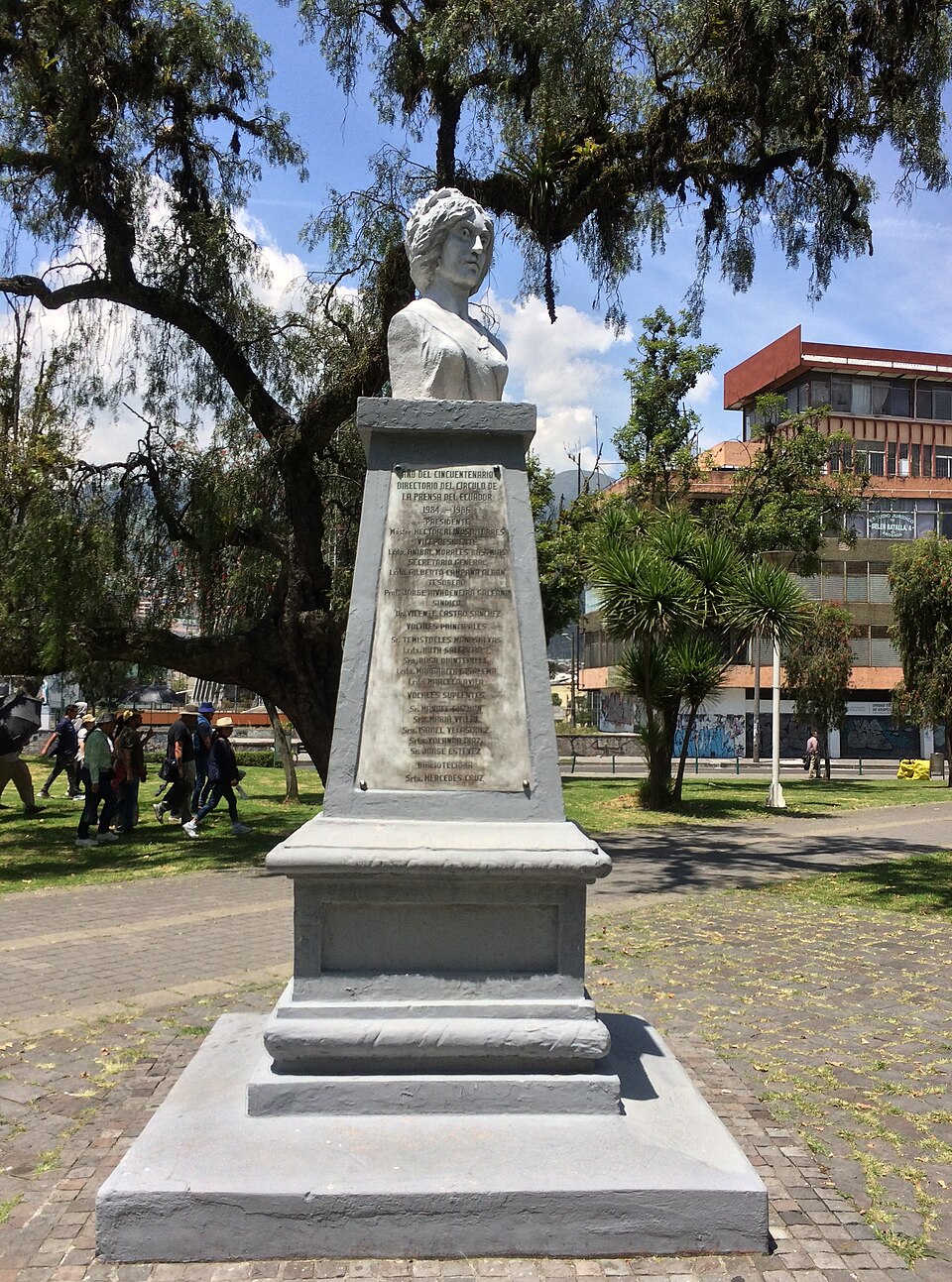 Bust of Manuela Sáenz, La Alameda park (Quito). The later 20th century generated shifts in her portrayals that were consistent with ideological shifts within Latin America, like the increase of feminism of the 1980s and nationalism of the 1960s – 1970s. Portrayals within the fictional The General in His Labyrinth by Gabriel García Márquez and the nonfictional Alfonso Rumazo's Manuela Saenz La Libertadora del Libertador contributed to her effective humanization within popular culture and helped politicize her image.[4] Alfonso Rumazo’s novel was especially poignant for its ideas of Pan-American Nationalism that were represented through Manuela's participation within the wars of independence. Manuela became increasingly popular with radical Latin American feminist groups subsequently, her image was commonly used as a rallying point for Indo-Latina causes of the 1980s.[4] The popular image of Manuela riding horseback in men's clothing, popularized by her portrayal in The General in His Labyrinth, was re-enacted by female demonstrators in Ecuador in 1998.[4] There was a gathering of feminists in Paita on September 24, 1989, organized by Nella Martinez which encouraged the recognition of Manuela Saenz and paid homage to her. This was known as the "Primer Encuentro con la Historia: Manuela Saenz". All participants swore to follow her example by rallying against sexual, racial and class discrimination, and other injustices. They saw Saenz as a feminist heroine.[5] On 25 May 2007 the Ecuadorian government symbolically gave Saenz the rank of General.[4] Museo Manuela Sáenz The Museo Manuela Sáenz is a museum in Old Town, Quito, that contains personal effects from both Sáenz and Bolívar to "[safeguard] the memories of Manuela Saenz, Quito's illustrious daughter".[25] Located at Junin 709 y Montufar, Centro Histórico, Quito. Entrance to the museum is free with the purchase of one of the books about Manuela's life. Personal effects within the museum include letters, stamps, and paintings. |
遺産 アルゼンチン女性公園にあるマヌエラ・サエンスの胸像。 革命後、マヌエラは事実上文学から姿を消した。1860年から1940年の間に彼女と革命への参加について書いたエクアドル人作家はわずか3人であり [5]、これらの著作は彼女をシモン・ボリバルの愛人としてのみ描くか、あるいは政治分野で無能かつ不当に参加した人物として描くことが多かった。これら の描写はまた、彼女の女性性を人物像の支柱として確固たるものにした。しかし1940年代、彼女の見方と描写に重大な転換が起きた。ビセンテ・レクナによ る『マヌエラ・サエンスの文書』(1945年)のような文学作品——これはボリバルの生涯に関する文書集だった——が、マヌエラに関する通説を事実上覆し たのだ。性的逸脱や過剰な女性性、無能といったイメージは、20世紀が進むにつれ、より好意的な描写に置き換えられていった。 マヌエラ・サエンスの胸像、ラ・アラメダ公園(キト)。 20世紀後半には、1980年代のフェミニズム台頭や1960~70年代のナショナリズム高揚といったラテンアメリカ内のイデオロギー変遷と連動した彼女 の描写変化が生じた。ガブリエル・ガルシア・マルケスの小説『迷宮の将軍』やアルフォンソ・ルマソのノンフィクション『解放者マヌエラ・サエンス』におけ る描写は、ポピュラー・カルチャー内での彼女の人間化を効果的に促進し、そのイメージの政治化に寄与した[4]。特にアルフォンソ・ルマソの小説は、独立 戦争へのマヌエラの参加を通じて表現された汎アメリカ的ナショナリズムの思想において、特に印象的であった。その後、マヌエラはラテンアメリカの急進的な フェミニストグループの間で人気が高まり、1980年代のインド系ラテンアメリカ人の運動の結束の象徴として、彼女のイメージが広く利用された。小説『迷 宮の将軍』で描かれた、男装して馬に乗るマヌエラのイメージは、1998年にエクアドルの女性デモ参加者たちによって再現された。 1989年9月24日、ネラ・マルティネスが主催したフェミニストの集会がパイタで開催され、マヌエラ・サエンツの認知と彼女への敬意が呼びかけられた。 これは「歴史との最初の出会い:マヌエラ・サエンツ」として知られている。参加者全員が、性的、人種的、階級的な差別やその他の不正に対して団結し、彼女 の例に従うことを誓った。彼らはサエンツをフェミニストのヒロインとみなした。[5] 2007年5月25日、エクアドル政府はサエンツに象徴的に将軍の階級を授与した。[4] マヌエラ・サエンツ博物館 マヌエラ・サエンツ博物館は、キトの旧市街にある博物館で、サエンツとボリバルの個人的な私物を収蔵し、「キトの輝かしい娘、マヌエラ・サエンツの記憶を [守る]」ことを目的としている。[25] 所在地:キト、歴史地区、フニン通り709番地とモントゥファール通り。マヌエラの生涯に関する書籍のいずれかを購入すると、博物館への入場は無料とな る。館内の個人的な私物には手紙、切手、絵画などが含まれる。 |
| Biographical writings "The Four Seasons of Manuela". Biography by Victor Wolfgang von Hagen (1974) "Manuela". Novel by Gregory Kauffman (1999). ISBN 978-0-9704250-0-3 "Manuela Sáenz – La Libertadora del Libertador". Author: Alfonso Rumazo González (Quito 1984) "En Defensa de Manuela Sáenz". Authors: Pablo Neruda, Ricardo Palma, Victor von Hagen, Vicente Lecuma, German Arciniegas, Alfonso Rumazo, Pedro Jorge Vera, Jorge Salvador Lara, Jorge Enrique Adoum, Mario Briceño Perozo, Mary Ferrero, Benjamín Carrión, Jorge Villalba S.J., Leonardo Altuve, Juan Liscano (Quito) "Manuela Sáenz – presencia y polémica en la historia". Authors: María Mogollón and Ximena Narváez (Quito 1997) "la Vida Ardiente De Manuelita Sáenz". Author: Alberto Miramón (Bogota 1946) For Glory and Bolívar: The Remarkable Life of Manuela Sáenz. Biography by Pamela S. Murray. (Austin, TX 2008). ISBN 978-0-292-71829-6 Our Lives Are the Rivers: A Novel. Author: Jaime Manrique. |
伝記作品 『マヌエラの四季』。ヴィクトル・ヴォルフガング・フォン・ハーゲン著(1974年) 『マヌエラ』。グレゴリー・カウフマン著(1999年)。ISBN 978-0-9704250-0-3 『マヌエラ・サエンス ― 解放者の解放者』。著者:アルフォンソ・ルマソ・ゴンサレス(キト 1984年) 『マヌエラ・サエンスを擁護して』著者:パブロ・ネルーダ、リカルド・パルマ、ヴィクトル・フォン・ハーゲン、ビセンテ・レクマ、ゲルマン・アルシニエガ ス、アルフォンソ・ルマソ、ペドロ・ホルヘ・ベラ、ホルヘ・サルバドール・ララ、ホルヘ・エンリケ・アドゥム、マリオ・ブリセニョ・ペロソ、メアリー・ フェレーロ、ベンハミン・カリオン、ホルヘ・ビジャルバ S.J.、レオナルド・アルトゥベ、フアン・リスカーノ(キト) 「マヌエラ・サエンス―歴史における存在と論争」著者:マリア・モゴヨン、キシメナ・ナルバエス(キト 1997年) 「マヌエリタ・サエンスの燃えるような生涯」著者:アルベルト・ミラモン(ボゴタ 1946年) 栄光とボリバルのために:マヌエラ・サエンスの驚くべき生涯。伝記。パメラ・S・マレー著。(テキサス州オースティン 2008年)。ISBN 978-0-292-71829-6 我らの命は川なり:小説。著者:ハイメ・マンリケ。 |
| Biographical movies and opera Manuela Sáenz, directed by Diego Rísquez (2000) 97 minutes. Manuela y Bolívar, opera in two acts by composer/librettist Diego Luzuriaga (2006) 2-1/2 hours. Bolívar, Netflix Original Series (2019) 63 episodes. |
伝記映画とオペラ マヌエラ・サエンス、ディエゴ・リスケス監督(2000年)97分。 マヌエラとボリバル、作曲家/台本作家ディエゴ・ルズリアガによる二幕のオペラ(2006年)2時間半。 ボリバル、Netflixオリジナルシリーズ(2019年)全63話。 |
| 1. Masur, Gerhard (1949). ""The
Liberator is Immortal"-An Unknown Letter of Manuela Saenz". The
Hispanic American Historical Review. 29 (3): 380–383.
doi:10.2307/2508458. ISSN 0018-2168. JSTOR 2508458. 2. Rumazo González, Alfonso (2005). Manuela Saenz : la libertadora del libertador. Bogotá: Intermedio. ISBN 958-709-393-3. OCLC 916067783. 3. Bolívar, Simón (1983). Hope of the universe (PDF). Paris: UNESCO. ISBN 9231021036. 4. Murray, Pamela (2008). For Glory and Bolívar. Austin, Texas: University of Texas Press. pp. 156–160. ISBN 978-0292721517. 5. Murray, Pamela S. (2001). "Loca' or 'Libertadora'?: Manuela Sáenz in the Eyes of History and Historians, 1900-c.1990". Journal of Latin American Studies. 33 (2): 291–310. doi:10.1017/S0022216X01006083. JSTOR 3653686. S2CID 145718805. 6. “Manuela Sáenz, Révolutionnaire Féministe.” L'Histoire par les femmes, July 7, 2019. https://histoireparlesfemmes.com/2016/02/08/manuela-saenz-revolutionnaire-feministe/ 7. “Manuela Sáenz: La Libertadora Feminista.” Colombia Informa - Agencia de Comunicaciones, November 23, 2018. https://www.colombiainforma.info/manuela-saenz-la-libertadora-feminista/ 8. Lyons, Mathew (7 July 2020). "The Liberator's Saviour is 'Buried'". History Today. Vol. 70, no. 7. p. 26. Archived from the original on 26 January 2021. Retrieved 9 June 2021. Bolívar called her la amable loca, the dear madwoman. 9. Chambers, Sarah C. (2001). "Republican Friendship: Manuela Sáenz Writes Women into the Nation, 1835-1856". Hispanic American Historical Review. 81 (2): 225–257. doi:10.1215/00182168-81-2-225. PMID 18637273. Retrieved 10 April 2024. 10. Chambers, Sarah. (2001). Republican Friendship: Manuela Saenz Writes Women into the Nation, 1835-1856. The Hispanic American historical review. 81. 225-57. doi:10.1215/00182168-81-2-225. pp 226 11. Chambers, Sarah C. (2001). "Republican Friendship: Manuela Sáenz Writes Women into the Nation, 1835-1856". Hispanic American Historical Review. 81 (2): 225–257. doi:10.1215/00182168-81-2-225. PMID 18637273. Retrieved 10 April 2024. 12. Chambers, Sarah. (2001). Republican Friendship: Manuela Saenz Writes Women into the Nation, 1835-1856. The Hispanic American historical review. 81. 225-57. doi:10.1215/00182168-81-2-225. pp 232 13. Hennes, Heather. “The Gendered Spaces of La Libertadora: Diego Rísquez’s ‘Manuela Sáenz.’” Hispanic Journal 32, no. 2 (2011): 95–108. JSTOR 44287065. pp 99 14. Vilalta, María José. “Historia de Las Mujeres y Memoria Histórica: Manuela Sáenz Interpela a Simón Bolívar (1822-1830).” European Review of Latin American and Caribbean Studies, no. 93 (2012): 61–78. 15. Yaneth Oviedo, Mary. 2013. “Manuela Sáenz En Las Memorias de Jean Baptista Boussingault: ¿La Mujer Emancipadora o Emancipada?” In Mujeres y Emancipación de La América Latina y El Caribe En Los Siglos XIX y XX, edited by Irina Bajini, Luisa Campuzano, and Emilia Perassi, 131–37. Di/Segni: 4. Milan, Italy: Università degli Studi di Milano; Ledizioni. 16. Chambers, Sarah. (2001). Republican Friendship: Manuela Saenz Writes Women into the Nation, 1835-1856. The Hispanic American historical review. 81. 225-57. doi:10.1215/00182168-81-2-225. pp 247 17. Chambers, Sarah. (2001). Republican Friendship: Manuela Saenz Writes Women into the Nation, 1835-1856. The Hispanic American historical review. 81. 225-57. 10.1215/00182168-81-2-225. pp 231 18. Chambers, Sarah. (2001). Republican Friendship: Manuela Saenz Writes Women into the Nation, 1835-1856. The Hispanic American historical review. 81. 225-57. doi:10.1215/00182168-81-2-225. pp 246 19. Chambers, Sarah. (2001). Republican Friendship: Manuela Saenz Writes Women into the Nation, 1835-1856. The Hispanic American historical review. 81. 225-57. doi:10.1215/00182168-81-2-225. pp 252 20. Chambers, Sarah. (2001). Republican Friendship: Manuela Saenz Writes Women into the Nation, 1835-1856. The Hispanic American historical review. 81. 225-57. doi:10.1215/00182168-81-2-225. pp 256 21. Boussingault, Jean Baptiste Joseph Dieudonné (2018). Mémoires de J. B. Boussingault [Memories of J. B. Boussingault] (in French). Vol. III (Reprinted ed.). Wyoming: Creative Media Partners, LLC. pp. 164–167. ISBN 978-0-270-76399-7. 22. Murray 2009, pp. 164–166. 23. Serrano, Amaya José Fernando (2006). Otros cuerpos, otras sexualidades [Other Bodies, Other Sexualities] (in Spanish). Bogotá: Pontificia Universidad Javeriana. pp. 168, 177, 178. ISBN 978-9-586-83894-8. 24. Conn, Robert T. (2020). Bolívar's Afterlife in the Americas : Biography, Ideology, and the Public Sphere. Cham: Palgrave Macmillan Cham. p. 194. doi:10.1007/978-3-030-26218-1. ISBN 978-3-030-26220-4. 25. "Museo Manuela Sáenz | Quito | Museums & Galleries | eventseeker". eventseeker.com. Retrieved 20 November 2016. |
1.
マスール、ゲルハルト(1949)。「『解放者は不死身である』―マヌエラ・サエンスの知られざる手紙」。『ヒスパニック・アメリカン歴史評論』29巻3
号:380–383頁。doi:10.2307/2508458。ISSN 0018-2168。JSTOR 2508458. 2. ルマソ・ゴンサレス、アルフォンソ (2005). 『マヌエラ・サエンス:解放者の解放者』. ボゴタ: インターメディオ. ISBN 958-709-393-3. OCLC 916067783. 3. ボリバル、シモン (1983). 宇宙の希望 (PDF). パリ: ユネスコ. ISBN 9231021036. 4. マレー, パメラ (2008). 栄光とボリバルのために. テキサス州オースティン: テキサス大学出版局. pp. 156–160. ISBN 978-0292721517. 5. マレー, パメラ・S. (2001). 「狂女か、解放者か?:歴史と歴史家たちの眼に映るマヌエラ・サエンス、1900-c.1990」. 『ラテンアメリカ研究ジャーナル』. 33 (2): 291–310. doi:10.1017/S0022216X01006083. JSTOR 3653686. S2CID 145718805. 6. 「マヌエラ・サーンツ、革命家フェミニスト」『女性による歴史』2019年7月7日。https://histoireparlesfemmes.com/2016/02/08/manuela-saenz-revolutionnaire-feministe/ 7. 「マヌエラ・サエンス:フェミニスト解放者」『コロンビア・インフォルマ - 通信社』、2018年11月23日。https://www.colombiainforma.info/manuela-saenz-la- libertadora-feminista/ 8. マシュー・ライオンズ(2020年7月7日)。「解放者の救い主は『埋葬された』」。『ヒストリー・トゥデイ』第70巻第7号、26頁。2021年1月26日にオリジナルからアーカイブ。2021年6月9日に閲覧。ボリバルは彼女を「愛すべき狂女」と呼んだ。 9. チェンバース、サラ・C.(2001年)。共和主義的友情:マヌエラ・サエンスが女性を国民に書き込む、1835-1856年」。ヒスパニック・アメリカ ン歴史評論。81巻2号:225–257頁。doi:10.1215/00182168-81-2-225。PMID 18637273。2024年4月10日閲覧。 10. チェンバース、サラ。(2001). 『共和主義的友情:マヌエラ・サエンスが女性を国民に書き込む、1835-1856年』. ヒスパニック・アメリカン歴史評論. 81. 225-57. doi:10.1215/00182168-81-2-225. pp 226 11. チェンバース、サラ・C. (2001). 「共和主義的友情:マヌエラ・サエンスが女性を国民に書き込む、1835-1856年」. ヒスパニック・アメリカン歴史評論. 81 (2): 225–257. doi:10.1215/00182168-81-2-225. PMID 18637273. 2024年4月10日取得。 12. チェンバース、サラ(2001)。『共和主義的友情:マヌエラ・サエンスが女性を国民に書き込む、1835-1856年』。ヒスパニック・アメリカン歴史評論。81. 225-57. doi:10.1215/00182168-81-2-225. pp 232 13. ヘネス、ヘザー。「『解放者』のジェンダー空間:ディエゴ・リスケスの『マヌエラ・サエンス』」『ヒスパニック・ジャーナル』32巻2号(2011年):95–108頁。JSTOR 44287065. pp 99 14. ヴィラタ、マリア・ホセ。「女性史と歴史的記憶:マヌエラ・サエンスがシモン・ボリバルに問う(1822-1830年)」。『ヨーロッパ・ラテンアメリカ・カリブ研究』第93号(2012年):61–78頁。 15. ヤネト・オビエド、メアリー。2013年。「ジャン・バティスタ・ブッサンゴーの回顧録におけるマヌエラ・サエンス:解放者か、解放された女性か?」 『19~20世紀ラテンアメリカ・カリブ海の女性と解放』イリーナ・バジーニ、ルイーサ・カンプサノ、エミリア・ペラッシ編、131–37頁。 Di/Segni: 4. ミラノ、イタリア: ミラノ大学; Ledizioni. 16. チェンバース、サラ。(2001). 『共和主義的友情:マヌエラ・サエンスが女性を国民に書き込む、1835-1856年』. 『ヒスパニック・アメリカン歴史評論』. 81. 225-57. doi:10.1215/00182168-81-2-225. pp 247 17. チェンバース、サラ. (2001). 『共和主義的友情:マヌエラ・サエンスが女性を国民に書き込む、1835-1856年』. 『ヒスパニック・アメリカン歴史評論』. 81. 225-57. 10.1215/00182168-81-2-225. pp 231 18. チェンバース, サラ. (2001). 『共和主義的友情:マヌエラ・サエンスが女性を国民に書き込む、1835-1856年』. 『ヒスパニック・アメリカン歴史評論』. 81. 225-57. doi:10.1215/00182168-81-2-225. pp 246 19. チェンバース, サラ. (2001). 『共和主義的友情:マヌエラ・サエンスが女性を国民に書き込む、1835-1856年』. 『ヒスパニック・アメリカン歴史評論』. 81. 225-57. doi:10.1215/00182168-81-2-225. pp 252 20. チェンバース, サラ. (2001). 『共和主義的友情:マヌエラ・サエンスが女性を国民に書き込む、1835-1856年』. 『ヒスパニック・アメリカン歴史評論』. 81. 225-57. doi:10.1215/00182168-81-2-225. pp 256 21. ブッサンゴー、ジャン・バティスト・ジョゼフ・ディウドネ(2018)。『J. B. ブッサンゴー回想録』(フランス語)。第III巻(復刻版)。ワイオミング州:クリエイティブ・メディア・パートナーズ社。pp. 164–167。ISBN 978-0-270-76399-7。 22. Murray 2009, pp. 164–166。 23. Serrano, Amaya José Fernando (2006). Otros cuerpos, otras sexualidades [他の身体、他のセクシュアリティ] (スペイン語). ボゴタ: Pontificia Universidad Javeriana. pp. 168, 177, 178. ISBN 978-9-586-83894-8. 24. Conn, Robert T. (2020). Bolívar's Afterlife in the Americas : Biography, Ideology, and the Public Sphere. Cham: Palgrave Macmillan Cham. p. 194. doi:10.1007/978-3-030-26218-1。ISBN 978-3-030-26220-4。 25. 「マヌエラ・サエンス博物館|キト|美術館・博物館|eventseeker」。eventseeker.com。2016年11月20日閲覧。 |
| Cited sources Arismendi Posada, Ignacio (1983). Gobernantes Colombianos [Colombian Presidents] (second ed.). Bogotá, Colombia: Interprint Editors Ltd.; Italgraf. Murray, Pamela S. (2009). Pike, Fredrick B. [in Spanish] (ed.). For Glory and Bolívar : The Remarkable Life of Manuela Sáenz. Medelin: University of Texas Press. ISBN 978-0-292-77871-9. |
引用文献 アリセンディ・ポサダ、イグナシオ(1983)。『コロンビアの統治者たち』(第二版)。コロンビア、ボゴタ:インタープリント・エディターズ社;イタルグラフ。 マレー、パメラ・S.(2009)。パイク、フレデリック・B.[スペイン語版](編)。『栄光とボリバルのために:マヌエラ・サエンスの驚くべき生涯』。メデジン:テキサス大学出版局。ISBN 978-0-292-77871-9。 |
| https://en.wikipedia.org/wiki/Manuela_S%C3%A1enz |
★付録「エクアドル女性史関連年表」(河内 2015:180)
1929
南米で最も早く女性に参政権が認められる。
1964
農地改革。
1967
スタンダード・オイル社による油田の発見。
1972
エクアドル・キチュア先住民連盟(ECUARUNARI) が設立される(シェラ地域)。
1975
エクアドル女性代表団が第1 回世界女性会議(メキシコ)に参加。
1979
軍政から民政へ移管。憲法において男女平等が明記される。非識字者への選挙権の付与により,非識字率の高かった先住民にも選挙権が認められる。
1980
国連女性差別撤廃条約を批准。エクアドル・アマゾン先住民連盟(CONFENIAE) が設立される。
1983
エクアドル女性育成活動センター(CEPAM) が設立される。
1989
エクアドル先住民族連合(CONAIE) が設立される。
1990
シェラ地域の先住民を中心として新自由主義への抗議運動が各地で展開され始める。
1992
オリエンテ地域の先住民を中心として首都キトまでの大規模なデモ行進が行われる。
1994
エクアドル初のコミサリーア(DV 被害者救済施設)がグアヤキルに設置される。国家先住民・少数民族事務局(SENAIME) が設置される。
1995
「女性と家族に対する暴力禁止法」制定・交付ざれる。
1996
先住民運動を基盤とする左派政党パチャクティックが誕生する。
1997
女性局が国家女性評議会内に再編成される。ブカラム大統領がパナマに亡命。女性副大統領アルティアガが大統領臨時代行を務める(2 日間)。その後アラルコン(男性)がアルティアガを引き継ぎ暫定大統領となる。ジェンダー・クオータ制を導入。
1998
憲法改正( 1998 年憲法)。ラテンアメリカ諸国で初めて女性のリプロダクティブ・ヘルス/ライツが規定される(第36 条)。マワ政権発足。世界銀行主導による「エクアドル先住民・アフロ系開発プロジェクト(PRODEPINE) が始動。
1999
未曾有の経済危機に突入。
2000
自国通貨スクレを廃止, ドル体制へ移行。軍部と先住民組織がマワ大統領を失脚に追い込む。マワは米国へ亡命し,軍政の救国評議会が発足(1 日のみ)。副大統領ノボアが暫定大統領となる。ジェンダー・クオータ制女性枠30%に引き上げ。
2003
グティエレスが大統領に就任。2 名の先住民閣僚が誕生(農牧大臣ルイス・マカス、外務大臣ニナ・パカリ:女性初の閣僚)。
2005
グティエレス大統領がブラジルヘ亡命,パラシオが暫定大統領に就任。
2006
先住民女性ノノが夫レマチェ(パチャクティック所属の国会議員)の家庭内暴力を告発。
2007
コレアが大統領に就任。先住民の諸権利の国連宣言(UNDRIP)採択,エクアドルは即時批准。
2008
新憲法制定。「スマク・カウサイ(Sumak kawsay)」など先住民の世界観に根ざした概念が盛リ込まれたほか第171 条・先住民裁判権にて先住民女性の意思決定過程への参加が規定される。
2014
『世界男女格差報告書』において,ジェンダー・ギャップ指数で世界21 位となる(06 年の同報告書初公表以来,最高位)。
20XX
リ ンク
文 献
そ の他の情報
CC
Copyleft,
CC, Mitzub'ixi Quq Chi'j, 1996-2099