リヴァイアサン
Introduction to Political Theory of Hobbs' Leviathan
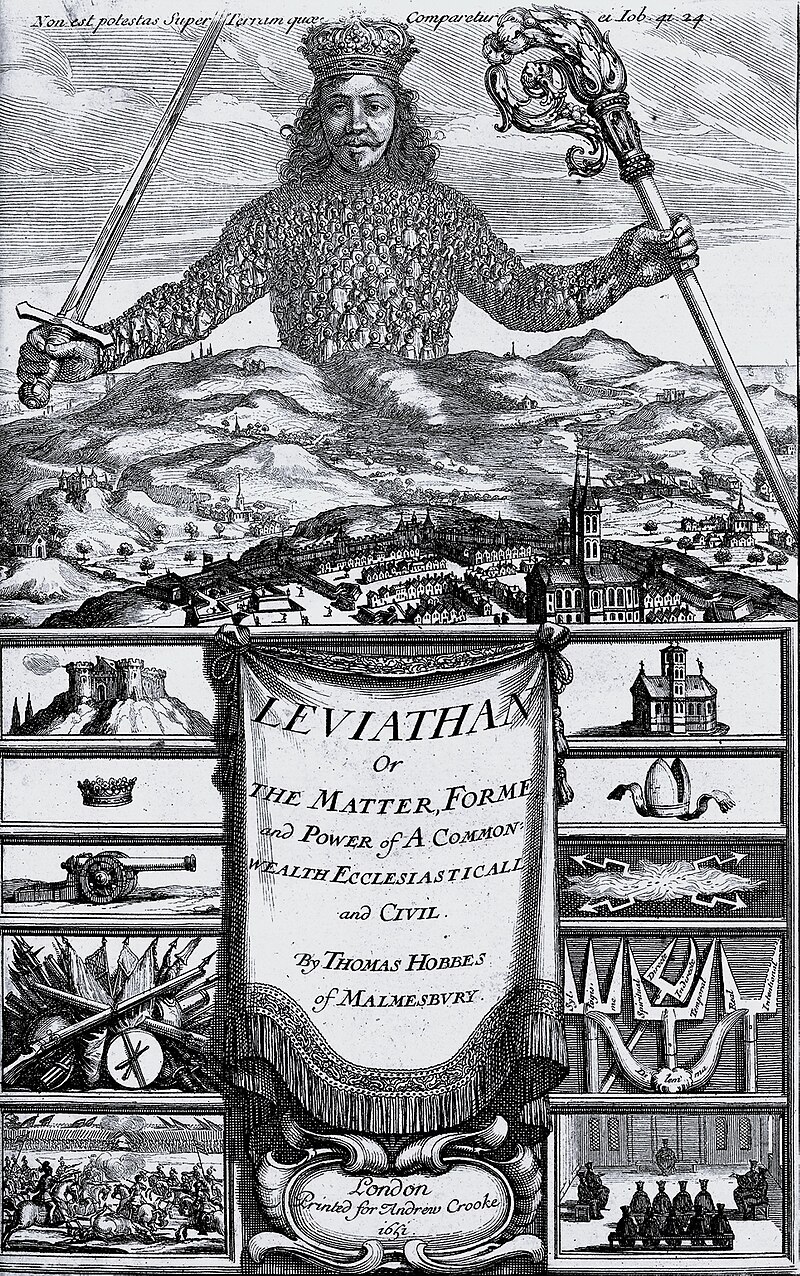
リヴァイアサン
Introduction to Political Theory of Hobbs' Leviathan
『リ
ヴァイアサン(Leviathan)』
は1651年の英国のトーマス・ホッブスの政治学書。「万人の万人対する闘争」を回
避して
社会契約論による民主的な社会をつくる根拠たる理論を構築した書物。ホッブスはベーコン、デカルト、スピノザなどと同時代の人であり、邦訳もあり名著であ
るにも関わらず専門の学生でもよく読まれない不幸な書籍。それもそのはずタイトルを含めて旧約聖書の喩えが随所に出てくるからであろう。逆に邦訳でもきち
んとホッブスがわかれば西洋の政治思想が面白いようにわかるために、いわばビデオゲームにおけるボス戦に相応しい本なのである。
| Leviathan or The
Matter, Forme and Power of a Commonwealth Ecclesiasticall and Civil,
commonly referred to as Leviathan, is a book written by Thomas Hobbes
(1588–1679) and published in 1651 (revised Latin edition
1668).[1][5][6] Its name derives from the biblical Leviathan. The work
concerns the structure of society and legitimate government, and is
regarded as one of the earliest and most influential examples of social
contract theory.[7] Written during the English Civil War (1642–1651),
it argues for a social contract and rule by an absolute sovereign.
Hobbes wrote that civil war and the brute situation of a state of
nature ("the war of all against all") could be avoided only by strong,
undivided government. |
『リヴァイアサン』(Leviathan or The
Matter, Forme and Power of a Commonwealth Ecclesiasticall and
Civil)は、トマス・ホッブズ(1588-1679)が執筆し、1651年に出版した著作(1668年ラテン語改訂版)である[1][5][6]。こ
の作品は社会の構造と合法的な政府に関するものであり、社会契約理論の最も初期で最も影響力のある例の1つとみなされている[7]。
イギリス内戦(1642-1651)の間に書かれ、社会契約と絶対主権者による統治を主張している。ホッブズは、内戦と自然状態の過酷な状況(「万人の万
人に対する戦争」)は、強力で分割不可能な政府によってのみ避けることができると書いた。 |
| Title The title of Hobbes's treatise alludes to the Leviathan mentioned in the Book of Job. In contrast to the simply informative titles usually given to works of early modern political philosophy, such as John Locke's Two Treatises of Government or Hobbes's own earlier work The Elements of Law, Hobbes selected a more poetic name for this more provocative treatise. Frontispiece After lengthy discussion with Thomas Hobbes, the Parisian Abraham Bosse created the etching for the book's famous frontispiece in the géometrique style which Bosse himself had refined. It is similar in organisation to the frontispiece of Hobbes' De Cive (1642), created by Jean Matheus. The frontispiece has two main elements, of which the upper part is by far the more striking. In it, a giant crowned figure is seen emerging from the landscape, clutching a sword and a crosier, beneath a quote from the Book of Job—"Non est potestas Super Terram quae Comparetur ei. Iob. 41 . 24" ("There is no power on earth to be compared to him. Job 41 . 24")—further linking the figure to the monster of the book. (Due to disagreements over the precise location of the chapters and verses when they were divided in the Late Middle Ages, the verse Hobbes quotes is usually given as Job 41:33 in modern Christian translations into English,[8] Job 41:25 in the Masoretic text, Septuagint, and the Luther Bible; it is Job 41:24 in the Vulgate.) The torso and arms of the figure are composed of over three hundred persons, in the style of Giuseppe Arcimboldo; all are facing away from the viewer, with just the giant's head having visible facial features. (A manuscript of Leviathan created for Charles II in 1651 has notable differences – a different main head but significantly the body is also composed of many faces, all looking outwards from the body and with a range of expressions.) The lower portion is a triptych, framed in a wooden border. The centre form contains the title on an ornate curtain. The two sides reflect the sword and crosier of the main figure – earthly power on the left and the powers of the church on the right. Each side element reflects the equivalent power – castle to church, crown to mitre, cannon to excommunication, weapons to logic, and the battlefield to the religious courts. The giant holds the symbols of both sides, reflecting the union of secular, and spiritual in the sovereign, but the construction of the torso also makes the figure the state. |
タイトル ホッブズの著作のタイトルは、『ヨブ記』に登場するリヴァイアサンを暗示している(→海龍リヴァイア サン)。ロックやホッブズの『法の要素』など、近世の政治哲学の著作につけられ た、単に情報を提供するタイトルとは対照的に、ホッブズはこの挑発的な論考に、より詩的な名前を選んだのである。 扉絵 ホッブズと長い間話し合った結果、パリのアブラハム・ボッセがこの本の有名な扉絵を、ボッセ自身が改良したジェオメトリック様式で制作しました。この作品 は、ジャン・マテウスが制作したホッブズの『デ・シーヴ』(1642年)の扉絵と構成が似ている。正面図には二つの主要な要素があり、そのうちの上部が圧 倒的に印象的である。 その中には、剣と十字架を手にした巨大な王冠をかぶった人物が風景の中から現れ、ヨブ記の引用文「Non est potestas Super Terram quae Comparetur ei」が描かれています。Iob. 41 . 24"(「地上に彼に比すべき力はない。 ヨブ記 41 . 24」) というヨブ記の引用文があり、この人物とヨブ記の怪物がさらに結びつけられています。(中世後期には、章と節の正確な位置関係に異論があったため、ホッブ ズが引用した節は通常、現代のキリスト教の英訳ではヨブ記41章33節、マソレト文、セプトゥアギンタ、ルター聖書では41章25節、ヴァルガテでは41 章24節としている)。胴体と腕はジュゼッペ・アルチンボルド風に300人以上の人物で構成され、全員が鑑賞者に背を向けており、巨人の頭だけが顔の特徴 が見えるようになっている。(1651年にチャールズ2世のために制作された『リヴァイアサン』の写本には、主な頭部が異なるものの、身体も多くの顔で構 成され、全員が身体から外を向き、さまざまな表情を見せるなど、顕著な違いがある)。 下部は、木製の縁取りで囲まれた3枚組の作品です。中央の形には、装飾的な幕の上にタイトルが描かれている。2つの側面は、主役の剣と十字架を反映してお り、左側は地上の権力、右側は教会の権力です。城は教会に、王冠はマイトレに、大砲は破門に、武器は論理に、戦場は宗教法廷に、それぞれのサイドの要素は 同等の権力を反映している。巨人は両側の象徴を持ち、君主における世俗と精神の結合を反映しているが、胴体の構造によって、その姿は国家にもなっているの である。 |
| Part I: Of Man Hobbes begins his treatise on politics with an account of human nature. He presents an image of man as matter in motion, attempting to show through example how everything about humanity can be explained materialistically, that is, without recourse to an incorporeal, immaterial soul or a faculty for understanding ideas that are external to the human mind. Life is but a motion of limbs. For what is the heart, but a spring; and the nerves, but so many strings; and the joints, but so many wheels, giving motion to the whole body, such as was intended by the Artificer?[9] Hobbes proceeds by defining terms clearly and unsentimentally. Good and evil are nothing more than terms used to denote an individual's appetites and desires, while these appetites and desires are nothing more than the tendency to move toward or away from an object. Hope is nothing more than an appetite for a thing combined with an opinion that it can be had. He suggests that the dominant political theology of the time, Scholasticism, thrives on confused definitions of everyday words, such as incorporeal substance, which for Hobbes is a contradiction in terms. Hobbes describes human psychology without any reference to the summum bonum, or greatest good, as previous thought had done. According to Hobbes, not only is the concept of a summum bonum superfluous, but given the variability of human desires, there could be no such thing. Consequently, any political community that sought to provide the greatest good to its members would find itself driven by competing conceptions of that good with no way to decide among them. The result would be civil war. However, Hobbes states that there is a summum malum, or greatest evil. This is the fear of violent death. A political community can be oriented around this fear. Since there is no summum bonum, the natural state of man is not to be found in a political community that pursues the greatest good. But to be outside of a political community is to be in an anarchic condition. Given human nature, the variability of human desires, and need for scarce resources to fulfill those desires, the state of nature, as Hobbes calls this anarchic condition, must be a war of all against all. Even when two men are not fighting, there is no guarantee that the other will not try to kill him for his property or just out of an aggrieved sense of honour, and so they must constantly be on guard against one another. It is even reasonable to preemptively attack one's neighbour. In such condition there is no place for industry, because the fruit thereof is uncertain, and consequently no culture of the earth, no navigation nor the use of commodities that may be imported by sea, no commodious building, no instruments of moving and removing such things as require much force, no knowledge of the face of the earth, no account of time, no arts, no letters, no society, and which is worst of all, continual fear and danger of violent death, and the life of man, solitary, poor, nasty, brutish, and short.[10] The desire to avoid the state of nature, as the place where the summum malum of violent death is most likely to occur, forms the polestar of political reasoning. It suggests a number of laws of nature, although Hobbes is quick to point out that they cannot properly speaking be called "laws", since there is no one to enforce them. The first thing that reason suggests is to seek peace, but that where peace cannot be had, to use all of the advantages of war.[11] Hobbes is explicit that in the state of nature nothing can be considered just or unjust, and every man must be considered to have a right to all things.[12] The second law of nature is that one ought to be willing to renounce one's right to all things where others are willing to do the same, to quit the state of nature, and to erect a commonwealth with the authority to command them in all things. Hobbes concludes Part One by articulating an additional seventeen laws of nature that make the performance of the first two possible and by explaining what it would mean for a sovereign to represent the people even when they disagree with the sovereign. |
第一部:人間について ホッブズは、政治に関する論考の冒頭で、人間の本性について述べている。彼は、運動する物質としての人間のイメージを提示し、人間のすべてが物質主義的に 説明できることを例証しようとした。つまり、無体で非物質的な魂や人間の心の外部にある考えを理解する能力に頼ることなく、である。 生命は手足の動きに過ぎない。心臓はバネに過ぎず、神経は多くの弦に過ぎず、関節は多くの車輪に過ぎず、造物師が意図したように全身に運動を与えているの である[9]。 ホッブズは用語を明確かつ無感覚に定義することで話を進める。善と悪は個人の食欲と欲望を表すために使われる用語に過ぎないが、これらの食欲と欲望はある 対象に向かったり遠ざかったりする傾向に他ならない。希望とは、あるものに対する食欲と、それが手に入るという意見とが結びついたものにほかならない。彼 は、当時支配的だった政治神学であるスコラ哲学が、ホッブズにとって矛盾する無体物などの日常的な言葉の定義を混乱させることによって繁栄していることを 示唆している。 ホッブズは、それまでの思想がそうであったように、sumum bonum(最大の善)には一切言及せずに、人間の心理を記述している。ホッブズによれば、sumum bonumという概念は不要であるだけでなく、人間の欲望の多様性を考えれば、そんなものは存在し得ない。その結果、政治的な共同体は、その構成員に最大 の善を提供しようとすると、その善の概念が競合し、その中で決定する方法がないことに気づくだろう。その結果、内戦になる。 しかし、ホッブズは、sumum malum、つまり最大の悪があると述べている。それは、暴力的な死に対する恐怖である。政治的共同体はこの恐怖を中心に方向づけられる。 sumum bonumがない以上、人間の自然な姿は、最大の善を追求する政治的共同体の中にあるのではない。しかし、政治的共同体の外にいることは、無政府状態にあ ることである。人間の本性、人間の欲望の多様性、その欲望を満たすための希少資源の必要性を考えると、ホッブズがこの無政府状態を呼ぶように、自然状態は 万人対万人の戦争でなければならない。二人の人間が争っていないときでも、相手が自分の財産のために、あるいはただ名誉を傷つけて殺そうとしてこないとい う保証はないので、お互いに常に警戒していなければならないのである。隣人を先制攻撃するのは合理的とさえ言える。 このような状態では、その果実が不確かであるため、産業の場がなく、その結果、地球の文化もなく、航海も、海によって輸入できる商品の使用もなく、日当た りの良い建物もなく、大きな力を必要とするものを移動したり除去する道具もなく、地球の表面に関する知識もなく、時間の計算もなく、芸術も、手紙も、社会 もなく、何よりも悪いのは、激しい死に対する継続した恐怖と危険で、人間の人生は、孤独で、貧しく、厄介で、野蛮で、短いと言える[10]。 暴力的な死というsumum malumが最も起こりやすい場所としての自然状態を避けたいという願望が、政治的推論の極意を形成しているのである。それは自然の法則の数々を示唆して いるが、ホッブズはそれを執行する者がいないため、適切に言えば「法」と呼ぶことはできないとすぐに指摘する。ホッブズは自然状態では何も正義とも不正義 とも見なされず、全ての人が全てのものに対して権利を持つと見なされなければならないと明言している[12]。自然の第二の法則は、他の人々が同じことを することを望むならば、全てのものに対する自分の権利を放棄することを望むべきであること、自然状態をやめ、全てのことにおいて彼らを命令する権限を持つ 連邦を建国することである。ホッブズは第1部の最後に、前2項の実行を可能にする17の自然法則を追加して明示し、主権者が国民と意見が異なる場合でも国 民を代表することがどういう意味を持つかを説明する。 |
| Part II: Of Commonwealth The purpose of a commonwealth is given at the start of Part II: THE final cause, end, or design of men (who naturally love liberty, and dominion over others) in the introduction of that restraint upon themselves, in which we see them live in Commonwealths, is the foresight of their own preservation, and of a more contented life thereby; that is to say, of getting themselves out from that miserable condition of war which is necessarily consequent, as hath been shown, to the natural passions of men when there is no visible power to keep them in awe, and tie them by fear of punishment to the performance of their covenants... The commonwealth is instituted when all agree in the following manner: I authorise and give up my right of governing myself to this man, or to this assembly of men, on this condition; that thou give up, thy right to him, and authorise all his actions in like manner. The sovereign has twelve principal rights:[13] 1. Because a successive covenant cannot override a prior one, the subjects cannot (lawfully) change the form of government. 2. Because the covenant forming the commonwealth results from subjects giving to the sovereign the right to act for them, the sovereign cannot possibly breach the covenant; and therefore the subjects can never argue to be freed from the covenant because of the actions of the sovereign. 3. The sovereign exists because the majority has consented to his rule; the minority have agreed to abide by this arrangement and must then assent to the sovereign's actions. 4. Every subject is author of the acts of the sovereign: hence the sovereign cannot injure any of his subjects and cannot be accused of injustice. 5. Following this, the sovereign cannot justly be put to death by the subjects. 6. The purpose of the commonwealth is peace, and the sovereign has the right to do whatever he thinks necessary for the preserving of peace and security and prevention of discord. Therefore, the sovereign may judge what opinions and doctrines are averse, who shall be allowed to speak to multitudes, and who shall examine the doctrines of all books before they are published. 7. To prescribe the rules of civil law and property. 8. To be judge in all cases. 9. To make war and peace as he sees fit and to command the army. 10. To choose counsellors, ministers, magistrates and officers. 11. To reward with riches and honour or to punish with corporal or pecuniary punishment or ignominy. 12. To establish laws about honour and a scale of worth. Hobbes explicitly rejects the idea of Separation of Powers. In item 6 Hobbes is explicitly in favour of censorship of the press and restrictions on the rights of free speech should they be considered desirable by the sovereign to promote order. |
第二部:コモンウェルスについて 連邦(コモンウェルス)の目的は、第II部の冒頭に述べられている。 人間(生来、自由と他者への支配を好む)が、連邦の中で生活するのを見るように、自らを抑制することを導入した最終的な原因、目的、意図は、自分自身の保 存と、それによってより満足した生活を送ることを予見することであった。つまり、目に見える力によって畏怖させ、罰の恐怖によって契約の履行を縛るものが なければ、これまで示されてきたように、人間の自然な衝動によって必然的に生じる悲惨な戦争の状態から抜け出すためである。 .. 連邦は、すべての人が次のように合意したときに設立される。私は、この条件下で、この人、またはこの人の集まりに対して、私の統治権を承認し、放棄する。 あなたは、彼にあなたの権利を放棄し、同様に彼のすべての行動を承認する。 君主は12の主要な権利を有する[13]。 1. 連続した契約は前の契約を覆すことはできないので、臣民は(合法的に)政府の形態を変更することはできない。 2. 連邦を形成する契約は、臣民が自分たちのために行動する権利を君主に与えることから生じるので、君主が契約に違反することはありえない。したがって、君主 の行動によって臣民が契約から解放されることを主張することはできない。 3. 君主が存在するのは、多数派が君主の支配に同意しているからであり、少数派はこの取り決めに従うことに同意しているので、君主の行為に同意する必要があ る。 4. すべての臣民は君主の行為の著者である。したがって、君主は臣民を傷つけることはできず、不公正を非難されることはない。 5. これに従って、君主は臣民によって正当に死刑にされることはない。 6. 共同体の目的は平和であり、主権者は平和と安全の維持と不和の防止に必要だと思うことは何でもする権利がある。従って、君主は、どのような意見や教義が嫌 われるか、誰に大勢で話すことを許すか、すべての書物の教義を出版前に検査するかを判断することができる。 7. 民法及び財産の規則を定めること。 8. すべての事件において裁判を行うこと。 9. 適当に戦争と講和を行い、軍隊を指揮すること。 10. 助言者、大臣、行政官および士官を選定すること。 11. 富と名誉をもって報い、または体罰もしくは金銭的な罰、または不名誉をもって罰すること。 12. 名誉や価値の尺度に関する法律を制定すること。 ホッブズは権力分立の考えを明確に否定している。第6項では、ホッブズは報道機関の検閲や言論の自由を制限することは、主権者が秩序を促進するために望ま しいと考える場合には、明確に賛成しているのである。 |
| Types There are three (monarchy, aristocracy and democracy): The difference of Commonwealths consisted in the difference of the sovereign, or the person representative of all and every one of the multitude. And because the sovereignty is either in one man, or in an assembly of more than one; and into that assembly either every man hath right to enter, or not every one, but certain men distinguished from the rest; it is manifest there can be but three kinds of Commonwealth. For the representative must needs be one man, or more; and if more, then it is the assembly of all, or but of a part. When the representative is one man, then is the Commonwealth a monarchy; when an assembly of all that will come together, then it is a democracy, or popular Commonwealth; when an assembly of a part only, then it is called an aristocracy. And only three; since unlike Aristotle he does not sub-divide them into "good" and "deviant": Other kind of Commonwealth there can be none: for either one, or more, or all, must have the sovereign power (which I have shown to be indivisible) entire. There be other names of government in the histories and books of policy; as tyranny and oligarchy; but they are not the names of other forms of government, but of the same forms misliked. For they that are discontented under monarchy call it tyranny; and they that are displeased with aristocracy call it oligarchy: so also, they which find themselves grieved under a democracy call it anarchy, which signifies want of government; and yet I think no man believes that want of government is any new kind of government: nor by the same reason ought they to believe that the government is of one kind when they like it, and another when they mislike it or are oppressed by the governors. And monarchy is the best, on practical grounds: The difference between these three kinds of Commonwealth consisteth not in the difference of power, but in the difference of convenience or aptitude to produce the peace and security of the people; for which end they were instituted. And to compare monarchy with the other two, we may observe: first, that whosoever beareth the person of the people, or is one of that assembly that bears it, beareth also his own natural person. And though he be careful in his politic person to procure the common interest, yet he is more, or no less, careful to procure the private good of himself, his family, kindred and friends; and for the most part, if the public interest chance to cross the private, he prefers the private: for the passions of men are commonly more potent than their reason. From whence it follows that where the public and private interest are most closely united, there is the public most advanced. Now in monarchy the private interest is the same with the public. The riches, power, and honour of a monarch arise only from the riches, strength, and reputation of his subjects. For no king can be rich, nor glorious, nor secure, whose subjects are either poor, or contemptible, or too weak through want, or dissension, to maintain a war against their enemies; whereas in a democracy, or aristocracy, the public prosperity confers not so much to the private fortune of one that is corrupt, or ambitious, as doth many times a perfidious advice, a treacherous action, or a civil war. Succession The right of succession always lies with the sovereign. Democracies and aristocracies have easy succession; monarchy is harder: The greatest difficulty about the right of succession is in monarchy: and the difficulty ariseth from this, that at first sight, it is not manifest who is to appoint the successor; nor many times who it is whom he hath appointed. For in both these cases, there is required a more exact ratiocination than every man is accustomed to use. Because in general people haven't thought carefully. However, the succession is definitely in the gift of the monarch: As to the question who shall appoint the successor of a monarch that hath the sovereign authority... we are to consider that either he that is in possession has right to dispose of the succession, or else that right is again in the dissolved multitude. ... Therefore it is manifest that by the institution of monarchy, the disposing of the successor is always left to the judgement and will of the present possessor. But, it is not always obvious who the monarch has appointed: And for the question which may arise sometimes, who it is that the monarch in possession hath designed to the succession and inheritance of his power However, the answer is: it is determined by his express words and testament; or by other tacit signs sufficient. And this means: By express words, or testament, when it is declared by him in his lifetime, viva voce, or by writing; as the first emperors of Rome declared who should be their heirs. Note that (perhaps rather radically) this does not have to be any blood relative: For the word heir does not of itself imply the children or nearest kindred of a man; but whomsoever a man shall any way declare he would have to succeed him in his estate. If therefore a monarch declare expressly that such a man shall be his heir, either by word or writing, then is that man immediately after the decease of his predecessor invested in the right of being monarch. However, practically this means: But where testament and express words are wanting, other natural signs of the will are to be followed: whereof the one is custom. And therefore where the custom is that the next of kindred absolutely succeedeth, there also the next of kindred hath right to the succession; for that, if the will of him that was in possession had been otherwise, he might easily have declared the same in his lifetime... Religion In Leviathan, Hobbes explicitly states that the sovereign has authority to assert power over matters of faith and doctrine and that if he does not do so, he invites discord. Hobbes presents his own religious theory but states that he would defer to the will of the sovereign (when that was re-established: again, Leviathan was written during the Civil War) as to whether his theory was acceptable. Hobbes' materialistic presuppositions also led him to hold a view which was considered highly controversial at the time. Hobbes rejected the idea of incorporeal substances and subsequently argued that even God himself was a corporeal substance. Although Hobbes never explicitly stated he was an atheist, many allude to the possibility that he was. Taxation Hobbes also touched upon the sovereign's ability to tax in Leviathan, although he is not as widely cited for his economic theories as he is for his political theories.[14] Hobbes believed that equal justice includes the equal imposition of taxes. The equality of taxes doesn't depend on equality of wealth, but on the equality of the debt that every man owes to the commonwealth for his defence and the maintenance of the rule of law.[15] Hobbes also championed public support for those unable to maintain themselves by labour, which would presumably be funded by taxation. He advocated public encouragement of works of Navigation etc. to usefully employ the poor who could work. |
3政治類型 3つある(君主制、貴族制、民主制)。 連邦の違いは、主権者の違い、すなわちすべての群衆を代表する者の違いにある。そして主権は、一人の人間にあるか、複数の人間の集まりにあるかであり、そ の集まりには、すべての人間が入る権利を持つか、すべての人間ではなく、他の者から区別された特定の人間が入るかであるから、3種類の連邦しかあり得ない ことは明白である。なぜなら、代表者は一人であるか、それ以上でなければならず、それ以上であれば、それはすべての人の集まりであるか、一部の人の集まり であるからである。代表者が一人の場合、連邦は君主制であり、集まるすべての人の集まりである場合、それは民主主義、または人民連邦であり、一部だけの集 まりである場合、それは貴族制と呼ばれる。 そして、3つだけである。アリストテレスと違って、彼はそれらを「善」と「逸脱」に分けていないのだから。 他の種類の連邦は存在し得ない。なぜなら、1つ、または複数、またはすべてが、主権(私が不可分であると示したもの)を完全に持たなければならないからで ある。歴史や政策書の中には、専制政治や寡頭政治といった他の政府の名称もあるが、それは他の形態の政府の名称ではなく、同じ形態が嫌われたものである。 君主制に不満を持つ人々はそれを専制政治と呼び、貴族制に不満を持つ人々は寡頭政治と呼ぶ。同様に、民主主義の下で悲しむ人々はそれを無政府と呼び、それ は政府の欠如を意味する。しかし私は、政府の欠如が新しい種類の政府であるとは誰も思わない。同じ理由で、政府は彼らが好むときには一つの種類で、彼らが それを嫌ったり支配者に圧迫されたときには別の種類と信じるべきだろう。 そして君主制は、実際的な理由から、最も優れている。 これら3種類の連邦の違いは、権力の違いではなく、人民の平和と安全をもたらすための利便性や適性の違いである。この目的のために、これらの連邦は制定さ れたのである。第一に、人民の人格を持つ者、またはそれを持つ議会の一員である者は、自分自身の自然人も持つということである。そして、彼はその政治的人 格において、共通の利益を得るために注意深いが、自分自身、家族、親族、友人の私的な利益を得るために、より注意深く、あるいはより注意深くなる。そして ほとんどの場合、もし公共の利益が私的に交差する機会があれば、彼は私的を好む。それゆえ、公の利益と私的な利益が最も密接に結びついたところに、公が最 も進歩することになる。さて、君主制においては、私的利益は公的利益と同じである。君主の富、権力、名誉は、その臣下の富、力、名声からしか生じない。一 方、民主主義や貴族主義では、公共の繁栄は、腐敗した者や野心家の私的財産にはあまり寄与しないが、不実な忠告や裏切り行為、内戦は何度も発生する。 承継(しょうけい 継承権は常に君主にある。民主主義国家や貴族国家では継承は容易であるが、君主制では困難である。 継承権に関する最大の困難は君主制にある。その困難は、一見したところ、誰が後継者を指名するのかが明らかではなく、また指名したのが誰であるかも何度も わからないことから生じている。なぜなら、これらの両方の場合において、すべての人が使い慣れたものよりも、より正確な批評が必要とされるからである。 なぜなら、一般に人々は注意深く考えてこなかったからだ。しかし、継承は間違いなく君主の賜物である。 主権を持つ君主の後継者を誰が任命するかという問題に関しては、...我々は、所有している者が後継者を処分する権利を持つか、さもなければその権利は再 び解散した多数派にあると考えなければならない。... したがって、君主制の制度によって、後継者の処分は常に現在の所有者の判断と意志に委ねられていることが明らかである。 しかし、君主が誰を任命したかは、常に明らかではない。 また、時折生じる疑問として、所有する君主がその権力の継承と相続を意図したのは誰であるかということがある。 しかし、その答えは それは彼の明白な言葉や遺言によって決定され、または他の十分な暗黙の兆候によって決定されます。 ということである。 明示的な言葉や遺言とは、彼が生前に口頭で、あるいは書面で宣言したもので、ローマの初代皇帝が誰が相続人となるべきかを宣言したのと同じことです。 なお、この場合、血縁者である必要はない。 相続人という言葉はそれ自体、人の子供や近親者を意味するものではなく、人が何らかの方法で自分の財産を継がせると宣言した者であれば、誰でもよいのであ る。したがって、ある君主が言葉や文書によって、そのような人物を相続人とすることを明確に宣言した場合、その人物は前任者の死後直ちに君主となる権利を 有することになる。 しかし、実質的にはこのような意味である。 しかし、遺言や明確な言葉がない場合は、他の自然な意思表示に従わなければならない:その1つは慣習である。したがって、近親者が絶対に継承するという慣 習がある場合、近親者もまた継承の権利を有する。なぜなら、もし所有者であった者の意志がそうでなければ、彼は容易に生前に同じことを宣言したであろうか ら...。 宗教 ホッブズは『リヴァイアサン』の中で、君主には信仰や教義の問題に対して権力を主張する権限があり、もしそうしないなら不和を招くと明言している。ホッブ ズは自らの宗教理論を提示するが、その理論が受け入れられるかどうかは君主の意思に従うと述べている(君主が再確立された時:やはり『リヴァイアサン』は 内戦中に執筆された)。また、ホッブズの唯物論的な前提は、当時非常に議論を呼ぶと考えられていた見解を持つに至った。ホッブズは無体物という考え方を否 定し、その後、神自身さえも有体物であると主張した。ホッブズは無神論者であると明言はしていないが、その可能性を示唆するものは多い。 課税 ホッブズは『リヴァイアサン』の中で君主の課税能力についても触れているが、彼は政治理論で引用されるほど経済理論で引用されることはない[14]。ホッ ブズは平等な正義には平等に課税されることが含まれると考えていた。税の平等は富の平等に依存するのではなく、すべての人が自分の防衛と法の支配の維持の ために連邦に負っている負債の平等に依存する[15]。 ホッブズはまた労働によって自活できない人々に対する公的支援を支持し、それはおそらく税によって賄われることになるだろう。彼は働くことができる貧しい 人々を有用に雇うために、航海の仕事などを公に奨励することを提唱した。 |
| Part III: Of a Christian
Commonwealth In Part III Hobbes seeks to investigate the nature of a Christian commonwealth. This immediately raises the question of which scriptures we should trust, and why. If any person may claim supernatural revelation superior to the civil law, then there would be chaos, and Hobbes' fervent desire is to avoid this. Hobbes thus begins by establishing that we cannot infallibly know another's personal word to be divine revelation: When God speaketh to man, it must be either immediately or by mediation of another man, to whom He had formerly spoken by Himself immediately. How God speaketh to a man immediately may be understood by those well enough to whom He hath so spoken; but how the same should be understood by another is hard, if not impossible, to know. For if a man pretend to me that God hath spoken to him supernaturally, and immediately, and I make doubt of it, I cannot easily perceive what argument he can produce to oblige me to believe it. This is good, but if applied too fervently would lead to all the Bible being rejected. So, Hobbes says, we need a test: and the true test is established by examining the books of scripture, and is: So that it is manifest that the teaching of the religion which God hath established, and the showing of a present miracle, joined together, were the only marks whereby the Scripture would have a true prophet, that is to say, immediate revelation, to be acknowledged; of them being singly sufficient to oblige any other man to regard what he saith. Seeing therefore miracles now cease, we have no sign left whereby to acknowledge the pretended revelations or inspirations of any private man; nor obligation to give ear to any doctrine, farther than it is conformable to the Holy Scriptures, which since the time of our Saviour supply the place and sufficiently recompense the want of all other prophecy "Seeing therefore miracles now cease" means that only the books of the Bible can be trusted. Hobbes then discusses the various books which are accepted by various sects, and the "question much disputed between the diverse sects of Christian religion, from whence the Scriptures derive their authority". To Hobbes, "it is manifest that none can know they are God's word (though all true Christians believe it) but those to whom God Himself hath revealed it supernaturally". And therefore "The question truly stated is: by what authority they are made law?" Unsurprisingly, Hobbes concludes that ultimately there is no way to determine this other than the civil power: He therefore to whom God hath not supernaturally revealed that they are His, nor that those that published them were sent by Him, is not obliged to obey them by any authority but his whose commands have already the force of laws; that is to say, by any other authority than that of the Commonwealth, residing in the sovereign, who only has the legislative power. He discusses the Ten Commandments, and asks "who it was that gave to these written tables the obligatory force of laws. There is no doubt but they were made laws by God Himself: but because a law obliges not, nor is law to any but to them that acknowledge it to be the act of the sovereign, how could the people of Israel, that were forbidden to approach the mountain to hear what God said to Moses, be obliged to obedience to all those laws which Moses propounded to them?" and concludes, as before, that "making of the Scripture law, belonged to the civil sovereign." Finally: "We are to consider now what office in the Church those persons have who, being civil sovereigns, have embraced also the Christian faith?" to which the answer is: "Christian kings are still the supreme pastors of their people, and have power to ordain what pastors they please, to teach the Church, that is, to teach the people committed to their charge." There is an enormous amount of biblical scholarship in this third part. However, once Hobbes' initial argument is accepted (that no-one can know for sure anyone else's divine revelation) his conclusion (the religious power is subordinate to the civil) follows from his logic. The very extensive discussions of the chapter were probably necessary for its time. The need (as Hobbes saw it) for the civil sovereign to be supreme arose partly from the many sects that arose around the civil war, and to quash the Pope of Rome's challenge, to which Hobbes devotes an extensive section. |
第III部:キリスト教的コモンウェルス(連邦)について 第III部では、ホッブズはキリスト教的連邦の本質を探ろうとする。このことは直ちに、どの聖典を、なぜ信頼すべきかという問題を提起している。もし、超 自然的な啓示が民法よりも優れていると主張する者がいれば、それはカオスとなり、ホッブズの切なる願いはそれを回避することである。このように、ホッブズ はまず、他人の個人的な言葉を神の啓示であると無謬的に知ることはできないことを立証する。 神が人に語るとき、それは即座に、あるいは以前神が即座にご自身で語られた別の人の仲介によってでなければならない。しかし、同じことを他の人がどのよう に理解するかは、不可能ではないにせよ、難しいことである。ある人が、神が超自然的に、しかも即座に自分に語られたと私に偽ったとして、私がそれを疑った としても、彼がどのような論拠を示して私にそれを信じさせることができるのか、私には容易に理解できないからである。 これは良いことだが、あまりに熱心に適用すると、すべての聖書が否定されることになる。だから、ホッブスは、私たちにはテストが必要であり、真のテスト は、聖書の書物を調べることによって確立される、と言っているのである。 つまり、神が確立した宗教を教えることと、現在の奇跡を示すことが、一緒になって、聖書が真の預言者、つまり即時の啓示を認める唯一のしるしであることは 明らかであり、これらは単独で、他の人に彼の言うことを考慮するよう義務づけるのに十分なものである。 したがって、奇跡がなくなった今、私たちには、私人の見せかけの啓示や霊感を認めるためのしるしが残っていない。また、聖書に適合しない限り、いかなる教 義にも耳を傾ける義務もない。 「したがって、奇跡はもはや消滅したのだ」ということは、聖書の書物だけが信頼できることを意味する。ホッブズは次に、様々な宗派に受け入れられている様 々な書物について、また「キリスト教の様々な宗派の間で大いに議論されている、聖書がどこからその権威を得ているかという問題」について論じている。ホッ ブズは、「(真のキリスト教徒はみなそれを信じているが)神自身が超自然的にそれを明らかにした者以外は、それらが神の言葉であることを知りえないことは 明白である」とした。したがって、「真に問われるのは、どのような権威によって法律とされるのか」ということである。 当然のことながら、ホッブズは最終的には市民権以外にこれを決定する方法はないと結論付けている。 従って、神が、それらが神のものであることを超自然的に明らかにせず、それらを公表した者が神によって送られたものでもない者は、その命令がすでに法律の 効力を持つ者以外の権威によって、つまり立法権のみを持つ君主に存在する連邦の権威以外によって、従う義務はないのである。 彼は十戒について論じ、「これらの書かれた表に法律の義務的効力を与えたのは誰であるか」と問う。しかし、法律は、主権者の行為であると認める者以外には 義務付けず、また法律でもないから、神がモーセに言ったことを聞くために山に近づくことを禁じられたイスラエルの民が、モーセが彼らに提案したすべての法 律に従うことを義務付けられるわけがない」そして前と同様に、「聖書の法律を作ることは、市民主権者に属する」と結論付けている。 最後に "君主でありながらキリスト教を信仰する者が教会でどのような地位を占めるかを考察する" その答えはこうだ "キリスト教の王は依然としてその民の最高の牧者であり、教会を教えるために、つまりその任にある民を教えるために、好きな牧者を任命する権限を持ってい る"。 この第三部には、膨大な量の聖書学がある。しかし、ホッブスの最初の主張(誰も他の人の神の啓示を確実に知ることはできない)が受け入れられると、彼の結 論(宗教的権力は民に従属する)は彼の論理から導かれます。この章の非常に広範な議論は、おそらく当時としては必要なものだったのだろう。ホッブズが考え るように、市民主権が最高である必要性は、内戦の周囲で生じた多くの宗派と、ホッブズが広範囲な章を割いているローマ教皇の挑戦を阻止するために生じたも のであった。 |
| Part IV: Of the Kingdom of
Darkness Hobbes named Part IV of his book "Kingdom of Darkness". By this Hobbes does not mean Hell (he did not believe in Hell or Purgatory),[16] but the darkness of ignorance as opposed to the light of true knowledge. Hobbes' interpretation is largely unorthodox and so sees much darkness in what he sees as the misinterpretation of Scripture. This considered, the kingdom of darkness... is nothing else but a confederacy of deceivers that, to obtain dominion over men in this present world, endeavour, by dark and erroneous doctrines, to extinguish in them the light...[17] Hobbes enumerates four causes of this darkness. The first is by extinguishing the light of scripture through misinterpretation. Hobbes sees the main abuse as teaching that the kingdom of God can be found in the church, thus undermining the authority of the civil sovereign. Another general abuse of scripture, in his view, is the turning of consecration into conjuration, or silly ritual. The second cause is the demonology of the heathen poets: in Hobbes's opinion, demons are nothing more than constructs of the brain. Hobbes then goes on to criticize what he sees as many of the practices of Catholicism: "Now for the worship of saints, and images, and relics, and other things at this day practiced in the Church of Rome, I say they are not allowed by the word of God". The third is by mixing with the Scripture diverse relics of the religion, and much of the vain and erroneous philosophy of the Greeks, especially of Aristotle. Hobbes has little time for the various disputing sects of philosophers and objects to what people have taken "From Aristotle's civil philosophy, they have learned to call all manner of Commonwealths but the popular (such as was at that time the state of Athens), tyranny". At the end of this comes an interesting section (darkness is suppressing true knowledge as well as introducing falsehoods), which would appear to bear on the discoveries of Galileo Galilei. "Our own navigations make manifest, and all men learned in human sciences now acknowledge, there are antipodes" (i.e., the Earth is round) "...Nevertheless, men... have been punished for it by authority ecclesiastical. But what reason is there for it? Is it because such opinions are contrary to true religion? That cannot be, if they be true." However, Hobbes is quite happy for the truth to be suppressed if necessary: if "they tend to disorder in government, as countenancing rebellion or sedition? Then let them be silenced, and the teachers punished" – but only by the civil authority. The fourth is by mingling with both these, false or uncertain traditions, and feigned or uncertain history. Hobbes finishes by inquiring who benefits from the errors he diagnoses: Cicero maketh honourable mention of one of the Cassii, a severe judge amongst the Romans, for a custom he had in criminal causes, when the testimony of the witnesses was not sufficient, to ask the accusers, cui bono; that is to say, what profit, honour, or other contentment the accused obtained or expected by the fact. For amongst presumptions, there is none that so evidently declareth the author as doth the benefit of the action. Hobbes concludes that the beneficiaries are the churches and churchmen. |
第四部 闇の王国について ホッブズはその著書の第四部を「闇の王国」と名付けた。これによってホッブズは地獄を意味するのではなく(彼は地獄や煉獄を信じていなかった)[16]、 真の知識の光に対抗する無知の闇を意味するのである。ホッブズの解釈は大きく非正統的であるため、彼が聖書の誤った解釈とみなすものに多くの闇を見ること になる。 このように考えると、闇の王国とは...現世で人間を支配するために、暗くて誤った教義によって、人間の中の光を消そうとする欺瞞者の連合体に他ならな い...[17]。 ホッブズはこの暗闇の原因を四つ挙げている。 第一は、誤った解釈によって聖典の光を消してしまうことである。ホッブズは主な乱用として、神の国は教会にあると教え、その結果、市民的君主の権威を損な わせていると見ている。また、聖書の濫用として、聖別を呪術に変えたり、愚かな儀式に変えたりすることを挙げている。 第二の原因は、異教徒の詩人たちの悪魔論である。ホッブズの考えでは、悪魔は脳の構築物に過ぎないのである。そして、ホッブズはカトリックの慣習の多くを 批判している。「聖人の崇拝、像の崇拝、聖遺物の崇拝、その他今日ローマ教会で行われていることについては、神の言葉によって許されることではないと言 う」。 第三は、聖書と宗教のさまざまな遺物や、ギリシャ人、特にアリストテレスの虚しく誤った哲学の多くを混ぜ合わせることである。ホッブズは哲学者のさまざま な論争にほとんど時間を割かず、人々が「アリストテレスの市民哲学から、民衆(当時はアテネのような)を除くあらゆる連邦を専制と呼ぶことを学んだ」こと に異議を唱えているのです。この最後に、ガリレオ・ガリレイの発見と関連すると思われる興味深い部分(闇は偽りをもたらすだけでなく、真の知識を抑圧して いる)がある。「私たち自身の航海が明らかにし、人文科学を学んだすべての人が認めるように、対蹠点がある」(すなわち、地球は丸い)「...にもかかわ らず、人は...教会の権威によってそのために罰せられました。しかし、その理由は何だろう?そのような意見は真の宗教に反するからだろうか?もしそれが 真実なら、そんなことはありえない」。しかし、ホッブズは、必要であれば、真実が抑圧されることに全く満足している。「それらが、反乱や扇動を容認して、 政府を混乱させる傾向があるとすれば?もし「反乱や扇動を容認するような政府の混乱を招くようなものであれば、それらを黙らせ、教師たちを罰するべきだ」 -ただし、文権によってのみである。 四つ目は、これら二つと、偽りの、あるいは不確かな伝統と、見せかけの、あるいは不確かな歴史とが混ざり合うことである。 ホッブズは最後に、自分が診断した誤りから利益を得るのは誰なのか、と問う。 キケロは、ローマ人の厳しい裁判官であるカッシーの一人について言及し、刑事事件で証人の証言が十分でないとき、告発者に「クイ・ボノ」、つまり、告発者 がその事実によってどんな利益、名誉、その他の満足を得たか、あるいは期待したかを尋ねる習慣があったことを高く評価している。なぜなら、推定の中で、行 為の利益ほど明らかに作成者を宣言するものはないからである。 ホッブズは、受益者は教会と教会関係者であると結論付けている。 |
| Behemoth by Thomas Hobbes Classical republicanism John Locke Scientia potentia est Hobbes's moral and political philosophy |
トーマス・ホッブズ著『ビヒモス』 古典的共和主義 ジョン・ロック 科学は力である ホッブズの道徳・政治哲学 |
| https://en.wikipedia.org/wiki/Leviathan_(Hobbes_book) |
https://www.deepl.com/ja/translator |
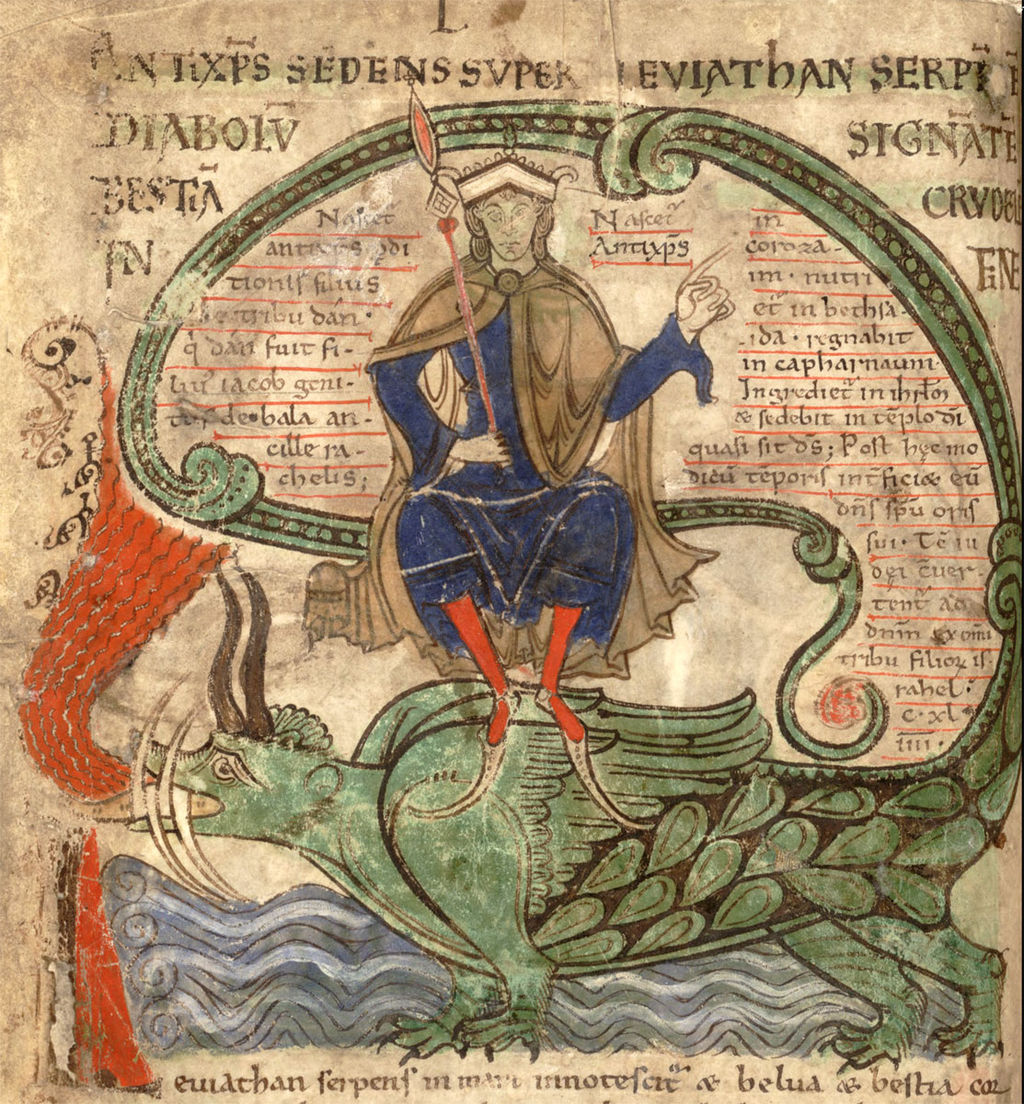 Antichrist on
Leviathan, Liber floridus, 1120
Antichrist on
Leviathan, Liber floridus, 1120
★Behemoth (Hobbes book)
| Behemoth, full title Behemoth:
the history of the causes of the civil wars of England, and of the
counsels and artifices by which they were carried on from the year 1640
to the year 1660, also known as The Long Parliament, is a
book written by Thomas Hobbes discussing the English Civil War.
Published posthumously in 1681, it was written in 1668, but remained
unpublished at the request of Charles II of England. |
『ビヒモス』は、正式名称を『ビヒモス:イングランド内戦の原因史、及
び1640年から1660年にかけて内戦が継続された策略と陰謀』といい、別名『長期議会』とも呼ばれる。トマス・ホッブズがイングランド内戦について論
じた著作である。1681年に死後出版されたが、1668年に執筆されたものの、イングランド王チャールズ2世の要請により未発表のままだった。 |
| Background Behemoth was written in 1668 as a follow-up to a previous and scandalous political work, Leviathan (1651). Leviathan is a representation of an ideal political world, and Behemoth has been considered to be a contrasting treatise on what happens when the very worst abuses of government come to pass.[1] Hobbes applied his understanding of the science of human nature to explain why the English Civil War came to pass. He was able to do this because he "did not make an impassable gulf between his rational understanding on the one hand and the particular events which he witnessed, remembered, or heard about on the other".[2] The book is written in the form of a dialogue between two men. The first speaker, called only "A", is an eyewitness and possible insider to the events of the English Civil War. The second speaker, referred to as "B", is a student aiming to understand the breakdown in the government of England at that time. Hobbes was refused permission by King Charles II to publish Behemoth. While the king recognised the correctness of the account of events and issues, he was concerned that the book would not be well received.[3] Charles withheld his permission to publish, in the hope that Hobbes would avoid further scandal, and perhaps see his reputation as a thinker restored. The manuscript for Behemoth was pirated and printed in unauthorised editions in Europe during the 1670s and in a letter to his friend John Aubrey, Hobbes stated his disappointment with this turn of events.[4] An official edition was released, three years after Hobbes' death in 1679, by his literary agent William Crooke. According to Aloysius Martinich, "after its initial success the book was relatively unread and unstudied until there was a resurgence of interest in it in the last quarter of the twentieth century".[5] Behemoth is not entirely factual, accurate or literal in retelling of the events of the English Civil War but still has value for students of the history of thought or revolution. As Royce MacGillivray puts it: "It is noteworthy, however, for the brilliance of the interpretation, the excellence of the prose, the revelation of what it was possible for a profoundly rationalist thinker to conclude about the religious issues of the war, and the interest of seeing this daring and powerful thinker, more fully than he had done elsewhere, apply his philosophy to the state of the catastrophe of the war."[6] Hobbes instead is drawing on his memories of the events and on two other possible sources, both written by James Heath around 1663.[7] These are A Brief Chronicle of all the Chief Actions and the expanded A Brief Chronicle of the Late Intestine Warr. It is possible they were simply used as prompts for Hobbes, already 80 years old when he wrote Behemoth. According to MacGillivray very little material from these sources found its way directly into the text. The summation below is just that, a summation, and is only the most basic part of each section. No effort is made to correct any inconsistencies introduced into the discussion between the master and the student so that the information may be presented as it was written by Thomas Hobbes. |
背景 『ビヒモス』は1668年に書かれた。これは以前出版され物議を醸した政治論著『リヴァイアサン』(1651年)の続編である。『リヴァイアサン』は理想 的な政治世界の構想を示すもので、『ビヒモス』は政府による最悪の権力乱用が現実化した場合に何が起こるかを論じた対照的な論文と見なされてきた。[1] ホッブズは人間本性に関する科学的理解を応用し、イングランド内戦が起きた理由を説明した。彼がこれを成し得たのは、「自らの理性的な理解と、目撃・記 憶・伝聞した具体的事件との間に越えられない隔たりを設けていなかった」からである。[2] 本書は二人の男による対話形式で書かれている。最初の語り手「A」はイングランド内戦の目撃者であり、内部事情を知る者かもしれない。二番目の語り手 「B」は当時のイングランド政府崩壊を理解しようとする学生である。 ホッブズは『ビヒモス』の出版をチャールズ2世から許可されなかった。王は事件や問題の記述の正確さを認めつつも、本書が世に受け入れられないことを懸念 したのだ[3]。チャールズは出版許可を与えず、ホッブズがさらなるスキャンダルを避け、思想家としての評判を回復することを望んだのである。 1670年代、ビヒモスの原稿は海賊版としてヨーロッパで無断出版された。ホッブズは友人ジョン・オーブリーへの手紙の中で、この事態に失望を表明してい る。ホッブズが1679年に死去してから3年後、彼の文学エージェントであるウィリアム・クルックによって公式版が刊行された。アロイシウス・マーティ ニックによれば、「この本は、最初の成功の後、20世紀の最後の四半期に再び関心が高まるまで、比較的読まれず、研究もされなかった」という。[5] 『ビヒモス』は、イングランド内戦の出来事を完全に事実に基づき、正確かつ文字通り再現しているわけではないが、思想や革命の歴史を研究する学生にとっては依然として価値がある。ロイス・マックギリブレイが言うように: 「しかし、その解釈の素晴らしさ、散文の卓越性、戦争の宗教的問題について、深く合理主義的な思想家がどのような結論に達することができたかを明らかにし ている点、そして、この大胆で力強い思想家が、他の場所よりもさらに完全に、彼の哲学を戦争という大惨事の状況に適用している様子を見ることができるとい う点で、注目に値する」[6] ホッブズはむしろ、自身の記憶と、1663年頃にジェームズ・ヒースが執筆した二つの資料を参考にしている[7]。これらは『諸主要行動の簡略年代記』 と、その拡張版『内戦簡略年代記』である。ホッブズが『ビヒモス』を執筆した時点で既に80歳であったため、これらの資料は単に彼の着想のきっかけとして 用いられた可能性が高い。マクギリヴレイによれば、これらの資料から直接本文に採用された部分はごくわずかである。 以下の要約はあくまで要約であり、各章の最も基本的な部分のみを扱う。師弟間の議論に生じた矛盾を修正する試みは一切行わず、トマス・ホッブズが記した情報をそのまま提示する。 |
| Preface: The Bookseller to the reader The 1682 edition of the book begins with a note from William Crooke in answer to why he was publishing this edition. Hobbes had made Crooke the caretaker of his literary estate in July 1679.[4] Crooke knew of the editions of Behemoth published in Europe and he reasoned that these editions did not show the work in the best possible light due to the many textual errors and omissions. It would therefore be best to publish an authorized edition to correct these errors and show the work as Hobbes wanted it to be read. Crooke had as his source a manuscript copy of the text given to him by Thomas Hobbes around 1670.[8] |
序文:書商から読者へ 本書の1682年版は、ウィリアム・クルークがなぜこの版を出版するのかを説明する注記で始まる。ホッブズは1679年7月、クルークを自身の著作遺産の 管理人に任命していた。[4] クルークはヨーロッパで刊行された『ビヒモス』の諸版を知っており、それらの版には多くの誤植や欠落があるため、作品を最良の形で示せていないと考えた。 したがって、これらの誤りを正し、ホッブズが意図した通りに読まれるべき姿を示すためには、正式な認可版を刊行するのが最善だと判断したのである。クルー クが依拠したのは、1670年頃にトマス・ホッブズから渡された原稿写本であった。[8] |
| Part One: Behemoth, or the Epitome of the Civil Wars of England This is the longest section of the book and roughly covers the period 1640–1642. The dialogue opens with the student asking the master how it was that a monarch as strong as Charles I of England should ever have had to face a rebellion. The master relates that a growing opposition to the crown was promoted by seven factions, each of them for their own ends and not in concert, who stoked the fires of rebellion. These factions were: Papists, Presbyterians, Independents including other sects of religious faith, those who were corrupted by their reading of the Latin and Greek classics, centres of commerce and trade such as London, those with no means of support who saw the war as a way to profit, and the lack of understanding as to the important role played by the monarchy in society. The motivations of each of these groups and how they contributed to the Civil War is discussed by the master and the student throughout the first part of the book. This section has been considered anti-clerical in its leanings as none of the actions of the religious groups involved are shown in any sort of positive light. The Papists wanted to condemn any ruler who did not offer compliance to the will of Rome. As Charles I was officially a Protestant, this was not popular. There were not many Papists in England at this time but they still had a voice that could be heard by their own adherents. Presbyterian ministers did not like a king whose queen was a known and practising Catholic. This translated itself into speeches calling for the exile of the queen and other Papists. As Catholicism was already severely proscribed against in the late 17th century these calls for expulsion are not unexpected or difficult to understand. The Independents and the other sects of the Protestant reformation were advocates of liberty and freedom in certain instances especially in the matter of religious choice. Provided an individual did not want to follow the Roman church their religious views would be tolerated by most of the Protestant groups. The issue of an absolute monarchy was a crucial cause of the Civil War according to Hobbes. Many members of the House of Parliament who wanted a monarchy did not want it to be an absolute one. Instead they desired that it act in consultation with the house before taking action. Charles I did not see the powers of the crown as being answerable to any but God. Parliament then acted to withhold required funds from the King in his quest to defeat the rebellious Scots. The Scots, Hobbes tells us, were in arms over the practice of episcopacy. This weakened the power of the crown but Charles I drew on the nobility to supply the needed funds for the war. When this source ran out Charles turned to Parliament to raise the Ship Money, a percentage of customs revenue given to the King for the upkeep of the navy, so that he could use these funds to continue the war against the Scots. Parliament declared that illegal and took the crown to court over the issue. The universities are brought into the discussion at this point. They existed as places where one could learn the classics and supposedly sharpen their minds by doing so. Instead they did not have the wit to read the classics critically and took them at their face value. This translated into certain scholars advocating an idealised form of republic to their students. However they did not teach the many virtues of the monarch to their students who came to see the crown as irresponsible. Hobbes reminds his student that obedience is all that is required to live a good and peaceful life. This obedience should extend to the crown as it does to God and one's parents but this is not what was preached by the Protestant clergy. Instead they advised disobedience of royal edicts such as the raising privately of funds for the king's use. When this directive for disobedience was coupled with the teachings of ancient rebellions as a way to remove so called despotic domains it left a fertile ground for revolution in England. |
第一部:ビヒモス、あるいはイングランド内戦の縮図 本書で最も長いこの章は、おおむね1640年から1642年までの期間を扱っている。 対話は、生徒が師に「イングランドのチャールズ1世のように強大な君主が、どうして反乱に直面しなければならなかったのか」と問うところから始まる。師 は、王権に対する反対勢力が七つの派閥によって扇動され、それぞれが独自の目的で行動し、協調することなく反乱の火に油を注いだと説明する。これらの派閥 とは:カトリック教徒、長老派、独立派(その他の宗教的宗派を含む)、ラテン語・ギリシャ語古典の読解によって腐敗した者たち、ロンドンなどの商業・貿易 の中心地、戦争を利益獲得の手段と見なした無産階級、そして君主制が社会で果たす重要な役割に対する理解の欠如である。 これらの各グループの動機と内戦への関与は、本書の前半で師弟が議論する。この章は反聖職的傾向があると見なされてきた。なぜなら関与した宗教団体の行動は、いずれも肯定的に描かれていないからだ。 カトリック教徒は、ローマの意志に従わない支配者を非難しようとした。チャールズ1世は公式にはプロテスタントだったため、これは好まれない立場だった。当時のイングランドにカトリック教徒は多くはなかったが、それでも信者たちの声は届いていた。 長老派牧師たちは、公然とカトリックを信仰する王妃を持つ国王を快く思わなかった。これは王妃や他のカトリック教徒の追放を求める演説へとつながった。 17世紀後半にはカトリック教は既に厳しく禁止されていたため、こうした追放要求は予想外でも理解しがたいものでもなかった。 独立派やプロテスタント改革派の諸宗派は、特に宗教選択の自由に関して、特定の状況下での自由と解放を主張していた。ローマ教会に従う意思がない限り、個人の宗教観はプロテスタント諸派の大半によって容認されたのである。 ホッブズによれば、絶対君主制の問題は内戦の決定的な原因であった。王政を望む議会議員の大半は、絶対的な王政を望んでいなかった。むしろ彼らは、王が行 動を起こす前に議会と協議することを求めていた。チャールズ1世は、王権の権限が神以外の何者にも説明責任を負うべきではないと考えていた。そこで議会 は、反乱を起こしたスコットランドを鎮圧しようとする王が必要とする資金の供給を停止した。ホッブズによれば、スコットランド人は主教制の慣行に反発して 武装していた。これにより王権は弱体化したものの、チャールズ1世は貴族から戦争に必要な資金を調達した。この財源が枯渇すると、チャールズは議会に「船 舶税」の徴収を要請した。これは海軍維持費として関税収入の一部を国王に納める制度であり、スコットランドとの戦争継続資金として充てられるはずだった。 議会はこれを違法と宣言し、この問題で王権を法廷に訴えた。 ここで大学が議論に加わる。大学は古典を学び、それによって知性を研ぎ澄ます場として存在していた。しかし実際には、古典を批判的に読む知恵もなく、文字 通りの解釈に留まっていた。その結果、一部の学者は学生に理想化された共和制を説くようになった。一方で彼らは、君主の持つ多くの美徳を学生に教えず、学 生たちは王権を無責任なものと見なすようになった。 ホッブズは弟子にこう説く。善良で平穏な人生を送るには、ただ従順であることが必要だと。この従順さは、神や親へのものと同じく王冠にも向けられるべき だ。だがプロテスタント聖職者たちが説いたのはこれとは異なる。彼らはむしろ、王の私的資金調達といった勅令への不服従を助言したのだ。この不服従の指示 が、いわゆる専制的な支配を排除する手段として古代の反乱を説く教えと結びついた時、イングランドに革命の肥沃な土壌が生まれたのである。 |
| Part Two: Both Sides Prepare for War The second section picks up the conversation on the following day and discusses how those who sought rebellion now began to make preparations for it to come to pass. The people of England had become accustomed to hear from those whom they trusted, namely the bishops and the members of Parliament, how corrupted the crown had become. Now the discussion turned to a supposed plot by the King and Queen to return the realm to the church of Rome. The king responded by banishing some who had written pamphlets and sermons suggesting this return to Catholicism. Parliament had three of them released and they were received triumphantly in London upon their return. In an effort to further weaken the King, Parliament sought to have removed those members who were supporters of the monarchy. To this end the house impeached the Lord of Strafford for treason to Parliament and had him beheaded. Next Parliament arrested and executed the Archbishop of Canterbury for his preaching of the introduction of arbitrary government ruled in consultation of the bishops. This was opposed by many in Parliament, but mainly by the Scots. After this discussion Hobbes' master provides a history of the house of commons and its role in the governance of the realm. He reminds his student that the Parliament had always been an institution of counsel and not control over the monarchy. The present Parliament oversteps the ancient bounds imposed on it by its appointed role as representative of the people before the king. The rising in Ireland of an army of Papist sympathies who busied themselves harassing and slaughtering Protestants becomes an issue before the Parliament. A truce is made with the king to arrange a militia to combat this uprising in Ireland. Charles I dismissed the charges of high treason but would not identify his informant in the commons. The solicitor general is accused of being an informer on the house and he flees to France to avoid the wrath of the Parliament. Parliament next took control of the militia from the crown and insisted that no adherents of the Roman church be allowed to command the army being sent to Ireland. Parliament raised funds for this expedition by selling shares of land in the Irish province of Ulster. A small share, three pence on every acre, was reserved for the crown with the balance of the funds being set aside for Parliament. The king did not assent to this. Relations between the two sides once again broke down and the king issued a declaration that Parliament needed to be obedient to the established laws of the kingdom. Both sides began to gather material and men for possible war. The Parliament sent a message to the king, a humble petition, with 19 propositions to prevent conflict. The nineteen points are: 1. Ministers serving on the King's Privy Council must be approved by the House of Commons and Lords. 2. Matters that concern the public must be debated only by Parliament. 3. A number of high offices, those dealing with finances and laws of the kingdom, must be chosen with the consent of both houses of Parliament. 4. The King's children's education and raising should be committed to those approved of by Parliament. 5. Parliament shall approve of the marriage of the King's children to any person, from home or abroad. 6. All laws against Papists must be strictly enforced. 7. The vote of Papists in the Lords shall be taken away, and the children of Papists must receive a Protestant education. 8. A reformation of the Church government must be made in a manner advised by both houses. 9. The King will accept the ordering of the militia by Parliament. 10.Members of Parliament that have recently been removed from the house must be allowed to return. 11. Councilors and judges must take an oath to maintain certain Parliamentary statutes. 12. All judges and officers approved of by Parliament shall hold their posts on condition of good behaviour. 13. The justice of Parliament shall apply to all law-breakers, whether they are inside the country or have fled. 14. The King's pardon must be granted, unless both houses of Parliament object. 15. Parliament must approve the King's appointees for commanders of the forts and castles of the kingdom. 16.The unnecessary military attachment guarding the King must be discharged. 17. The Kingdom will formalise its alliance with the Protestant States of the United Provinces (the Dutch) to defend them against the Pope and his followers. 18. The King must clear the six members of Parliament of any wrongdoing. 19. New peers of the House of Lords must be voted in by both Houses of Parliament. These nineteen points were rejected by the king as they would further weaken the authority of the crown. This left both Parliament and the king no choice but to go to war. See the related article Nineteen Propositions for a further discussion of this aspect of the English Civil War. |
第二部:双方が戦争の準備を整える 第二部では、翌日の会話を再開し、反乱を企てた者たちがその実現に向けて準備を始めた経緯を論じる。 イングランドの人々は、信頼する者たち、すなわち司教や議会議員から、王権がいかに腐敗したかを聞くことに慣れていた。今や議論は、国王と王妃が王国を ローマ教会に復帰させようとする陰謀へと移った。国王はこれに対し、カトリック復帰をほのめかすパンフレットや説教を書いた者たちを国外追放した。議会は そのうち三人を釈放し、彼らはロンドンに戻ると歓呼をもって迎えられた。 国王をさらに弱体化させるため、議会は王政支持派の議員排除を図った。その一環として、ストラフォード卿を議会への反逆罪で弾劾し、斬首刑に処した。次に 議会はカンタベリー大主教を逮捕・処刑した。その理由は、主教らと協議して運営される専制政府の導入を説いたことにある。議会内では多くの反対があった が、主にスコットランド人議員によるものだった。 この議論の後、ホッブズの師は庶民院の歴史と国家統治におけるその役割を解説する。師は弟子に、議会は常に助言機関であり、君主制を支配する機関ではなかったと指摘する。現在の議会は、国王の前で人民を代表する役割として課せられた古来の境界線を越えているのだ。 アイルランドでカトリック支持派の軍隊が台頭し、プロテスタントを迫害・虐殺する事態が議会で問題となる。国王との休戦協定が結ばれ、アイルランドの反乱 鎮圧のための民兵組織が整えられる。チャールズ1世は反逆罪の訴追を却下したが、庶民院内の情報提供者を明かさなかった。法務次官が議会への密告者と非難 され、議会の怒りを避けるためフランスへ逃亡する。 議会は次に民兵の指揮権を王室から奪い、アイルランド派遣軍の指揮官にローマ教会の信奉者を一切認めないことを主張した。議会はこの遠征資金を調達するた め、アイルランド・アルスター地方の土地を株券として売却した。1エーカーあたり3ペンスの小額が王室に留保され、残額は議会に充てられることになってい た。国王はこれに同意しなかった。両者の関係は再び決裂し、国王は議会が王国の確立された法律に従うべきだと宣言した。 双方は戦争に備え物資と兵士の集積を開始した。議会は国王に19項目の提案を含む謙虚な請願書を送付し、紛争回避を図った。その19項目とは: 1. 国王の枢密院に勤務する大臣は、庶民院と貴族院の承認を得なければならない。 2. 公共に関わる事項は議会でのみ審議されること。 3. 財政及び王国の法律に関わる要職は、両院の同意を得て選出されること。 4. 王の子女たちの教育及び養育は、議会が承認した人格に委ねられること。 5. 王の子女たちの国内外を問わずいかなる者との婚姻も、議会が承認すること。 6. カトリック教徒に対する全ての法律は厳格に施行されねばならない。 7. 上院におけるカトリック教徒の投票権は剥奪され、その子息はプロテスタント教育を受けねばならない。 8. 教会統治の改革は両院の助言に基づき行われねばならない。 9. 国王は民兵の統制を議会に委ねることを承諾する。 10. 最近議会から追放された議員は復帰を許されねばならない。 11. 参事会員及び裁判官は、特定の議会制定法を遵守する宣誓をしなければならない。 12. 議会が承認した全ての裁判官及び官吏は、良き行いを条件としてその職に留まる。 13. 議会の司法権は、国内にいるか国外に逃亡したかを問わず、全ての法違反者に適用される。 14.国王の恩赦は、両院が反対しない限り認められねばならない。 15.国王が任命する要塞・城砦の司令官は、議会の承認を得ねばならない。 16.国王を警護する不必要な軍隊は解雇されねばならない。 17.王国は、教皇とその追随者から彼らを守るため、オランダ連邦共和国(オランダ)との同盟を正式に締結する。 18. 国王は議会の六人の議員に対する一切の嫌疑を晴らさねばならない。 19. 上院の新たな貴族は両院の議会による投票で選出されねばならない。 これらの十九の要求は、王権の権威をさらに弱体化させるものとして国王に拒否された。これにより議会と国王の双方に戦争以外の選択肢はなくなった。 このイングランド内戦の側面に関するさらなる議論については、関連記事「十九の要求」を参照のこと。 |
| Part Three: The English Civil War, Rise of Cromwell, and Execution of Charles I The discussion again continues after a break and now turns to the matter of the Civil war itself. The student is concerned about what he sees as the inability of Charles I to stand up to the Parliament due to his overall lack of resources as Parliament has taken control of much of the necessary material to fight a war. The master reminds the student that the officers on the side of the crown were all well experienced men and that this was an advantage that the Parliamentarians did not have. As for money, neither side had much on hand. Some of the forces supporting the king took future credit while those supporting the Parliament were funded by an appeal to the cities and by the placing of levies on the towns. As the wars continued men on both sides of the struggle changed sides. This at first was to the detriment of the Parliamentary forces but in time some of those loyal to the king began to support the cause of the Parliament. This was despite the king's ancient right to call for arms in times of conflict from all land owners and high born people. The Parliamentarians had already abandoned most of the laws and so this most ancient call to arms for the king was largely ignored. The progress of the wars showed that early on the victory was mainly had by the king's cavaliers over Parliament's forces. Mainly in the north and the west of the country Charles I had his successes. Scotland came into the war on the side of Parliament and this put some pressure on the crown's forces. This pressure was used by Oliver Cromwell in 1644 to win the Battle of Marston Moor. This marks the rise of Oliver Cromwell in the Parliamentary army and he would use these successes to eventually take over the control of the commonwealth as Lord Protector. In 1645 Cromwell reorganised Parliament's forces into the New Model Army. This was a more disciplined and better trained group of soldiers and with this the tide began to turn against the royalist cause. In 1646 the besieged Charles I received from Parliament the same nineteen points that had brought both sides to conflict. Charles again did not give assent to them. Instead an arrangement was brokered between Parliament and the king that would see him surrender himself to them and thus end the war. By the end of 1646 the great seal of the king was broken and power over England was now available to be taken. 1647 and 1648 saw the contention for control over the realm between Oliver Cromwell, with his New Model Army, and the Parliament as the king was held prisoner and not permitted to govern. Cromwell controlled 55 members of the parliament and used them to gain further support for his control over the government. Cromwell made overtures to the king to gain those members who had supported the royalist cause. London tried to stand against Cromwell but was quickly put down. He continued to consolidate his power and eventually had control over the parliament. He did not turn control back to the king as he said he would. Charles I was as unwilling to work with Parliament under the control of Cromwell and the generals as he had been before the Civil War. Cromwell removed opposition in the house, leaving what became known as the Rump Parliament, and began a charge against the king for his part in bringing about the war. The king was brought before Parliament, the charges read, and the king denied the authority of Parliament to charge him. This occurred three times and each time Parliament asserted that they did have the necessary authority. Charles was found guilty of tyranny and executed at the gates of Whitehall on 30 January 1649. |
第三部:イングランド内戦、クロムウェルの台頭、チャールズ1世の処刑 議論は中断を経て再開され、今度は内戦そのものの問題に移る。生徒は、議会が戦争に必要な物資の大半を掌握したため、チャールズ1世が議会に対抗する手段 を欠いていると見る点に懸念を抱いている。師は生徒にこう指摘する。王党派の将校たちは皆、経験豊富な者ばかりであり、これは議会派が持たない優位性だっ たと。資金面では、双方とも手元資金は乏しかった。王を支持する軍勢の一部は将来の信用で賄い、議会派は都市への資金要請や町への賦課金で資金を調達した のだ。 戦争が続くにつれ、両陣営の兵士が離反した。当初は議会派にとって不利だったが、やがて王に忠誠を誓っていた者たちの一部が議会派を支持し始めた。これ は、紛争時に全ての土地所有者と高貴な者たちに兵を召集する王の古来の権利にもかかわらず起きた現象だ。議会派は既にほとんどの法律を放棄していたため、 この最も古い王の兵力召集令はほとんど無視された。 戦況の推移は、初期段階では主に国王派の騎兵隊が議会派軍を打ち破ったことを示している。チャールズ1世は主に国内の北部と西部で勝利を収めた。スコット ランドが議会派側で参戦したことで、王室軍には一定の圧力がかかった。この圧力をオリバー・クロムウェルは1644年に活用し、マーストン・ムーアの戦い で勝利を収めた。これが議会派軍におけるオリバー・クロムウェルの台頭を示すもので、彼はこれらの勝利を足掛かりに、やがて護国卿として共和政の支配権を 掌握することになる。 1645年、クロムウェルは議会派軍を新軍(ニューモデルアーミー)として再編成した。これはより規律正しく訓練された兵士集団であり、これにより王党派 の勢いは衰え始めた。1646年、包囲されたチャールズ1世は議会から、両陣営を対立に導いたのと同じ19項目の要求書を受け取った。チャールズは再びこ れに同意しなかった。代わりに議会と国王の間で取り決めが成立し、国王は自ら議会に降伏することで戦争を終結させることとなった。1646年末までに国王 の大印章は破壊され、イングランドの支配権は奪取可能な状態となった。 1647年から1648年にかけて、国王は囚われの身で統治を許されず、オリバー・クロムウェル率いる新軍と議会が王国の支配権を巡って争った。クロム ウェルは議会の55名の議員を掌握し、政府支配のさらなる支持を得るために彼らを利用した。クロムウェルは王党派を支持していた議員たちを取り込むため、 国王に接触を図った。ロンドンはクロムウェルに抵抗を試みたが、すぐに鎮圧された。彼は権力強化を続け、ついに議会を掌握した。約束していた王への権力返 還は行わなかった。 チャールズ1世は、内戦前と同様に、クロムウェルと将軍たちの支配下にある議会との協力を拒んだ。クロムウェルは議会内の反対勢力を排除し、いわゆる「残存議会」を残して、国王が戦争を引き起こした責任を追及し始めた。 国王は議会に召喚され、訴因が読み上げられたが、国王は議会に訴追権限がないと主張した。このやり取りは三度繰り返され、その度に議会は必要な権限を有す ると断言した。チャールズは専制政治の罪で有罪判決を受け、1649年1月30日にホワイトホール宮殿の門前で処刑された。 |
| Part Four: The Protectorship of Oliver Cromwell, Failure of Richard Cromwell, Restoration of the Stuarts The Rump Parliament became an Oligarchy after the execution of Charles I. A forty-person council of state, whose job was to carry out the directives of the Rump Parliament, was established. The Parliament took the name Custodes Libertatis Angliae (Custodians of English Liberty) for use in legal matters. Hobbes saw this as being foolish as they did not have a good idea of what liberty actually meant. Cromwell, not yet the sole head of the government, went with the army to Ireland and in a year subdued the entire country. In Scotland the Earl of Montrose failed to get the people behind a rising against the Parliament and was executed. Cromwell's rival, General Fairfax, resigned instead of taking an army into Scotland to fight fellow Presbyterians. Cromwell was now made general of the entire army. Charles II went to Scotland, after agreeing to the demands of the Scots Parliament and sat as king. Hostilities between England and Scotland recommenced. Cromwell and the army invaded Scotland to capture the young king. Charles II, after failing to hold Edinburgh or Stirling, was able to escape to the Continent. The Rump responded to an altercation with the Dutch and it began the First Anglo–Dutch War in 1652. Cromwell continued to fight the enemies of England while he solidified his hold over the Parliament. Cromwell was able to dissolve Parliament on 23 April 1653. A new parliament was composed of 142 of Cromwell's staunchest supporters from the army and the old Parliament. He gave them supreme power, and they in return appointed him Protector of England. The Dutch were defeated by the English, and Cromwell now had control of all of England. In 1657 Cromwell was offered the title of king but refused it due to the opposition of the army, his source of power, to the idea. Parliament began to descend into disorder as factionalism again crept into its proceedings. Cromwell managed to keep the various factions in line. After Cromwell's death the Parliament fell into disarray. General Monck saw that the only solution to the troubles was not to have Richard Cromwell succeed his father but to restore the monarchy. Monck occupied London with the army and forced parliament to offer the crown to Charles II. The monarchy was then restored when Charles II accepted the offer of the Parliament. |
第四部:オリバー・クロムウェルの保護政権、リチャード・クロムウェルの失敗、スチュワート家の復権 チャールズ1世の処刑後、残党議会は寡頭政治となった。残党議会の指示を実行する40人の国家評議会が設立された。議会は、法的な問題に関しては 「Custodes Libertatis Angliae(英国の自由の守護者たち)」という名称を使用した。ホッブズは、彼らが自由の本当の意味をよく理解していなかったため、これは愚かなこと だと考えた。 まだ政府の最高責任者ではなかったクロムウェルは、軍隊を率いてアイルランドに渡り、1 年で国全体を征服した。スコットランドでは、モントローズ伯爵が議会に対する反乱を民衆に支持させることに失敗し、処刑された。クロムウェルのライバルで あるフェアファックス将軍は、スコットランドに軍隊を派遣して、同じ長老派教徒と戦うことを拒否し、辞任した。クロムウェルは、全軍の総司令官に任命され た。 チャールズ2世はスコットランド議会が提示した要求を受け入れ、国王として即位した。イングランドとスコットランドの敵対関係が再燃した。クロムウェルと 軍は若き王を捕らえるためスコットランドに侵攻した。チャールズ2世はエディンバラやスターリングの防衛に失敗したが、大陸へ逃亡することに成功した。 残存議会はオランダとの摩擦に応じ、1652年に第一次英蘭戦争を開始した。クロムウェルは議会への支配を固めつつ、イングランドの敵との戦いを続けた。 1653年4月23日、クロムウェルは議会を解散させた。新たな議会は、軍と旧議会から選ばれたクロムウェルの最も忠実な支持者142名で構成された。彼 は彼らに最高権力を与え、見返りに彼らは彼をイングランド保護者に任命した。オランダはイングランドに敗れ、クロムウェルは今やイングランド全土を掌握し た。 1657年、クロムウェルは国王の称号を提示されたが、彼の権力の源泉である軍部がこれに反対したため、これを拒否した。議会は再び派閥争いが進行に忍び込み、混乱に陥り始めた。クロムウェルは様々な派閥を統制下に置くことに成功した。 クロムウェルの死後、議会は混乱に陥った。モンク将軍は、この混乱を収める唯一の解決策は、リチャード・クロムウェルを後継者に据えることではなく、君主 制を復活させることだと考えた。モンクは軍隊でロンドンを占領し、議会にチャールズ2世に王冠を授けるよう強要した。チャールズ2世が議会の申し出を受け 入れたことで、君主制は復活した。 |
| Criticism of Hobbes' views on rebellion Immanuel Kant, one of the leading intellects of the Age of Enlightenment, had a different view on the nature of rebellions from Hobbes. Howard Williams, of the University of Wales, in 2003 wrote a study comparing the views of the two great thinkers on the subject of revolution amongst other things. Hobbes saw all revolution as something that should be avoided at all costs. Hobbes expressed society as a combination of the people, as the body of the society, and the monarchy, as the soul of the society, making a healthy commonwealth. Without the soul the body dies and so it is with society for Hobbes. Civil war should be avoided because it is "the process of a society losing its soul".[9] In this book Williams describes Hobbes writing of Behemoth as an attempt to "capture the spirit of those awful times and to suggest emphatically that they should not be repeated".[10] Hobbes did not believe that anything positive came out of the civil war. Kant, according to Williams, shares the same basic attitude to the resistance of sovereign power but does not think that all outcomes of Rebellion are necessarily negative.[11] Kant is writing about the French Revolution, not the English Civil War, in his book The Conflict of the Faculties. Written more than 100 years after Hobbes wrote Behemoth, it has as its focus the idea that rebellions arouse sympathy in other countries for the people caught up in them. Kant says that this is due to a "moral disposition within the human race".[12] Going further Kant, according to Williams, implies that uprisings are the wrong solution to a problem with governance but that there can still be something positive in the results of that uprising. Hobbes does not think that there is any sort of innate morality in society and that rebellion is either "an unwise or failed experiment as a complete blunder arising from ignorance".[13] Instead, according to Williams, Hobbes has sympathy not for the common people caught up in the rebellion but instead for those who were the victims of the rebellion. This is in keeping with the royalist stance taken by Hobbes in Behemoth. The French Revolution was not the only source for Kant's views on rebellion. He took into account the American Revolutionary War and the English Civil war as well as the views of classical thinking on the nature of republics.[14] Hobbes, of course, could not do this. Kant as well was more of an observer than a participant in the events of these revolutions. Hobbes was deeply affected by the Civil war and believed that rebellion would not be a solution. Instead "only an absolute sovereign power could teach 'the science of just and unjust', fixing meanings in a stable way and thus inducing social cohesion".[15] Hobbes then is a supporter of an "absolute sovereignty, embodied in a monarch or corporate body of individuals; Kant is a supporter of popular sovereignty, embodied in the law-making powers of a group of the people's representatives".[16] Another key difference between the two philosophers is the way that the laws of the land should be administered. An absolute monarch, for Hobbes, implies that the authority of that monarch "must be beyond question, whereas for Kant the sovereign's authority is best safeguarded through the possibility of public debate and criticism".[17] These fundamental differences in thinking are perhaps more to do with the differences in the eras the two philosophers lived in. Hobbes lived a hundred years before Kant. Additionally Hobbes experienced rebellion first hand, even to the point of fleeing England for fear of his personal safety, whereas Kant did not directly suffer during the rebellions that occurred in his lifetime. Another consideration was that in the course of a century much more had been written on the subject of the rights of the people and of liberty and this too must have been an influence on Kant's point of view. This does not negate Hobbes' views on rebellion but does illuminate a probable cause for his position on them. |
ホッブズの反乱に関する見解への批判 啓蒙時代の代表的な知性の一人であるイマヌエル・カントは、反乱の本質についてホッブズとは異なる見解を持っていた。ウェールズ大学のハワード・ウィリア ムズは2003年、革命問題をはじめとする両巨匠の見解を比較した研究を発表した。ホッブズはあらゆる革命を「何としても避けるべきもの」と捉えていた。 彼は社会を「身体」たる民衆と「魂」たる君主制の結合体と表現し、健全な共同体を形成すると説いた。魂なくして身体は死す。ホッブズにとって社会もまた同 様である。内戦は「社会が魂を失う過程」であるため回避すべきだとした[9]。ウィリアムズはこの書物で、ホッブズが『ビヒモス』を執筆した意図を「あの 恐ろしい時代の精神を捉え、決して繰り返されるべきではないと強く示唆するため」と説明している[10]。ホッブズは内戦から何ら建設的な成果は生まれな いと考えていた。 ウィリアムズによれば、カントも主権者への抵抗に対する基本的な姿勢は同じだが、反乱の結果が必ずしも全て否定的なものとは考えていない[11]。カント が『学問の争い』で論じているのはフランス革命であって、イングランド内戦ではない。ホッブズが『ビヒモス』を執筆してから100年以上経って書かれたこ の著作は、反乱が巻き込まれた人々に対して他国に同情を喚起するという考えを焦点としている。カントは、これは「人類内に存在する道徳的傾向」によるもの だと述べている。[12] ウィリアムズによれば、カントはさらに踏み込んで、反乱は統治上の問題に対する誤った解決策ではあるが、それでもなおその反乱の結果には何か良いものがあ る可能性を示唆している。 ホッブズは、社会に生来の道徳など存在せず、反乱は「無知から生じる完全な失敗としての愚かな実験」か「失敗した実験」に過ぎないと考えている。[13] ウィリアムズによれば、ホッブズが同情するのは反乱に巻き込まれた庶民ではなく、むしろ反乱の犠牲者たちである。これは『ビヒモス』でホッブズが取った王 党派の立場と一致している。 カントの反乱に関する見解はフランス革命だけが源泉ではない。彼はアメリカ独立戦争やイングランド内戦、共和制の本質に関する古典的思考の諸見解も考慮に 入れた[14]。ホッブズには当然ながらそれは不可能だった。カントもまた、これらの革命の出来事において参加者というより観察者に近い立場だった。ホッ ブズは内戦に深く影響を受け、反乱が解決策にはならないと信じていた。代わりに「『正義と不正義の科学』を教えるのは絶対的な主権力のみであり、意味を安 定的に固定することで社会的結束を促す」と主張した。[15] つまりホッブズは「君主や個人の集合体に体現される絶対的権威」の支持者であり、カントは「人民代表団の立法権に体現される人民主権」の支持者だ。 [16] 両哲学者のもう一つの重要な相違点は、国土の法がどのように執行されるべきかという点にある。ホッブズにとって絶対君主とは、その権威が「疑いの余地のな いものでなければならない」ことを意味する。一方カントにとって、主権者の権威は「公の議論と批判の可能性を通じて最もよく守られる」のである。[17] この根本的な思考の相違は、おそらく両哲学者が生きた時代の差異に起因する。ホッブズはカントより百年前の人物だ。さらにホッブズは反乱を直接体験し、個 人的な危険を恐れてイングランドから逃亡するに至ったが、カントは生涯で起きた反乱によって直接苦悩していない。もう一つの考慮点は、一世紀の間に人民の 権利と自由に関する著作が格段に増えたことであり、これもカントの見解に影響を与えたに違いない。これはホッブズの反乱に関する見解を否定するものではな いが、彼の立場の背景にある可能性のある原因を明らかにしている。 |
| References 1. A. P. Martinich. Hobbes: A Biography. (New York: Cambridge University Press, 1999), 323. 2. Richard Peters. Hobbes. (London: Penguin Books, 1967), 60. 3. Noel Malcolm, ed. Thomas Hobbes: The Correspondence. Vol. 2 1660–1679. (Oxford: Clarendon Press, 1994), 771. 4. Malcolm, 772 5. Martinich, 324. 6. Royce Macgillivray. "Thomas Hobbes' History of the English Civil War – A Study of Behemoth", Journal of the History of Ideas, Vol. 31, No.2, (Apr.-Jun. 1970), 179. 7. MacGillivray, 182. 8. Thomas Hobbes. Behemoth: The History of the Causes of the Civil Wars of England, and of the Counsels and Artifices by Which They Were Carried on from the Year 1640 to the Year 1660. (New York: Burt Franklin, 1963), 2. 9. Howard Williams. "Kant's Critique of Hobbes: Sovereignty and Cosmopolitanism", (Cardiff: University of Wales Press, 2003), 31. 10. Williams, 32. 11. Williams, 33. 12. Williams, 34 13. Williams, 34. 14. Williams, 36. 15. David Norbrook, "The English Revolution and English Historiography" in The Cambridge Companion to Writing of the English Revolution, Ed. N.H. Keeble, (Cambridge: Cambridge University Press, 2001), 270. 16. Williams, 37. 17. Williams, 38. |
参考文献 1. A. P. マーティン。ホッブズ:伝記。(ニューヨーク:ケンブリッジ大学出版、1999年)、323。 2. リチャード・ピーターズ著『ホッブズ』(ロンドン:ペンギンブックス、1967年)、60ページ。 3. ノエル・マルコム編『トーマス・ホッブズ:書簡集』第2巻 1660-1679年(オックスフォード:クレアンドンプレス、1994年)、771ページ。 4. マルコム、772ページ 5. マーティニッチ、324ページ 6. ロイス・マックギリヴレイ『トマス・ホッブズのイングランド内戦史―「ビヒモス」の研究』Journal of the History of Ideas、第 31 巻、第 2 号(1970 年 4 月~6 月)、179 ページ。 7. マックギリヴレイ、182 ページ。 8. トーマス・ホッブズ。『ビヒモス:イングランド内戦の原因、および 1640 年から 1660 年にかけて内戦が継続した理由に関する考察』(ニューヨーク:バート・フランクリン、1963 年)、2 ページ。 9. ハワード・ウィリアムズ『カントのホッブズ批判:主権とコスモポリタニズム』(カーディフ:ウェールズ大学出版、2003年)、31ページ。 10. ウィリアムズ、32ページ。 11. ウィリアムズ、33ページ。 12. ウィリアムズ、34ページ。 13. ウィリアムズ、34ページ。 14. ウィリアムズ、36ページ。 15. デイヴィッド・ノーブルック「イングランド革命とイングランド史学」『イングランド革命の記述に関するケンブリッジ・コンパニオン』N.H.キーブル編(ケンブリッジ:ケンブリッジ大学出版局、2001年)、270頁。 16. ウィリアムズ、37頁。 17. ウィリアムズ、38頁。 |
| 1839 edition of Behemoth from The Online Library of Liberty. Internet Archive: Behemoth |
1839年版『ビヒモス』(自由のオンライン図書館より) インターネットアーカイブ:『ビヒモス』 |
| https://en.wikipedia.org/wiki/Behemoth_(Hobbes_book) |
クレジット
一番最初のタイトルは、「国家は我々自身を形づく る:社会意識の産出に関する予備的考察」でした。その次に「国家は我々自身を形づくる、あるいは リヴァイアサン入門」となり、現在の「リヴァイアサン」になりました。
リンク集
文献
Copyleft, CC, Mitzub'ixi Quq Chi'j, 1996-2099
+++
Copyleft, CC, Mitzub'ixi Quq Chi'j, 1996-2099

☆
 ☆
☆