日本の先住民/先住民族
Indigenous peoples in
Japan, 2025
☆The
Indigenous World 2025: Japan, (IWGIA)の原文の再掲と翻訳である。
| The two Indigenous
Peoples of Japan, the Ainu and the Ryūkyūans (or Okinawans), live on
the northernmost and southernmost islands of the country’s archipelago. The Ainu territory stretches from Sakhalin and the Kuril Islands (now both Russian territories) to the northern part of present-day Japan, including the entire island of Hokkaido. Hokkaido was unilaterally incorporated into the Japanese state in 1869. Although most Ainu still live in Hokkaido, over the second half of the 20th century, tens of thousands migrated to Japan’s urban centres for work and to escape the more prevalent discrimination on Hokkaido. Since June 2008, the Ainu have been officially recognized as an Indigenous people of Hokkaido; however, this does not imply full recognition of their rights in accordance with the UN Declaration on the Rights of Indigenous Peoples (UNDRIP). The most recent government surveys put the Ainu population in Hokkaido at 11,450 (2023) and in the rest of Japan at 210 (2011), although experts estimate the actual population to be much higher.[1] The Ryūkyūans (Okinawans) live in the Ryūkyū Archipelago, which constitutes what is now known as “Okinawa Prefecture” in Japan. Okinawa is the largest and most populated island of the archipelago. The Ryūkyūans (Okinawans) have unique cultural characteristics and are composed of six major Indigenous language groups.[2] In 1879, Japan annexed the Ryūkyū Islands to Japanese territory and established “Okinawa Prefecture”. After World War II, the Ryūkyū Islands were relinquished to the US military in exchange for Japanese independence. In 1972, the islands were returned to Japanese sovereignty. Today, approximately 1.45 million people live in Okinawa Prefecture. The Japanese government still does not recognize the Ryūkyū people as an Indigenous group in Japan and the proportion of Indigenous people among the total population of Ryūkyūs is difficult to estimate. A significant part of Okinawa Island is occupied by US Army and Japanese Defense Forces’ military installations. Japan has adopted the UN Declaration on the Rights of Indigenous Peoples (UNDRIP) – although it does not recognize the unconditional right to self-determination. It has not ratified ILO Convention 169. |
日本の2つの先住民であるアイヌと琉球人(または沖縄人)は、この列島
の最北端と最南端の島々に暮らしている。 アイヌの居住地域は、サハリンや千島列島(現在はいずれもロシア領)から、北海道全域を含む現在の日本の北部にかけて広がっている。北海道は1869年に 日本国家に一方的に編入された。アイヌの多くは依然として北海道に居住しているが、20世紀後半にかけて、仕事を求めて、また北海道でより顕著だった差別 から逃れるために、数万人が日本の都市部へ移住した。2008年6月以降、アイヌは北海道の先住民として公式に認定されている。しかし、これは国連先住民 の権利に関する宣言(UNDRIP)に基づく権利の完全な承認を意味するものではない。最新の政府調査によると、北海道のアイヌ人口は11,450人 (2023年)、日本本土のアイヌ人口は210人(2011年)とされているが、専門家は実際の人口はこれよりはるかに多いと推定している。[1] 琉球人(沖縄人)は、現在日本で「沖縄県」として知られる琉球列島に居住している。沖縄島は、この列島の中で最も大きく、人口も最も多い島である。琉球人 (沖縄人)は独自の文化的特徴を持ち、6つの主要な先住言語グループから構成されている。[2] 1879年、日本は琉球諸島を日本領に編入し、「沖縄県」を設立した。第二次世界大戦後、琉球諸島は日本の独立と引き換えに米軍に委譲された。1972 年、同諸島は日本の主権下に戻された。現在、沖縄県には約145万人が居住している。日本政府は依然として琉球の人々を日本の先住民として認めておらず、 琉球諸島の総人口に占める先住民の割合を推定することは困難である。沖縄本島の相当な部分は、米軍および自衛隊の軍事施設によって占拠されている。 日本は「先住民の権利に関する国連宣言(UNDRIP)」を採択しているが、無条件の自決権は認めていない。また、ILO第169号条約を批准していな い。 |
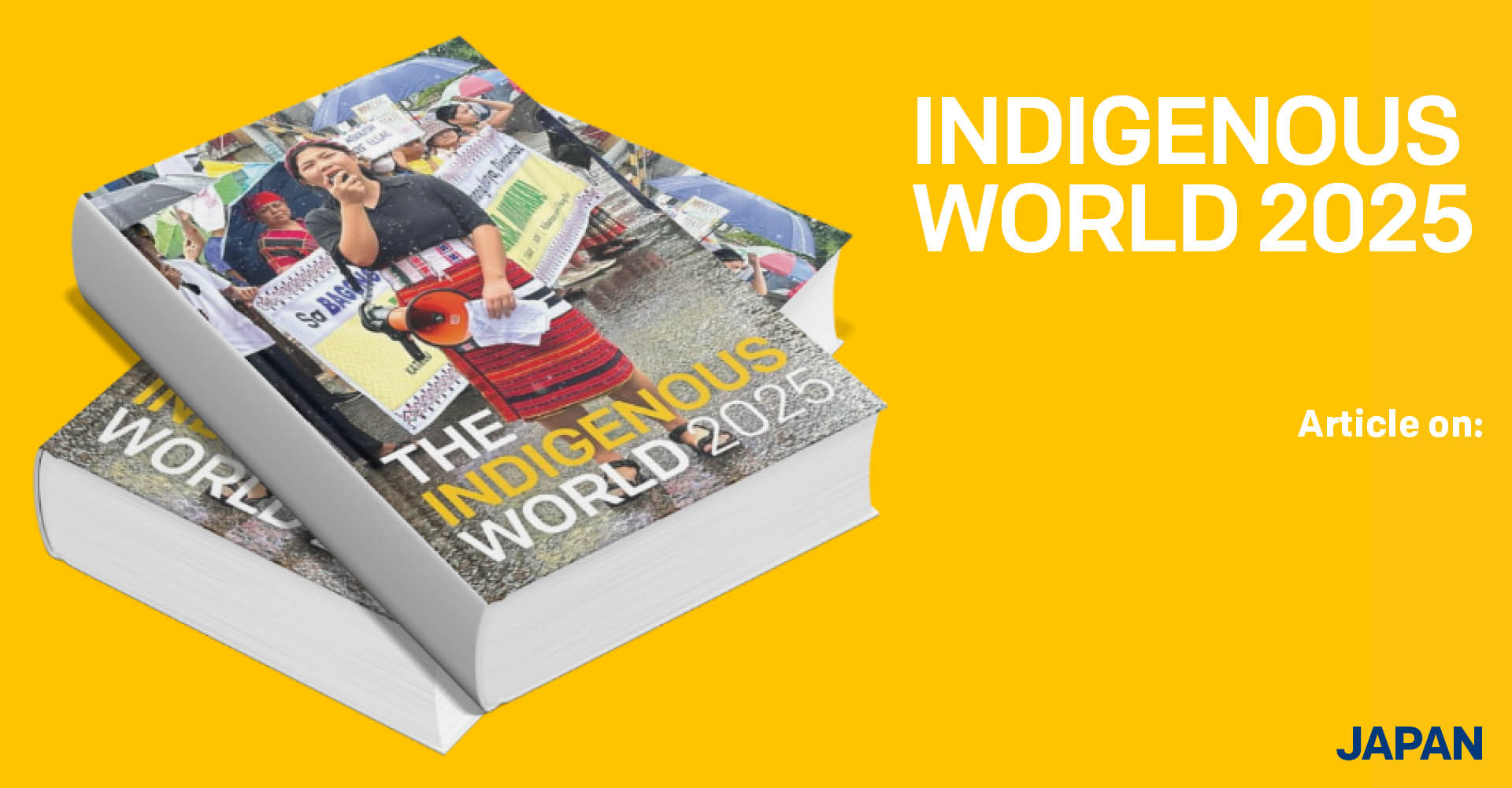
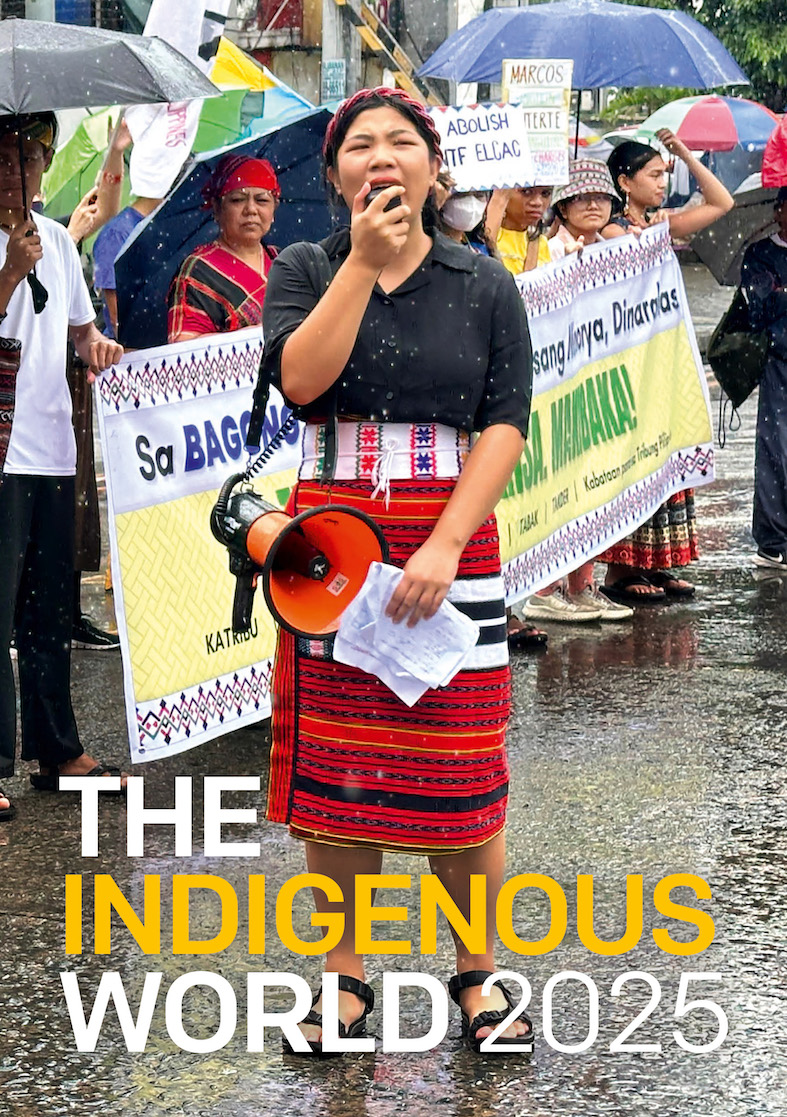 This article is part of the 39th edition of The Indigenous World, a yearly overview produced by IWGIA that serves to document and report on the developments Indigenous Peoples have experienced. The photo above is of an Indigenous activist Funa-ay Claver, a Bontok Igorot, standing alongside Indigenous youth activists and others. They are protesting against the repressive laws and human rights violations suffered through the actions and projects of the Government of the Philippines and other actors against Indigenous Peoples at President Marcos Jr’s national address on 22 July 2024 in Quezon City, Philippines. The photo was taken by Katribu Kalipunan ng Katutubong Mamamayan ng Pilipinas and is the cover of The Indigenous World 2025 where this article is featured. Find The Indigenous World 2025 in full here |
この記事は、IWGIAが発行する年次報告書『The Indigenous World』第39号の一部であり、先住民が経験した動向を記録・報告するものである。上の写真は、ボントック・イゴロット族の先住民族活動家フナ・ア イ・クラバーが、先住民族の若者活動家らと共に立つ姿だ。彼らは、2024年7月22日にフィリピンのケソン市で行われたマルコス・ジュニア大統領の国民 演説に対し、フィリピン政府やその他の主体による先住民族への行動やプロジェクトを通じて被っている抑圧的な法律や人権侵害に抗議している。この写真はカ トリブ・カリプナン・ング・カトゥトゥボン・マママヤン・ング・ピリピナス(フィリピン先住民族連合)が撮影したもので、本記事が掲載されている『The Indigenous World 2025』の表紙となっている。『The Indigenous World 2025』の全文はこちら |
| Ainu Ainu demands ignored Despite Ainu expectations to the contrary,[3] none of the Ainu-related developments for 2024 involved any significant policy gains, and the year has passed relatively quietly. In spite of the submission of a 93,000-signature petition[4], [5] in March, and an in-house seminar sponsored by the Citizens’ Alliance for the Examination of Ainu Policy held at the Tokyo House of Representatives in May,[6] the mandated five-year review of the Ainu Policy Promotion Act was limited to scantily publicized, year-end hearings conducted in various locations in Hokkaido by the Ministry of Internal Affairs and Communications. Four Members of Parliament attended the in-house seminar held in May but as of time of writing, there has yet to be any movement at the Parliament level. It is expected that there may be a formal Parliamentary debate on the matter later in the fiscal year (i.e., by the end of March 2025), once the local hearings of Ainu in Hokkaido and Tokyo have concluded. Other developments were significant only in that they similarly ignored or neglected longstanding Ainu demands. As forecast, in April, the verdict of the Raporo Ainu Nation litigation against the Japanese State and Hokkaido Prefectural Government went in favour of the State. Meanwhile, designation in Hokkaido of Japan’s 35th National Park, the Hidakasanmyaku-Erimo-Tokachi National Park,[7] occurred without any significant consultation of the Ainu people. Release of Ainu-themed films On the contrary, what public attention that did occur was given to the simultaneous release of four films that feature Ainu as their theme: two historical pieces Kamui no Uta[8] and Sisam,[9] Ainu Puri,[10] a documentary about a contemporary Ainu family, and the major-release entertainment film Golden Kamuy.[11] Unlike the live-action movie Golden Kamuy, based on the well-known manga and anime of the same name, which has enjoyed widespread popular success and contributed to an increase in interest in Ainu culture, historical and documentary works such as the former three films tend to receive little public appraisal. Sisam is noteworthy in that it may be the first major-release cinema to portray Edo-Era colonization of Hokkaido from the standpoint of the Ainu people, a point which has led to criticism of Hokkaido Mayor Suzuki (see below), who showed his support by visiting the filming location.[12] Continuing incidents of hate speech All of the above occurred despite the results of the Survey on the Living Conditions of the Ainu, published in 2023,[13] indicating worsening living conditions for the Ainu: the number of Ainu respondents on social welfare was 1.3 times that of non-Ainu residents in the same municipalities, a rise of 4.9 % and, meanwhile, there was a 5.8% rise in the perception of incidents of discrimination to 31% from the previous survey in 2017.[14] Ironically, much of the attention on the film Sisam in Hokkaido centred around discriminatory remarks sent to Hokkaido Governor, Naomichi Suzuki, after he showed his support for the film by publicly posting photos of the actors’ courtesy visit to his office to his “X” page. Governor Suzuki has refrained from commenting on the remarks in consideration of the individual’s rights to freedom of expression.[15] Unrelatedly, police were deployed outside a gathering held in southern Sapporo City in December by the right-wing organization, Nippon Kaigi, which publicly solicited the attendance of children to a street event that included art and a public lecture purported to portray the “true history” of Hokkaido. Panels at the event questioned the Indigeneity of the Ainu people, and a featured lecturer claimed that the content of the “Ainu Supplementary Reader”, a teaching material distributed to elementary and junior high schools in the prefecture, was problematic in its statement that Hokkaido “was unilaterally made part of Japan without the consent of the Ainu people”.[16] Resistance by Ainu and their supporters Ainu and their supporters have refused to take ongoing discrimination lightly. Different protest events, with varying degrees of gravity and social impact, were held throughout the year. In December 2023, after a kick-off event for a cartoon book designed for consciousness-raising against racial discrimination, Ainu Moyamoya (Feelings of Unease) by Ainu scholar Mokottunasi Kitahara held at Hokkaido University, a number of articles were published about the event.[17] After a first protest in February 2023 in response to hate speech remarks made by Member of Parliament Mio Sugita,[18], [19] a second protest, led by an Ainu Elder against Sugita, was held in January 2024 by a multi-ethnic steering committee in solidarity with Okinawan and burakumin (caste or descendant group) supporters and attended by approximately 200 citizens.[20] There has been no response, however, from Ms Sugita or the Liberal Democratic Party (LDP) to which she belonged at the time. April marked an historic event in which the Japanese Society of Cultural Anthropology, just days after having delivered an official apology to the Ainu people for past research wrongdoings,[21] participated in an Ainu-sponsored forum on research ethics.[22] To Ainu disappointment, the other three academic societies participating have refused to offer similar apologies, despite the holding of yet a second forum in December.[23] In May, the National Ainu Museum issued the Uainukor Declaration,[24] stating that it would not accept discrimination against its employees, and that it would strive to raise anti-racism consciousness. In July, upon the visit to Hokkaido of Minister of State for Okinawa and Northern Territories Affairs, Ms Hanako Jimi, Governor Suzuki demanded that a nationwide survey on awareness of the Ainu be conducted.[25] It is also of note that the Hewlett-Packard Foundation-sponsored Mori Kawa Umi Project officially launched their homepage[26] in November. The project aims to document traditional Ainu usages of the sea, rivers, and forest of Ainu territory by combining interviews with Ainu Elders with historical documentation. The project adds a heretofore untaken advocacy twist to this seemingly innocuous topic by positioning Ainu land and resource use rights within the framework of UN human rights instruments and examining the physical changes to the environment of Ainu territory through the lens of how they have historically been wrought by the colonial processes of development. |
アイヌ 無視されたアイヌの要求 アイヌ側の期待とは裏腹に[3]、2024年のアイヌ関連の動きには目立った政策上の成果は見られず、この一年は比較的静かに過ぎ去った。 9万3000人の署名を集めた請願書[4]の提出や、 [5]、また5月には「アイヌ政策検討市民連合」主催の院内セミナーが衆議院議員会館で開催された[6]にもかかわらず、アイヌ政策推進法の5年ごとの見 直しは、総務省が北海道各地で実施した、ほとんど周知されなかった年末の公聴会にとどまった。5月に開催された内部セミナーには4名の国会議員が出席した が、執筆時点では、国会レベルでの動きはまだ見られない。北海道および東京でのアイヌ住民に対する現地聴取が終了した後、今会計年度(すなわち2025年 3月末まで)の後半に、この件に関する正式な国会審議が行われる可能性がある。 その他の動きは、同様に長年のアイヌの要求を無視または軽視したという点においてのみ重要であった。予想通り、4月には、日本国および北海道を相手取った 「ラポロ・アイヌ・ネーション」訴訟の判決が国に有利な内容となった。一方、北海道における日本35番目の国立公園である「飛騨山脈・えりも・十勝国立公 園」[7]の指定は、アイヌの人々との実質的な協議なしに行われた。 アイヌをテーマにした映画の公開 それとは対照的に、世間の注目を集めたのは、アイヌをテーマにした4本の映画が同時公開されたことだった。歴史劇の『カムイの歌』[8]と『シサム』 [9]、現代のアイヌ家族を描いたドキュメンタリー『アイヌ・プリ』[10]、そして大作娯楽映画『ゴールデンカムイ』である。[11] 同名の有名な漫画やアニメを原作とし、大衆的な成功を収め、アイヌ文化への関心の高まりに寄与した実写映画『ゴールデンカムイ』とは異なり、前述の3作品 のような歴史・ドキュメンタリー作品は、一般からの評価が低い傾向にある。『シサム』は、江戸時代の北海道開拓をアイヌの視点から描いた初の劇場用長編映 画であるという点で注目に値する。この点について、撮影現場を訪れて支持を表明した北海道の鈴木知事(後述)に対する批判も生じている。[12] 続くヘイトスピーチの事例 2023年に公表された「アイヌの生活実態調査」[13]の結果が、アイヌの生活環境の悪化を示しているにもかかわらず、上記の事態はすべて発生した。社 会福祉の受給を受けているアイヌ回答者の数は、同一自治体の非アイヌ住民の1.3倍であり、4.9%の増加となった。一方、差別的出来事の経験率は、 2017年の前回調査から5.8%上昇し、31%に達した。[14] 皮肉なことに、映画『シサム』に関する北海道での注目の多くは、鈴木直道知事が俳優たちの知事室表敬訪問の写真を自身の「X」ページに公開して映画への支 持を示した後、知事宛てに送られた差別的な発言に集中した。鈴木知事は、個人の表現の自由の権利に配慮し、これらの発言についてコメントを控えている。 [15] これとは無関係だが、12月に札幌市南部で右翼団体「日本会議」が開催した集会の会場外には警察が配備された。同団体は、北海道の「真実の歴史」を描くと 称するアートや公開講演を含む街頭イベントに、子供たちの参加を公然と呼びかけていた。イベントのパネルディスカッションではアイヌ民族の先住性について 疑問が呈され、登壇した講師の一人は、道内の小中学校に配布されている教材『アイヌ学習補助教材』の内容について、「北海道はアイヌ民族の同意なしに一方 的に日本の一部とされた」とする記述が問題であると主張した。[16] アイヌと支援者による抵抗 アイヌと支援者たちは、続く差別を軽く受け流すことを拒んできた。その年の間、異なる深刻さや社会的影響の度合いがあり、様々な抗議イベントが開催され た。2023年12月、北海道大学で開催された、アイヌ学者・北原モッコットナシ氏による人種差別への意識啓発を目的とした絵本『アイヌ・モヤモヤ』の キックオフイベントの後、同イベントに関する記事が多数掲載された。[17] 2023年2月、杉田美緒議員によるヘイトスピーチ発言[18]、[19]に抗議する最初のデモが行われた後、2024年1月には、アイヌの長老が主導 し、沖縄や被差別部落(カーストまたはその子孫グループ)の支援者らと連帯する多民族運営委員会によって杉田議員に対する第2回目の抗議活動が行われ、約 200人の市民が参加した。[20] しかし、杉田氏や当時彼女が所属していた自由民主党(LDP)からは、何の反応もなかった。 4月には歴史的な出来事があった。日本文化人類学会が、過去の研究上の過ちについてアイヌの人々に公式に謝罪したわずか数日後[21]、アイヌが主催する 研究倫理に関するフォーラムに参加したのである。[22] アイヌの人々の失望をよそに、参加した他の3つの学術団体は、12月に2回目のフォーラムが開催されたにもかかわらず、同様の謝罪を行うことを拒否した。 [23] 5月、国立アイヌ博物館は「ウアイヌコル宣言」[24]を発表し、職員に対する差別を容認せず、反人種主義意識の向上に努めることを表明した。7月、沖 縄・北方担当大臣の地見花子氏が北海道を訪問した際、鈴木知事はアイヌに対する認識に関する全国調査の実施を要求した。[25] また、ヒューレット・パッカード財団が支援する「森・川・海プロジェクト」が11月にホームページを正式に開設したことも注目に値する。[26] このプロジェクトは、アイヌの長老たちへのインタビューと歴史的資料を組み合わせることで、アイヌの領土における海、川、森林の伝統的な利用実態を記録す ることを目的としている。同プロジェクトは、アイヌの土地および資源利用権を国連の人権条約の枠組みに位置づけ、アイヌの領土における環境の物理的変化 を、それが歴史的にいかに植民地的な開発プロセスによって引き起こされてきたかという視点から検証することで、一見無害に見えるこのテーマに、これまでに なかったアドボカシー的な視点を加えている。 |
| Ryūkyūans (Okinawans) Rape committed by US soldier in Okinawa In June 2024, the Okinawa prefectural government learned that a U.S. Air Force soldier had abducted an underage girl to his home and sexually assaulted her in December 2023. The American soldier was indicted in March 2024. Nonetheless, the Ministry of Foreign Affairs of Japan (MOFA) did not report the incident to the Okinawa prefectural government until June 2024.[27] This incident triggered a series of protests and rallies organized by citizens and municipalities against the U.S. military, the MOFA, and the Japan Defense Agency.[28],[29],[30],[31] In October 2024, Ryūkyūan women brought the issue of sexual abuse faced by women in Okinawa due to the presence of the U.S. military to the attention of the United Nations (UN) Committee on the Elimination of Discrimination against Women (CEDAW).[32] The CEDAW Committee urged the Japanese government to take appropriate action to punish those responsible for sexual assaults and ensure adequate compensation for the victims. The Japanese government officials stated that the government would “request the U.S. to implement thorough measures to prevent future incidents and accidents” through the review of the “liberty system”, which regulates the conduct of U.S. personnel. Additionally, they plan to establish a new consultative forum in collaboration between the U.S. military, the Japanese government, the prefecture, and local communities. In December 2024, the Naha District Court sentenced the perpetrator to just five years in prison[33] while, according to the Tokyo Bar Association, the charge for non-consensual sexual intercourse ranges from 5 to 20 years.[34] As reported by the Ryūkyū Shimpo newspaper, the charge was lighter than expected (at least seven years), since: (1) the victim was a minor, (2) the prosecution had asked for seven years, and (3) the judge remarked on the “viciousness” of this case. Indigenous Ryūkyūan youth engagement with the UN In April 2024, Shinako Oyakawa and Shimabukuro Riku Akamine from the Association of Comprehensive Studies for Independence of the Lew Chewans (ACSILs), along with Ryūkyūan diasporic youth, participated in the Permanent Forum on Indigenous Issues in New York.[35] They drew attention to the fact that the Japanese government does not recognize the Ryūkyūan people as Indigenous and is violating the UN Declaration of the Rights of Indigenous Peoples (UNDRIP) by failing to protect their Indigenous rights and turning Ryūkyūan land into a military colony. Furthermore, in July 2024, at the meeting of the Expert Mechanism on the Rights of Indigenous Peoples (EMPRIP) in Geneva, Kanako Matsuda of the GINOWAN Churamizu Association delivered a statement addressing water contamination with per- and polyfluoroalkyl substances (PFAS) leaked from the U.S. military bases in Okinawa.[36] She highlighted that the loss of biodiversity, PFAS contamination of water resources, and noise pollution caused by the base construction have made Okinawa a victim of environmental racism,[37] and the resulting damages have disproportionately affected socially and culturally disadvantaged groups, such as women and children. She called on the Japanese government to firmly urge the U.S. military to take responsibility for the environmental pollution and degradation. In September 2024, Risako Sakai and Alexyss McClellan-Ufugusuku, who also attended the EMRIP meeting in Geneva, gave reports in Naha, Okinawa, to inform the public about Indigenous rights and movements.[38], [39] Approximately 70 people attended this event where speakers reported on their advocacy activities at the UN, which were focused on highlighting the impacts of the construction of the U.S. military base at Henoko and cases of sexual violence committed by U.S. soldiers, and discussing the way in which their activities and statements at the UN address the current situation of Ryūkyū Islands and the Indigenous Ryūkyūan peoples' right to self-determination.[40] In addition, they called for solidarity between Ryūkyūan peoples and other Indigenous Peoples around the world. The local newspaper, Ryūkyū Shimpo, covered the event. Interaction with other Indigenous Peoples around the world In February and April 2024, Māori youths, members of the Aotearoa (New Zealand) government scholarship programme to develop human resources for cultural revival and economic activities based on Māori traditions and values, visited Ryūkyū. During the visit, the delegation learned about Ryūkyū's history and culture and discussed issues and future prospects as Indigenous Peoples with a common history of forced colonization. The delegation visited the Okinawa prefectural government, where the Vice Governor, Yoshimi Teruya, among other things noted that: “Okinawa was once an independent kingdom, known as the Ryūkyū Kingdom. Similarly, many islands in Oceania also have histories of independence. I look forward to the continued development of exchanges.”[41], [42], [43], [44], [45], [46] Indigenous language revitalization movement At a symposium on Ryūkyūan languages held in Naha City in September 2024, GACHIMAF, an Indigenous Ryūkyūan rapper, performed a rap in the Okinawan language (i.e., Uchināguchi). This marked the first rap performance at the event and provided a unique opportunity for elderly native speakers and younger generations raised in Japanese—the language of the Japanese colonizers—to connect and reaffirm their cultural identities.[47] In December 2024, in a symbolic act to highlight Okinawa’s unique culture and language(s),[48] a group of Ryūkyūan students from Okinawa Christian University read the UN Universal Declaration of Human Rights in Uchināguchi, one of the Ryūkyūan Indigenous languages,[49] at the SDGs National Forum held by Okinawa Prefecture in Naha City. Revitalization of traditional culture In March 2024, Ryūkyūan women living in the U.S. organized a gathering in Hawai’i, inviting women with hajichi (traditional Ryūkyūan tattoos on women’s hands).[50] “I want the next generations to understand Okinawa's history before colonization and to recognize the significance that we have ancestors from/in Okinawa,” said the organizer, Mariko Middleton. “I want the future generations to feel proud of their heritage.” The construction of the new U.S. military base at Henoko On 10 January 2024, the Japanese government began the landfill work on the Oura Bay of Henoko, ignoring the opposition of the people of Okinawa Prefecture. The governor, Denny Tamaki, held a press conference and appealed for a halt to the construction and for dialogue between the Okinawa Prefecture and the Japanese government. Protests are still ongoing at Henoko. Nonetheless, the Japanese government has continued the construction without dialogue with the governor.[51], [52] The repatriation movement for the remains of Ryūkyūan people In June, the American Anthropological Association's Commission for the Ethical Treatment of Human Remains (TCETHR) released its final report on the remains and burials of the world's Indigenous and minority peoples, including interviews with Ryūkyūans in 2023, with a cover photo of one of the sites where Ryūkyūan remains were stolen, the Mumujyana-baka.[53] This report states that, “no research or exhibition should be conducted without the consent of the relatives and/or community.”[54] In the same month, the National Museum of Ethnology in Osaka established guidelines for the return of Ryūkyūan-origin zushigame (decorated pottery container for storing the bones of one's ancestors) and cinerary urns to their original owners, who are the ritual successors, and published it on its website. The likely explanation for the establishment of the guidelines is the ongoing efforts of the Nirai Kanai nu Kai, an advocacy group dedicated to the repatriation of Ryūkyūan remains. Since 2023, this group has been urging the museum to identify and return the original custodians of the collection, given the ambiguity of the acquisition route. Despite these requests, the museum has not provided any updates or reports to the group. Moreover, the guidelines appear to be problematic, as they determine the “legitimacy” of ritual successors or bereaved family members through the lens of the colonizers, mandating specific methods and storage locations even after the return, along with the adherence to community customs. Such stipulations imposed by the museum interfere with the self-determination rights of the Ryūkyū people. The Nirai Kanai nu Kai has highlighted this concern. The museum has yet to respond. Jeff Gayman is a full Professor in the School of Education and Research Faculty of Media and Communication at Hokkaido University where his research focuses on issues of empowerment of the Ainu in educational arenas. He has been engaged in support of Ainu rights advocacy for over 15 years. Dr. Kanako Uzawa, PhD is an Ainu scholar, artist, museum curator, and advocate dedicated to amplifying Indigenous voices worldwide. As the founder of AinuToday and CEO of K. Uzawa Consult, she bridges academic and public platforms to celebrate Indigenous identity. She is also an Assistant Professor at the Global Station for Indigenous Studies and Cultural Diversity at Hokkaido University and an affiliated researcher at the Historical Museum of the University of Oslo. Ryoko Nakamura is an Indigenous Ryūkyūan. Co-chair of the Nirai Kanai no Kai, a campaign group for the repatriation of the remains of Ryūkyūan people stolen by Japanese researchers. In addition, she is involved in the campaign against the Japanese military (the Japan Self-Defense Forces) and U.S. military bases. Risako Sakai (she/her/hers) collaborated in drafting the section on Ryūkyūans. She is an Indigenous woman from Okinawa and is currently a PhD candidate in Applied Anthropology at Oregon State University. This article is part of the 39th edition of The Indigenous World, a yearly overview produced by IWGIA that serves to document and report on the developments Indigenous Peoples have experienced. The photo above is of an Indigenous activist Funa-ay Claver, a Bontok Igorot, standing alongside Indigenous youth activists and others. They are protesting against the repressive laws and human rights violations suffered through the actions and projects of the Government of the Philippines and other actors against Indigenous Peoples at President Marcos Jr’s national address on 22 July 2024 in Quezon City, Philippines. The photo was taken by Katribu Kalipunan ng Katutubong Mamamayan ng Pilipinas and is the cover of The Indigenous World 2025 where this article is featured. Find The Indigenous World 2025 in full here |
琉球人(沖縄人) 沖縄で米兵が犯した強姦事件 2024年6月、沖縄県は、2023年12月に米空軍の兵士が未成年の少女を自宅に連れ込み、性的暴行を加えたことを把握した。この米兵は2024年3月 に起訴された。それにもかかわらず、日本外務省(MOFA)は2024年6月になるまで、この事件を沖縄県に報告しなかった。[27] この事件をきっかけに、市民や自治体が米軍、外務省、防衛庁に対して一連の抗議活動や集会を組織した。[28],[29],[30],[31] 2024年10月、琉球の女性たちは、米軍駐留に起因する沖縄の女性たちが直面する性的虐待の問題を、国連女性差別撤廃委員会(CEDAW)に提起した。 [32] CEDAW委員会は、日本政府に対し、性的暴行の責任者を処罰し、被害者への適切な補償を確保するための適切な措置を講じるよう求めた。日本政府当局者 は、米軍関係者の行動を規制する「リバティ・システム」の見直しを通じて、「将来的な事件や事故を防ぐための徹底した措置を米国に実施するよう要請する」 と述べた。さらに、米軍、日本政府、県、地域社会が連携して、新たな協議の場を設立する計画だ。 2024年12月、那覇地方裁判所は加害者にわずか5年の懲役刑を言い渡した[33]。一方、東京弁護士会によると、同意のない性交の罪に対する量刑は5 年から20年である。[34] 『琉球新報』の報道によると、判決は予想(少なくとも7年)より軽かった。その理由は、(1) 被害者が未成年であったこと、(2) 検察側が7年を求刑していたこと、(3) 裁判官が本件の「悪質性」に言及したことである。 国連における琉球先住民族の若者の関与 2024年4月、琉球人独立総合研究協会(ACSILs)の親川真奈子氏と赤嶺島袋陸氏、および琉球系ディアスポラの若者たちが、ニューヨークで開催され た先住民族問題常設フォーラムに参加した。[35] 彼らは、日本政府が琉球人を先住民として認めず、先住民の権利を保護せず、琉球の土地を軍事植民地化することで、国連先住民の権利に関する宣言 (UNDRIP)に違反しているという事実に注目を集めた。 さらに、2024年7月、ジュネーブで開催された先住民の権利に関する専門家メカニズム(EMPRIP)の会合において、宜野湾市「チュラミズ協会」の松 田佳奈子氏は、沖縄の米軍基地から漏出したパーフルオロアルキル物質(PFAS)による水質汚染について声明を発表した。[36] 彼女は、生物多様性の喪失、水資源のPFAS汚染、基地建設による騒音公害が、沖縄を環境人種主義の犠牲者としていることを強調した[37]。また、その 結果生じた被害は、女性や子どもといった社会的・文化的に不利な立場にあるグループに不均衡な影響を与えていると指摘した。彼女は、日本政府に対し、環境 汚染と環境破壊について米軍が責任を負うよう強く促すよう求めた。 2024年9月、ジュネーブでのEMRIP会合にも出席した酒井理沙子氏とアレクシス・マクレラン=ウフグスク氏は、沖縄・那覇で報告会を行い、先住民族 の権利と運動について一般市民に周知した。[38] [39] このイベントには約70人が参加し、登壇者らは国連でのアドボカシー活動について報告した。その活動は、辺野古での米軍基地建設の影響や米兵による性暴力 の事例を浮き彫りにすることに焦点を当て、国連での活動や声明が、琉球諸島の現状や先住民の自決権にどのように向き合っているかを論じた。[40] さらに、彼らは琉球の人々と世界中の他の先住民との連帯を呼びかけた。地元紙『琉球新報』がこのイベントを報じた。 世界中の先住民との交流 2024年2月と4月、マオリの伝統と価値観に基づいた文化復興および経済活動のための人材育成を目的とした、アオテアロア(ニュージーランド)政府の奨 学金プログラムに参加するマオリの若者たちが、琉球を訪問した。訪問中、代表団は琉球の歴史と文化について学び、強制的な植民地化という共通の歴史を持つ 先住民として、諸課題や将来展望について議論した。代表団は沖縄県庁を訪問し、そこで照屋義美副知事は、とりわけ次のように述べた。「沖縄はかつて、琉球 王国として知られる独立した王国であった。同様に、オセアニアの多くの島々にも独立の歴史がある。今後も交流が発展していくことを期待している」 [41]、[42]、[43]、[44]、[45]、 [46] 先住民族言語の復興運動 2024年9月に那覇市で開催された琉球語に関するシンポジウムで、琉球先住民族のラッパーであるGACHIMAFが、沖縄語(ウチナーグチ)でラップを 披露した。これは同イベント初のラップパフォーマンスであり、年配の母語話者と、日本の植民地支配者の言語である日本語で育った若い世代が繋がり、自らの 文化的アイデンティティを再確認する貴重な機会となった。[47] 2024年12月、沖縄の独自の文化と言語を強調する象徴的な行為として[48]、沖縄キリスト教大学の琉球系学生グループが、那覇市で開催された沖縄県 主催のSDGs全国フォーラムにおいて、琉球先住民族の言語の一つであるウチナーグチで国連世界人権宣言を朗読した[49]。 伝統文化の復興 2024年3月、米国在住の琉球系女性たちがハワイで集まりを企画し、ハジチ(女性の手にある伝統的な琉球の刺青)を持つ女性たちを招待した。[50] 「次世代には、植民地化以前の沖縄の歴史を理解し、自分たちの祖先が沖縄にルーツを持つことの意味を認識してほしい」と、主催者のマリコ・ミドルトンは 語った。「未来の世代には、自分たちのルーツを誇りに思ってほしい。」 辺野古における新たな米軍基地の建設 2024年1月10日、日本政府は沖縄県民の反対を無視し、辺野古の大浦湾での埋め立て工事を開始した。玉城デニー知事は記者会見を開き、建設の中止と沖 縄県と日本政府との対話を訴えた。辺野古では今も抗議活動が続いている。それにもかかわらず、日本政府は知事との対話なしに建設を続けている。[51], [52] 琉球人の遺骨返還運動 6月、米国人類学会の「人骨の倫理的取り扱い委員会(TCETHR)」は、2023年に琉球の人々へのインタビューを含めた、世界の先住民および少数民族 の人骨と埋葬に関する最終報告書を公表した。表紙写真には、琉球の人骨が盗まれた場所の一つであるムムジャナ・バカが写っている。[53] この報告書は、「遺族および/またはコミュニティの同意なしに、いかなる研究や展示も行われてはならない」と述べている。[54] 同月、大阪の国立民族学博物館は、琉球起源の祖師壺(先祖の骨を納める装飾陶器)および骨壺を、儀礼上の継承者である本来の所有者に返還するためのガイド ラインを策定し、ウェブサイトに掲載した。 この指針が策定された背景には、琉球人の遺骨返還に取り組む支援団体「ニライカナイの会」の継続的な活動があると考えられる。同団体は2023年以降、収 蔵品の取得経路が不明確であることを理由に、博物館に対し、コレクションの本来の保管者を特定し返還するよう求めてきた。こうした要請にもかかわらず、博 物館は同団体に対し、いかなる進捗報告も提供していない。さらに、このガイドラインには問題があるようだ。なぜなら、それは植民地支配者の視点を通じて儀 礼の継承者や遺族の「正当性」を決定し、返還後も特定の方法や保管場所を義務付け、さらに地域の慣習に従うことを求めているからである。博物館によって課 されたこのような規定は、琉球の人々の自己決定権を侵害するものである。「ニライカナイヌ会」はこの懸念を指摘している。博物館は未だにこれに応答してい ない。 ジェフ・ゲイマンは北海道大学教育学研究科・メディア・コミュニケーション学部の教授であり、教育現場におけるアイヌのエンパワーメントに関する問題を研 究の中心としている。15年以上にわたり、アイヌの権利擁護活動に携わっている。 宇沢佳奈子博士は、アイヌの学者、アーティスト、博物館学芸員、そして世界中の先住民族の声を広めることに尽力する活動家である。「AinuToday」 の創設者であり、K. Uzawa ConsultのCEOとして、学術界と一般社会をつなぎ、先住民族のアイデンティティを称える活動を行っている。また、北海道大学グローバル先住民族・ 文化多様性研究ステーションの助教であり、オスロ大学歴史博物館の客員研究員でもある。 仲村涼子は先住民である琉球人だ。「ニライカナイの会」の共同代表を務めており、同会は日本の研究者によって盗まれた琉球人の遺骨の返還を求める運動団体 である。さらに、日本軍(自衛隊)および米軍基地に対する反対運動にも携わっている。 酒井理沙子(she/her/hers)は、琉球人に関するセクションの起草に協力した。彼女は沖縄出身の先住民の女性であり、現在オレゴン州立大学で応 用人類学の博士課程に在籍している。 この記事は、IWGIAが発行する年次報告書『The Indigenous World』第39号の一部であり、先住民が経験した動向を記録し報告することを目的としている。上の写真は、先住民族活動家のフナ・アイ・クラバー(ボ ントック・イゴロット族)が、先住民族の若者活動家らと共に立つ姿だ。彼らは、2024年7月22日にフィリピンのケソン市で行われたマルコス・ジュニア 大統領の国民演説において、フィリピン政府やその他の主体による先住民への行動やプロジェクトを通じて苦悩している抑圧的な法律や人権侵害に抗議してい る。この写真はカトリブ・カリプナン・ング・カトゥトゥボン・マママヤン・ング・ピリピナスによって撮影されたもので、本記事が掲載されている『The Indigenous World 2025』の表紙となっている。『The Indigenous World 2025』の全文はこちらで閲覧できる |
| Notes and references
[1] Population figures for Hokkaido taken from the 2023 Survey of Ainu Livelihoods conducted by the Hokkaido prefectural government in cooperation with the Ainu Association. Hokkaido Government, Environment and Lifestyle Section. “Hokkaido Ainu Survey on Livelihood Report.” 2023, Population figures for the rest of Japan taken from the 2011 Survey of Non-Hokkaido Ainu Livelihoods conducted by the Council for Ainu Policy Promotion. “Non-Hokkaido Ainu Survey on Livelihood Report.” 2011, ; many with Ainu ancestry do not publicly identify as Ainu due to discrimination and stigma in Japanese society. Ainu observers estimate the actual population of those with Ainu ancestry to be between 100,000 and 300,000, with 5,000 in the greater Kanto region alone. [2] Ryukyu Shimpo. 2013. “‘Revival of Ryukyuan Languages’ Shimakutouba Aims to Restore Status.” Ryukyu Shimpo Digital. Ryukyu Shimpo. 12 May 2013. [3] Gayman, Jeff; Uzawa, Kanako (Dr.); Nakamura, Ryoko; and Sakai, Risako. “Japan”. In The Indigenous World 2024 (ed. D. Mamo), April 2024. [4] Senjyuminzoku Ainu no Koe Jitsugen! Jikkouiinkai (Realizing the Voices of the Indigenous Ainu! Executive Committee), 19 September 2023. Ainu Seisaku no Minaosi o Motomeru Seigan Chomei (Signature Petition Calling for a Review of Ainu Policy) Retrieved from [5] Gayman, Jeff; Uzawa, Kanako (Dr.); Nakamura, Ryoko; and Sakai, Risako. “Japan”. In The Indigenous World 2024 (ed. D. Mamo), April 2024. [6] Kihara, Kyoko. Tokyo Shimbun Press, 30 May, 2024.”Watasitati o Kankou Shigen to sika Mite inai” Go Nen Hetta Ainu Shisaku Suishin Hou wa “Nukegara no you na Houritsu” (“They See Us as Nothing More than A Tourism Resource” 5 Years after Passage, Ainu Policy Promotion Act is “Nothing More than an Empty Shell”. [7] Government of Japan, Ministry of the Environment. National Parks of Japan. [8] Official site: [9] Official site: [10] Official site: [11] Official site: [12] Hokkaido Shimbun Press, 29 September 2024. Shasetsu Ainu Sabetsu Toukou Chiji ha Kizen Taru Taiou o (Editorial: Discriminatory Post Against the Ainu Governor Should Take Firm Stance). [13] Hokkaido Prefecture Government. “Results of the Survey on Living Conditions.” 9 September 2024. [14] Muto Eri, Kimura Nami, Kaneko Buntarou. Hokkaido Shimbun Press, 10 September 2024. Ainu Minzoku Sabetsu, SNS Nobanashi Dou Seikatsu Jittai Chousa Bassoku Kitei Nasi Okureru Taisaku (Discriminatory Posts on SNS Left Unfettered Prefectural Survey on Actual Living Conditions Reveals no Punishment Clauses Measures Delayed) [15] Hokkaido Shimbun Press, 29 September 2024. Shasetsu Ainu Sabetsu Toukou Chiji ha Kizen Taru Taiou o (Editorial: Discriminatory Post Against the Ainu Governor Should Take Firm Stance). [16] HBC (Hokkaido Broadcasting Corporation), 29 December 2024. “Heito o Yamero” “Sabetsu no Itou wan ai” Gaito de Uzumaku Koe, Ainu Shisaku Suishin Hou kara Go Nen…SNS Jyou de Tsuduku Sabetsu ni “Jikkousei Aru Torikumi Hitsuyou” “Stop Hate Speech” “We have no Intention of Discrimination” 5 Years After Passage of the Ainu Policy Promotion Act, Shouts Reverberate on Streets, Effective Measures to Halt Continuing Discrimination on SNS Necessary. [17] CREA. 24 January 2024. “Ainu ni Atta koto ga Nai” Sore tte Hontou? Golden Kamuy o Miru Mae ni Siru Beki Ainu Minzoku e no Sabetsu No Rekishi Kitahara Mokkotunas Kyoujyu Intabyu- Zenpen (“I’ve Never Met an Ainu” Is that Really True? The History of Discrimination Against the Ainu that You Should Know Before Watching Golden Kamuy. Interview with Professor Kitahara Mokkotunas I). [18] Gayman, Jeff; Uzawa, Kanako (Dr.); and Nakamura, Ryoko. “Japan”. In The Indigenous World 2023 (ed. D. Mamo), April 2023. [19] Gayman, Jeff; Uzawa, Kanako (Dr.); Nakamura, Ryoko; and Sakai, Risako. “Japan”. In The Indigenous World 2024 (ed. D. Mamo), April 2024. [20] Hokkaido Shimbun Press, 28 February 2024. Sugita Mio Giin no Ainu Minzoku Sabetsu “Jikkousei Aru Kinshihou Hitsuyou” Sapporo de “Kangaeru Shukai” (Discriminatory Remarks Against the Ainu by MP Sugita Mio “Effective Law to Prevent Discrmination Necessary” “Protest Gathering in Sapporo” [21] Japanese Society of Cultural Anthropology, 1 April 2024. Ainu Minzoku Kenkyu ni Kansuru Nihon Bunka Jinrugakkai Gakkai Seimei (Statement of the Japanese Society of Cultural Anthropology on Research on the Ainu People). [22] Tokyo Shimbun Press. 22 April 2024. Shazai mo Sezu “Kenyu Sasero” to wa Nanigoto ka Ainu Minzoku to Kenkyusha no Hatsu Taiwa Kara Kangaeta “Siritai Youkyu” Ga Motsu Bouryokusei (What do you Mean, “Allow us to Research” with no Apology? Thinking About the Violence Inherent in the “Desire to Know” After the First Dialog Between Researchers and Ainu). [23] Tokyo Shimbun Press. Ainu/Ryukyu Minzoku no Ikotsu “Toukotsu” Katakunani Shazai Sinai Gakkai no Iibun “Senjyuminzoku” o Sonchou sinai Jinruigaku no Goman (Theft of Human Remains of Ainu and Ryukyuan Peoples Excuse of Academic Society that Refuses to Properly Apologize “The Haughtiness of Anthropology That will not Respect “Indigenous Peoples”). [24] [25] Murata, Ryou. Hokkaido Shimbun Press, 12 July 2024. Ainu Shisakusuishinhou Minaoshi he Seifu ga Zenkokuteki Ishiki Chousa Dou Chiji ga Yousei (Toward Review of the Ainu Policy Promotion Act, Japanese Government to Conduct Nationwide Survey on Consciousness Regarding the Ainu, Hokkaido Governor Demands). [26] Mori Kawa Umi no Ainu Senjyuken o Mieruka Suru Purojekuto (A Visualization Project on the Rights of Indigenous Peoples to Natural Resources of the Ainu). [27] Ryukyu Shimpo Digital. 2024. “U.S. Air Force Chief Indicted for Kidnapping, Sexually Assaulting Girl Under 16.” Naha District Prosecutor's Office., 26 June 2024. https://ryukyushimpo.jp/news/entry-3233077.html; and Ryukyu Shimpo Digital. 2024.” [Video] Governor Tamaki ‘Outraged’ at Indictment of U.S. Soldier in Girl Sexual Assault Case: No Contact from Foreign Ministry, Okinawa.” Ryukyu Shimpo Digital, 28 June 2024. [28] Okinawa Times. 2024. “There is anger, sadness, and frustration that cannot be adequately expressed in words,” young people attending a protest rally for the first time, expressing their feelings about the repeated assaults by U.S. soldiers. 5 July 2024. [29] Ryukyu Asahi Broadcasting Corporation. 2024. “Sanrenkyo protests against Okinawa Defense Bureau over U.S. soldier incident.” 4 July 2024. [30] Okinawa Times. 2024. “Sexual assaults by U.S. soldiers in Okinawa: All municipalities protest and pass a letter of opinion demanding an apology and compensation for the victims, revision of the Status of Forces Agreement, and other measures”. 22 December 2024. [31] Ryukyu Shimpo, 2024. “No to U.S. Military Sexual Violence: 2,500 people protest against assault of young girls by U.S. soldiers at prefectural assembly, demanding apology, compensation, and revision of the Status of Forces Agreement”. 23 December 2024. [32] Ryukyu Shimpo. 2024. “ |
注と文献 [1] 北海道の人口数値は、北海道庁がアイヌ協会と共同で実施した「2023年アイヌ生活実態調査」に基づく。北海道庁、環境・生活課。「北海道アイヌ生活実態 調査報告書」。2023年、日本本州・北海道以外の地域の人口数値は、アイヌ政策推進協議会が実施した「2011年北海道外アイヌ生計実態調査」に基づ く。「北海道外アイヌ生計実態調査報告書」。2011年、;アイヌの血を引く多くの人々は、日本社会における差別や偏見のため、公にはアイヌであると名乗 らない。アイヌ関係者の推計によると、アイヌの血を引く人々の実際の人口は10万人から30万人とされ、首都圏だけでも5,000人に上る。[2] 琉球新報。2013年。「『琉球語の復興』 島口語は地位の回復を目指す」。琉球新報デジタル。琉球新報。2013年5月12日。[3] ジェフ・ゲイマン、宇沢加奈子(博士)、中村涼子、酒井理沙子。「日本」。『The Indigenous World 2024』(D. マモ編)、2024年4月。[4] 先住民族アイヌの声を現す!実行委員会、2023年9月19日。「アイヌ政策の見直しを求める署名請願」[5] ジェフ・ゲイマン、宇沢加奈子(博士)、 中村 涼子、酒井 里沙子。「日本」。『The Indigenous World 2024』(D. マモ編)、2024年4月。[6] 木原 京子。東京新聞出版、2024年5月30日。「 「私たちを単なる観光資源としか見ていない」 成立から5年、アイヌ政策推進法は「中身のない法律」 [7] 日本政府、環境省。『日本の国立公園』。[8] 公式サイト:[9] 公式サイト:[10] 公式サイト:[11] 公式サイト:[12] 北海道新聞社、2024年9月29日。「社説:アイヌ知事への差別的投稿には断固たる対応を」。[13] 北海道庁。「生活実態調査の結果」。2024年9月9日。[14] 武藤絵里、木村奈美、金子文太郎。北海道新聞社、2024年9月10日。アイヌ民族差別、SNSでの無言の差別が横行 生活実態調査で処罰規定なし 対策 が遅れる [15] 北海道新聞社、2024年9月29日。 社説「アイヌ差別投稿 知事は断固たる対応を」[16] HBC(北海道放送)、2024年12月29日。 「ヘイトを止めろ」「差別の糸は切れない」街頭で渦巻く声、アイヌ政策推進法から5年…SNS上で続く差別に「実効性のある取り締まりが必要」 「Stop Hate Speech」 「差別するつもりはない」アイヌ政策推進法成立から5年、街に響き渡る声、SNS上で続く差別を止めるための実効的な措置が必要だ。[17] CREA。2024年1月24日。 「アイヌに会ったことがない」それって本当か?『ゴールデンカムイ』を見る前に知っておくべきアイヌ民族への差別の歴史 北原モッコトゥナス教授インタ ビュー・前編(「アイヌに会ったことがない」それって本当か?『ゴールデンカムイ』を見る前に知っておくべきアイヌ民族への差別の歴史。 北原モッコトゥナス教授へのインタビュー I)。[18] ジェフ・ゲイマン、宇沢香奈子(博士)、中村涼子。「日本」。『The Indigenous World 2023』(D. マモ編)、2023年4月。[19] ジェフ・ゲイマン、宇沢香奈子(博士); 中村 涼子、酒井 里沙子。「日本」。『The Indigenous World 2024』(D. マモ編)、2024年4月。[20] 北海道新聞社、2024年2月28日。 杉田美緒議員によるアイヌ民族への差別的発言「差別を防止する実効性のある法律が必要」札幌で「抗議集会」 [21] 日本文化人類学会、2024年4月1日。アイヌ民族研究に関する日本文化人類学会声明。[22] 東京新聞社、2024年4月22日。謝罪もせず「研究させてくれ」とはどういうことか アイヌ民族と研究者の初対話から考えた「知りたい欲求」がもたらす 暴力性(謝罪もせず「研究させてくれ」とはどういうことか [23] 東京新聞社。アイヌ・琉球民族の遺骨「盗骨」 [24] [25] 村田亮。北海道新聞社、2024年7月12日。「アイヌ政策推進法の見直しに向け、政府が全国的な意識調査を実施へ、知事が要請」。[26] 「森・川・海の先住民の先住権を可視化するプロジェクト」。[27] 琉球新報デジタル。2024年。「米空軍司令官、16歳未満の少女を拉致・性的暴行した疑いで起訴」。那覇地方検察庁、2024年6月26日。 https://ryukyushimpo.jp/news/entry-3233077.html; および 琉球新報デジタル。2024年。[動画] 少女への性的暴行事件で米兵が起訴、玉城知事は「憤り」:外務省からは連絡なし、沖縄。琉球新報デジタル、2024年6月28日。[28] 沖縄タイムス。2024年。「言葉では十分に表せない怒り、悲しみ、そして無力感がある」と、初めて抗議集会に参加した若者たちは、米兵による繰り返され る暴行についてその思いを語った。2024年7月5日。[29] 琉球朝日放送。2024年。「三連協、米兵事件で沖縄防衛局に抗議」。2024年7月4日。[30] 沖縄タイムス。2024年。「沖縄での米兵による性的暴行:全自治体が抗議し、被害者への謝罪と補償、日米地位協定の改定などを求める意見書を可決」。 2024年12月22日。[31] 琉球新報、2024年。「米軍の性暴力にノー:県議会で米兵による少女への暴行に抗議、2,500人が集結。謝罪、賠償、駐留軍地位協定の改定を要求」。 2024年12月23日。[32] 琉球新報。2024年。「女性差別撤廃委員会、米兵による性暴力への緊急措置を勧告」2024年10月31日。[33] 琉球新報。2024年。 「【速報】少女の拉致・性暴行、米兵に懲役5年。裁判での少女の証言は『十分に信用できる』、被告の犯行は『極めて悪質』」沖縄県那覇地方裁判所。 2024年12月13日。[34] 東京弁護士会。 発行年不明。「同意のない性交(レイプ)には懲役刑があるのか?初犯でも懲役刑になるのか?:刑事事件の実績豊富な東京弁護士法人」。2025年1月20 日閲覧。[35] 琉球新報。2024年。「大川、赤嶺ら、先住民問題で訴え 米ニューヨークの国連常設フォーラム」2024年4月18日。[36] 琉球新報。2024年。「PFAS汚染、米兵による性暴力が国連で報告 沖縄からも参加、基地問題への訴え」。2024年7月1日。[37] 有機フッ素化合物(PFAS)汚染から市民の命を守る連絡会。年不詳。「沖縄PFAS問題を国連人権理事会に提訴(宜野湾・首里水道協会)」[38] 琉球新報。2024年。「沖縄の自決権確立に向け、世界の先住民との連帯を訴える、琉球独立協会トークイベント(那覇)」2024年9月18日。[39] 「琉球諸島独立総合研究協会(ACSILs)-イベント」日付不明。[40]「 琉球諸島独立総合研究協会(ACSILs) - 国連、声明など。」日付不明。[41] 琉球新報。2024年。「あの有名な踊り『ハカ』も沖縄県庁でニュージーランド・マオリ族が披露」『基地問題は、我々の闘争と共通する』2024年2月 15日。[42] 琉球新報。2024年。「世界の先住民とつながる:マオリから学んだ美しさと強さ、沖縄が国際社会にアピール」2024年8月14日。[43] 宮古新報。「ニュージーランド・マオリ奨学生が照屋副知事を表敬訪問」。2024年2月27日。[44] RBC NEWS。「ニュージーランド先住民マオリ族が副知事を表敬訪問、沖縄とマオリの歴史に共通点、今後の交流を約束」。2024年2月15日。[45] QAB(琉球朝日放送)。「ニュージーランドのマオリ族12名が沖縄に到着、県内視察と交流のため照屋副知事を表敬訪問」。2024年2月13日。 [46] OTV。「自治と自決権に関心、ニュージーランド先住民マオリ族が国際交流のため沖縄を訪問」。2024年2月13日。[47] GACHIMAFのInstagram [48] 沖縄タイムス。2024年。「全国フォーラム『一人ひとりを大切に』でキリスト教系大学生が『ウチナー語による人権宣言』を朗読。」2024年12月20 日。[49] 琉球先住民族の言語の一つ。[50] 琉球新報。2024年。「米国ハワイで『ハジチ』集会、世界中から集まった30人の沖縄人が先祖を誇りに思う」。2024年5月19日。[51] 琉球新報。「国は建設結果を『見切り』、対話なしに辺野古を『見切り』、辺野古地区を『縮小』しようとしている、自民党は辺野古地区を『縮小』しようとし ている、辺野古大浦湾で本格的な建設が始まる。」2024年1月17日。[52] 琉球新報。「沖縄県政2024年(1)辺野古基地建設は進む、米軍機の事故が相次ぐ、基地の不条理は依然として存在する。」2024年12月30日。 [53] アメリカ人類学会。2024年。「米国人類学会 人体遺骸倫理委員会」、18-20頁。[54] 沖縄タイムス。「『遺族の同意なしに研究や展示を行うべきではない』、世界最大の人類学会がガイドラインを策定、琉球遺骸返還訴訟に言及」。2024年7 月10日。 |
| https://iwgia.org/en/japan/5664-iw-2025-japan.html |
|
リ ンク
文 献
そ の他の情報
CC
Copyleft,
CC, Mitzub'ixi Quq Chi'j, 1996-2099