アンドリュー・ワイル
Andrew Thomas Weil, b.1942
解説:池田光穂
アンドリュー・ワイル
Andrew Thomas Weil, b.1942
解説:池田光穂
★アンドルー・トーマス・ウェイル[Andrew Thomas Weil](/waɪl/、1942年6月8日生まれ)は、統合医療を提唱するアメリカの著名な医師である。[1][2][3]
| Andrew Thomas Weil (/waɪl/, born June 8, 1942) is an American celebrity doctor who advocates integrative medicine.[1][2][3] |
アンドルー・トーマス・ウェイル[Andrew Thomas Weil](/waɪl/、1942年6月8日生まれ)は、統合医療を提唱するアメリカの著名な医師である。[1][2][3] |
| Early life and education Weil was born in Philadelphia, on June 8, 1942,[4] the only child of parents who operated a millinery store,[4] in a family that was Reform Jewish.[5] He graduated from high school in 1959, and was awarded a scholarship from the American Association for the United Nations,[4] giving him the opportunity to go abroad for a year, during which he lived with families in India, Thailand, and Greece.[6] From this experience, he became convinced that American culture and science was insular and unaware of non-American practices. He began hearing that mescaline enhanced creativity and produced visionary experiences, and finding little information on the subject, he read The Doors of Perception by Aldous Huxley.[when?][7]: 24f In 1960, Weil entered Harvard University, where he majored in biology with a concentration in ethnobotany.[4] At Harvard, he developed curiosity about psychoactive drugs. He met Harvard psychologists Timothy Leary and Richard Alpert, and separately engaged in organized experimentation with mescaline.[8] Weil wrote for Harvard Crimson.[7]: 86 [9] One published account of the period describes a falling out of Weil from the group that included the faculty—among whom the experimentation with drugs was contentious, and with regard to undergraduates, proscribed;[10][11] the falling out involved an exposé on drug-use and supply that Weil wrote for the Crimson.[8] Weil wrote of faculty experimentation with drugs in a series of Crimson pieces:[12] "Better Than a Damn", (February 20, 1962), his apparent first Crimson piece;[9][13] "Alpert Defends Drugs on 'Open End,'" (May 27, 1963);[14] and "Investigation Unlikely in Dismissal of Alpert", (May 29, 1963).[15] and that this reporting included the claim that "undergraduates had indeed been able to obtain access to psilocybin from members" of the Harvard faculty research team that was involved in such research.[12] As late as 1973, Weil's name appears in conjunction with an editorial regarding the 1963 firing of Alpert, which stated the view that it would be "unfortunate if the firing of Richard Alpert led to the suppression of legitimate research into the effects of hallucinogenic compounds," distancing himself and the Crimson from the "shoddiness of their work as scientists ... less [the result] of incompetence than of a conscious rejection of scientific ways of looking at things."[16] Weil's undergraduate thesis was titled "The Use of Nutmeg as a Psychotropic Agent,"[8] specifically, on the narcotic properties of nutmeg,[17] chair of the Department of Social Relations, and a former director of Harvard's Center for Research in Personality.[11] In 1964, he graduated cum laude with a B.A. in biology.[4] Medical training Weil entered Harvard Medical School, "not with the intention of becoming a physician but rather simply to obtain a medical education."[4] He received a medical degree in 1968,[18][19][20] although "the Harvard faculty ... threatened to withhold it because of a controversial marijuana study Weil had helped conduct" in his final year.[4] Weil moved to San Francisco and completed a one-year medical internship at Mount Zion Hospital in 1968–69.[18][19][21] While there, he volunteered at the Haight-Ashbury Free Clinic.[22] Weil went on to complete one year of a two-year program at NIH, resigning due to "official opposition to his work with marijuana."[21] |
生い立ちと学歴 ワイルは1942年6月8日、フィラデルフィアで生まれた[4]。両親は帽子店を営んでおり[4]、彼はその一家のひとりっ子で、家族は改革派ユダヤ教徒 であった。[5] 彼は1959年に高校を卒業し、米国国連協会から奨学金を得て[4]、1年間海外へ渡る機会を得た。その間、インド、タイ、ギリシャの家庭に滞在した。 [6] この経験から、彼はアメリカの文化や科学が閉鎖的で、アメリカ以外の慣習に無知であると確信するようになった。メスカリンが創造性を高め、幻視体験をもた らすという話を耳にするようになり、このテーマに関する情報がほとんど見当たらないため、アルドス・ハクスリーの『知覚の扉』を読んだ。[いつ?] [7]: 24f 1960年、ウェイルはハーバード大学に入学し、生物学を専攻して民族植物学を専門とした。[4] ハーバード大学在学中、彼は向精神薬に対する好奇心を抱くようになった。彼はハーバード大学の心理学者ティモシー・リアリーとリチャード・アルパートと出 会い、それぞれ別々にメスカリンを用いた組織的な実験を行った。[8] ウェイルは『ハーバード・クリムゾン』に寄稿した。[7]: 86 [9] この時期に関するある出版物によると、ウェイルは教員を含むグループから離脱したとされる。教員の間では薬物実験は議論の的となっており、学部生に関して は禁止されていた。[10] [11] この決裂には、ウェイルが『クリムゾン』に寄稿した薬物使用と供給に関する暴露記事が関係していた。[8] ウェイルは『クリムゾン』の一連の記事で、教員による薬物実験について書いた。[12] 「Better Than a Damn」(1962年2月20日)、彼の『クリムゾン』への最初の寄稿と思われる記事。[9][13] 「Alpert Defends Drugs on 『Open End』」 (1963年5月27日);[14] および 「アルパート解雇に関する調査は行われない見通し」(1963年5月29日)。[15] そして、この報道には、「学部生が実際に、そのような研究に関与していたハーバード大学教員研究チームのメンバーからサイロシビンを入手することができて いた」という主張が含まれていた。[12] 1973年になってもなお、ワイルの名前は、1963年のアルパート解雇に関する社説に関連して登場している。その社説は、「リチャード・アルパートの解 雇が、幻覚性化合物の影響に関する正当な研究の抑圧につながるとすれば不幸なことだ」との見解を示し、彼自身および『クリムゾン』紙を、「科学者としての 彼らの仕事の杜撰さ…… [その結果は]「無能さというよりは、物事を科学的に捉える姿勢を意図的に拒絶したことに起因する」と述べている。[16] ウェイルの学部卒業論文の題名は「向精神薬としてのナツメグの利用」[8]であり、具体的にはナツメグの麻薬的特性について論じたものであった[17]。 彼は社会関係学部の学部長であり、ハーバード大学人格研究センターの元所長でもあった[11]。1964年、彼は生物学の学士号を優等で取得した。[4] 医学教育 ウェイルはハーバード大学医学部に入学したが、「医師になるつもりはなく、単に医学教育を受けるためだった」[4]。1968年に医学博士号を取得したが [18][19][20]、最終学年に行われた「ウェイルが協力した物議を醸したマリファナ研究」を理由に、「ハーバード大学の教員陣は…学位授与を保留 すると脅した」という。[4] ウェイルはサンフランシスコに移り、1968年から69年にかけてマウント・ザイオン病院で1年間の臨床研修を修了した。[18][19][21] その間、彼はヘイト・アッシュベリー・フリー・クリニックでボランティア活動を行った。[22] その後、ウェイルはNIH(米国国立衛生研究所)の2年制プログラムのうち1年目を修了したが、「マリファナに関する研究に対する当局の反対」を理由に辞 任した。[21] |
| Career Following his internship, Weil took a position with the National Institute of Mental Health (NIMH) that lasted approximately one year, to pursue his interests in research on marijuana and other drugs;[18][19] during this time he may have received formal institutional permission to acquire marijuana for the research.[7]: 145f Weil is reported to have experienced opposition to this line of inquiry at the NIMH, to have departed to his rural northern Virginia home (1971-1972), and to have begun his practices of vegetarianism, yoga, and meditation, and work on writing The Natural Mind (1972).[18][19] At the same time, Weil began an affiliation with the Harvard Botanical Museum that would span from 1971 to 1984, where his work included duties as a research associate investigating "the properties of medicinal and psychoactive plants."[18][19] His interests led him to explore the healing systems of indigenous people, and with this aim, Weil traveled throughout South America and other parts of the world, "collecting information about medicinal plants and healing," from 1971 to 1975, as a fellow for the Institute of Current World Affairs.[18][19][23] In 1994, Weil founded the Arizona Center for Integrative Medicine at the University of Arizona College of Medicine in Tucson, Arizona.[24][25] Andrew Weil is the founder of True Food Kitchen, a restaurant chain serving meals on the premise that food should make one feel better. There are currently 44 restaurants in the chain. Weil is credited with popularizing the 4-7-8 breathing technique.[26][27][28][29] |
経歴 インターンシップ終了後、ウェイルはマリファナやその他の薬物に関する研究への関心を追求するため、国立精神衛生研究所(NIMH)に約1年間勤務した [18][19]。この期間中、彼は研究のためにマリファナを入手する正式な機関の許可を得ていた可能性がある[7]: 145f ワイルは、NIMHにおいてこの研究方針に対して反対を受けたと伝えられており、バージニア州北部の田舎の自宅へ戻り(1971年~1972年)、ベジタ リアン生活、ヨガ、瞑想を始め、『The Natural Mind』(1972年)の執筆に取り組み始めた。[18][19] 同時に、ウェイルは1971年から1984年まで続くハーバード大学植物博物館との提携を開始し、そこで「薬用および向精神性植物の特性」を調査する研究 員としての職務を担った。[18][19] こうした関心から、彼は先住民の医療体系を探求するようになり、その目的のために、1971年から1975年にかけて、カレント・ワールド・アフェアーズ 研究所のフェローとして南米や世界の各地を旅し、「薬用植物や治療法に関する情報を収集」した。[18][19] [23] 1994年、ウェイルはアリゾナ州ツーソンにあるアリゾナ大学医学部に、アリゾナ統合医療センターを設立した。[24] [25] アンドルー・ワイルは、食は人をより良くするべきだという理念のもと食事を提供するレストランチェーン「トゥルー・フード・キッチン」の創設者である。現在、同チェーンは44店舗を展開している。 ワイルは、4-7-8呼吸法を広めた人物として知られている。[26][27][28][29] |
| View of conventional medicine Evidence-based medicine is a stated central component of the higher-order "system of systems" Weil envisions integrative medicine to be.[30] It is clear that in both scholarly/academic and popular settings, Weil's statements suggest practices from alternative therapies as being something to add to conventional medical treatment plans.[30][31] However, Weil is also on record speaking disparagingly of conventional, evidence-based medicine, both in academic and popular contexts. For instance, he is quoted as having said to a group commencing after a month-long training program in integrative medicine at the Arizona Center for Integrative Medicine that "that evidence-based medicine, at its worst, 'is exactly analogous to religious fundamentalism'" (though the source leaves unclear whether any specific aspect of evidence-based medicine was given).[32] |
従来の医学に対する見解 エビデンスに基づく医療は、ウェイルが統合医療として構想する高次元の「システムの体系」において、明示された中心的な構成要素である。[30] 学術的・専門的な場においても、一般向けの場においても、ウェイルの発言は、代替療法の実践を従来の医療計画に追加すべきものとして示唆していることは明 らかだ。[30][31] しかし、ウェイルは学術的・大衆的な文脈を問わず、従来のエビデンスに基づく医療を軽蔑的に語った記録も残している。例えば、アリゾナ統合医療センターで 1か月にわたる統合医療研修プログラムを終えたグループに対し、彼は「エビデンスに基づく医療は、最悪の場合、『宗教的原理主義と全く同じである』」と述 べたと伝えられている(ただし、出典ではエビデンスに基づく医療のどの具体的な側面が指摘されたのかは不明である)。[32] |
| Influences and philosophy This section of a biography of a living person needs additional citations for verification. Please help by adding reliable sources. Contentious material about living persons that is unsourced or poorly sourced must be removed immediately from the article and its talk page, especially if potentially libelous. Find sources: "Andrew Weil" – news · newspapers · books · scholar · JSTOR (March 2022) (Learn how and when to remove this message) Weil acknowledges many experiences and individuals that have influenced his philosophical and spiritual ideas, and the techniques he considers valid in his approach to medicine. Weil has been open about his own history of experimental and recreational drug use, including experiences with narcotics and mind-altering substances.[33] Among the individuals who strongly influenced his personal and professional life is the late osteopath Robert C. Fulford, who specialized in cranial manipulation.[34][35] Weil has further stated that he respects the work of psychologist Martin Seligman, who pioneered the field of positive psychology and now directs the Positive Psychology Center at the University of Pennsylvania. Weil has also professed admiration for the work of Stephen Ilardi, professor of psychology at the University of Kansas, and author of The Depression Cure.[36] Weil is widely recognized as having a seminal role in establishing the field of integrative medicine, where this field is defined as: a higher-order system of systems of care that emphasizes wellness and healing of the entire person (bio-psycho-socio-spiritual dimensions) as primary goals, drawing on both conventional and CAM [complementary and alternative medicine] approaches in the context of a supportive and effective physician-patient relationship.[30] He says that patients are urged to take the Western medicine prescribed by their physicians, and—in what Publishers Weekly describes as a message "becoming a signature formula"— "bend the 'biomedical model' [conventional, evidence-based medicine] to incorporate alternative therapies, including supplements like omega-3 fatty acids, vitamin D, and herbal remedies; [and] meditation and other 'spiritual' strategies."[31] Proper nutrition, exercise, and stress reduction are also emphasized by Weil.[31] In particular, he is a proponent of diets that are rich in organic fruits, organic vegetables, and fish, and is a vocal critic of foods and diets rich in partially hydrogenated oils.[37] In an interview on Larry King Live, Weil focused on a view that sugar, starch, refined carbohydrates, and trans-fats are more dangerous to the human body than saturated fats. Regarding treatment strategies, their side effects, and their efficacy, Weil advocates for the use of whole plants as a less problematic approach in comparison to synthetic pharmaceuticals. In addition, Weil is an advocate of incorporating specific medicinal mushrooms into one's diet.[38] Weil has expressed opposition to the war on drugs,[39] and takes a measured, nuanced approach to the use of recreational drugs.[40] |
影響と哲学 存命人物の伝記であるこの節は、検証のために追加の出典が必要だ。信頼できる情報源を追加して協力してほしい。出典がない、あるいは出典が不十分な存命人 物に関する論争の的となる内容は、特に名誉毀損の恐れがある場合は、記事およびそのトークページから直ちに削除しなければならない。 出典を探す:「アンドルー・ワイル」 – ニュース · 新聞 · 書籍 · 学術文献 · JSTOR (2022年3月) (このメッセージを削除する方法と時期について) ワイルは、自身の哲学的・精神的思想や、医学的アプローチにおいて有効と考える手法に影響を与えた多くの経験や人物を認めている。ワイルは、麻薬や精神作 用物質の使用経験を含め、自身の実験的・娯楽目的での薬物使用歴について率直に語っている。[33] 彼の個人的な生活および職業生活に多大な影響を与えた人物の一人に、頭蓋骨マニピュレーションを専門とした故オステオパシー医ロバート・C・フルフォード がいる。 [34][35] ウェイルはさらに、ポジティブ心理学の分野を開拓し、現在はペンシルベニア大学のポジティブ心理学センターを率いる心理学者マーティン・セリグマンの業績 を尊重していると述べている。また、カンザス大学心理学教授であり、『うつ病の治し方』の著者であるスティーブン・イラルディの業績に対しても称賛の意を 表している。[36] ウェイルは、統合医療という分野の確立において先駆的な役割を果たした人物として広く認められている。この分野は次のように定義される。 「支援的かつ効果的な医師と患者の関係性という文脈において、従来の医療とCAM(補完・代替医療)の両方のアプローチを活用し、人間全体(生物的・心理 的・社会的・精神的側面)のウェルネスと治癒を第一の目標として重視する、ケアのシステム群から成る高次元のシステムである。」[30] 彼は、患者に対し、医師から処方された西洋医学の薬を服用するよう強く勧めている。そして、『パブリッシャーズ・ウィークリー』誌が「彼の代名詞的な定式 になりつつある」と評するメッセージとして、「『生物医学モデル』(従来の、エビデンスに基づく医学)を柔軟に解釈し、オメガ3脂肪酸、ビタミンD、ハー ブ療法などのサプリメント、[そして]瞑想やその他の『精神的』な戦略といった代替療法を取り入れる」よう提唱している。[31] ウェイルは、適切な栄養摂取、運動、ストレス軽減も強調している。[31] 特に、有機栽培の果物、有機野菜、魚を豊富に含む食事を提唱しており、部分水素添加油を多く含む食品や食事法に対しては、鋭く批判的である。[37] 『ラリー・キング・ライブ』でのインタビューで、ウェイルは、砂糖、デンプン、精製炭水化物、トランス脂肪酸が、飽和脂肪酸よりも人体にとって危険である という見解に焦点を当てた。 治療戦略、その副作用、および有効性に関して、ワイルは合成医薬品と比較して問題が少ないアプローチとして、植物全体(ホールフード)の使用を提唱している。さらに、ワイルは特定の薬用キノコを食事に取り入れることを推奨している。[38] ワイルは麻薬戦争に反対の立場を表明しており[39]、嗜好薬の使用に対しては慎重かつ微妙なアプローチをとっている。[40] |
| Publications Overview While Weil's early books and publications primarily explored altered states of consciousness,[citation needed] he has since expanded the scope of his work to encompass healthy lifestyles and health care in general.[citation needed] In the last ten years, Weil has focused much of his work on the health concerns of older people.[citation needed] In his book Healthy Aging, Weil looks at the process of growing older from a physical, social, and cross-cultural perspective,[citation needed] and in his book Why our Health Matters is focused on health care reform.[citation needed] Of his books, several have appeared on various bestseller lists, both as hardbacks and as paperbacks (many appearing so in the 1990s[41]), some of them being Spontaneous Healing (1995; on the New York Times list),[42][better source needed][better source needed] Eight Weeks to Optimum Health (1997; on the Publishers Weekly and New York Times lists),[42][43][better source needed] Eating Well for Optimum Health (2000; Publishers Weekly, New York Times),[42][43][better source needed] The Healthy Kitchen (2002, with chef Rosie Daley; New York Times),[42][better source needed] Healthy Aging (2005; New York Times),[42][better source needed] and Spontaneous Happiness (2011; New York Times).[42][better source needed] |
著作 概要 ウェイルの初期の著書や論文は主に変性意識状態を扱っていたが[出典必要]、その後、彼は研究の範囲を拡大し、健康的なライフスタイルや医療全般を扱うよ うになった。[出典必要] 過去10年間、ウェイルは研究の多くを高齢者の健康問題に注力してきた。[出典必要] 著書『Healthy Aging』では、身体的、社会的、そして異文化間の視点から加齢のプロセスを考察しており[出典必要]、著書『Why our Health Matters』では医療制度改革に焦点を当てている。[出典必要] 彼の著書のいくつかは、ハードカバー版およびペーパーバック版の両方で様々なベストセラーリストにランクインしており(その多くは1990年代にランクイ ンした[41])、その中には『Spontaneous Healing』(1995年;ニューヨーク・タイムズ紙のリストに掲載)などがある。[42][より信頼できる出典が必要][より信頼できる出典が必 要] 『Eight Weeks to Optimum Health』(1997年;パブリッシャーズ・ウィークリーおよびニューヨーク・タイムズのリストに掲載)、[42][43][より信頼できる出典が必 要] 『Eating Well for Optimum Health』(2000年;パブリッシャーズ・ウィークリー、ニューヨーク・タイムズ)、 [42][43][出典の明示が必要] 『ヘルシー・キッチン』(2002年、シェフのロージー・デイリーとの共著;ニューヨーク・タイムズ紙)、[42][出典の明示が必要] 『ヘルシー・エイジング』(2005年;ニューヨーク・タイムズ紙)、[42][出典の明示が必要] そして『自発的な幸福』(2011年;ニューヨーク・タイムズ紙)。[42][出典の明示が必要] |
| List of popular works Books The Natural Mind: An Investigation of Drugs and the Higher Consciousness (1972, rev. 2004);ISBN 0-618-47905-8 The Marriage of the Sun and Moon: A Quest for Unity in Consciousness (Houghton Mifflin Company: 1980); ISBN 0-395-25723-9 Health and Healing (1983, rev. 2004);ISBN 0-618-47908-2 From Chocolate to Morphine: Everything you need to know about mind-altering drugs with Winifred Rosen (1983, rev. 1993 & 2004); ISBN 0-618-48379-9 Natural Health, Natural Medicine (1990, rev. 2004);ISBN 0-618-47903-1 Spontaneous Healing (Ballantine: 1995); ISBN 0-8041-1794-2 Eight Weeks to Optimum Health (1997, rev. 2006);ISBN 978-0-345-49802-1 Eating Well for Optimum Health (2000);ISBN 0-375-40754-5 The Healthy Kitchen with Rosie Daley (2002);ISBN 0-375-41306-5 Healthy Aging (2005);ISBN 0-375-40755-3 Why Our Health Matters (2009)ISBN 978-1-59463-066-8 Spontaneous Happiness (2011)ISBN 978-0-316-12942-8 True Food: Seasonal, Sustainable, Simple, Pure (2014)ISBN 978-0-316-12941-1 Fast Food, Good Food: More Than 150 Quick and Easy Ways to Put Healthy, Delicious Food on the Table (2015)ISBN 978-0-316-32942-2 James Beard Awards Nominated (2013) Focus on Health (True Food: Seasonal, Sustainable, Simple, Pure) (2003) Vegetarian/Health Focus (The Healthy Kitchen)[44] Ask Dr. Weil collections Published collections of answers to questions received on his DrWeil.com website: Women's Health ISBN 0-8041-1674-1 Healthy Living ISBN 0-7515-2476-X Natural Remedies ISBN 0-8041-1675-X Common Illnesses ISBN 0-8041-1676-8 Vitamins and Minerals ISBN 0-8041-1672-5 Your Top Health Concerns ISBN 0-7515-2606-1 Audio-only publications Breathing: The Master Key to Self Healing, audio CD, Sounds True (2000).[full citation needed] Academic works As of 2015, Weil was serving as series editor of an academic imprint from Oxford University Press called the Weil Integrative Medicine Library, volumes for clinicians in more than 10 medical specialties, including oncology, cardiology, rheumatology, pediatrics, and psychology.[45] Weil co-edited the first volume, Integrative Oncology, with Donald Abrams, which appeared in 2009.[24] Academic and scholarly reviews of the series and individual volumes were lacking as of 2015—in almost all cases, the publisher's "Reviews and Awards" tabs lack society or other published reviews (apart from Doody's).[46] A cancer society review of the second edition of the series' Integrative Oncology volume, the first volume to have been published, describes the field as "an exciting new discipline" and the book as offering "best-practice methods to prevent cancer and support those affected by it on all levels: body, mind, and spirit" and as being comprehensive, and offering "meticulous, well-written chapters on proven and yet-to-be-proven methods for enhancing cancer care with integrative oncology."[47] Other works Weil was a regular contributor to High Times magazine from 1975 to 1983.[48] More recently, Weil has written the forewords to a variety of books, including Paul Stamets's Psilocybin Mushrooms of the World[49] and Lewis Mehl-Madrona's Coyote Medicine.[50] In the 21st century, Weil has occasionally written articles for Time magazine.[51] |
主な著作一覧 著書 『ナチュラル・マインド:薬物と高次意識の探究』(1972年、2004年改訂版);ISBN 0-618-47905-8 『太陽と月の結婚:意識の統一を求めて』(ホートン・ミフリン社:1980年);ISBN 0-395-25723-9 『健康と癒やし』(1983年、2004年改訂版);ISBN 0-618-47908-2 『チョコレートからモルヒネまで:精神作用薬について知っておくべきすべて』(ウィニフレッド・ローゼン共著、1983年、1993年および2004年改訂版);ISBN 0-618-48379-9 『ナチュラル・ヘルス、ナチュラル・メディシン』(1990年、2004年改訂版);ISBN 0-618-47903-1 『自然治癒』(バランタイン:1995年);ISBN 0-8041-1794-2 『8週間で最適な健康へ』(1997年、2006年改訂版);ISBN 978-0-345-49802-1 『最適な健康のための食事』(2000年);ISBN 0-375-40754-5 『ロージー・デイリーと作るヘルシーキッチン』(2002年);ISBN 0-375-41306-5 『健康的な老い』(2005年);ISBN 0-375-40755-3 『なぜ私たちの健康が重要なのか』(2009年)ISBN 978-1-59463-066-8 『自発的な幸福』(2011年)ISBN 978-0-316-12942-8 『トゥルー・フード:旬、持続可能、シンプル、ピュア』(2014年)ISBN 978-0-316-12941-1 『ファストフード、グッドフード:健康的で美味しい食事を食卓に並べる150以上の簡単・手早い方法』(2015年)ISBN 978-0-316-32942-2 ジェームズ・ビアード賞 ノミネート (2013年) 『健康に焦点を当てて』(『トゥルー・フード:季節、持続可能、シンプル、ピュア』) (2003) ベジタリアン/健康に焦点を当てた(『ザ・ヘルシー・キッチン』)[44] 『ドクター・ウェイルに聞いてみよう』シリーズ DrWeil.comのウェブサイトを通じて寄せられた質問への回答をまとめた出版物: 『女性の健康』 ISBN 0-8041-1674-1 『ヘルシー・リビング』 ISBN 0-7515-2476-X 『自然療法』 ISBN 0-8041-1675-X 『一般的な病気』 ISBN 0-8041-1676-8 『ビタミンとミネラル』 ISBN 0-8041-1672-5 『あなたの最大の健康上の懸念』 ISBN 0-7515-2606-1 オーディオのみの出版物 『呼吸:自己治癒へのマスターキー』、オーディオCD、Sounds True(2000年)。[出典の明記が必要] 学術著作 2015年時点で、ウェイルはオックスフォード大学出版局の学術シリーズ『ウェイル統合医療ライブラリー』のシリーズ編集者を務めていた。このシリーズ は、腫瘍学、心臓病学、リウマチ学、小児科、心理学など10以上の医療専門分野の臨床医向けの巻で構成されている。[45] ウェイルはドナルド・エイブラムスと共に第1巻『Integrative Oncology』を共同編集し、2009年に出版された。[24] 2015年時点で、このシリーズおよび各巻に対する学術的・専門的な書評は不足していた。ほとんどの場合、出版社の「書評と受賞歴」タブには、学会やその 他の出版物による書評が掲載されていない(Doody'sを除く)。[46] 本シリーズで最初に出版された『Integrative Oncology』第2版の癌学会による書評では、この分野を「刺激的な新しい学問分野」と評し、本書が「がんを予防し、あらゆるレベルでがんに罹患した 人々を支援するためのベストプラクティスを提供している」と述べている。身体、心、精神」のあらゆるレベルで、がんを予防し、がんに罹患した人々を支援す るためのベストプラクティス手法を提供している」と評し、包括的であるとともに、「統合腫瘍学を用いてがん治療を向上させるための、実証済みの手法および 今後実証されるであろう手法について、綿密かつ明快に書かれた章」を提供していると述べている。[47] その他の著作 ワイルは1975年から1983年まで、『ハイ・タイムズ』誌に定期的に寄稿していた。[48] 近年では、ポール・スタメッツの『Psilocybin Mushrooms of the World』[49] やルイス・メル=マドロナの『Coyote Medicine』[50] など、様々な書籍の序文を執筆している。21世紀に入ってからは、時折『タイム』誌に記事を寄稿している。[51] |
| Critiques and controversies Medical Medical professionals in particular have criticized Weil for promoting treatment claims and alternative medicine practices described as unverified or inefficacious, or for otherwise rejecting aspects of evidence-based medicine. Weil's rejection of some aspects of evidence-based medicine and his promotion of alternative medicine practices that are not verifiably efficacious were criticized in a 1998 New Republic piece by Arnold S. Relman, emeritus editor-in-chief of The New England Journal of Medicine and emeritus professor of medicine at Harvard Medical School.[52] The late Barry Beyerstein of Simon Fraser University, writing in the journal Academic Medicine in 2001, criticized Weil and various aspects of complementary and alternative medicine, asserting that it held a "magical world-view"; he continued, saying, On advocating emotional criteria for truth over criteria based on empirical data and logic, New Age medical gurus such as Andrew Weil ... have convinced many that "anything goes" ... By denigrating science, these detractors have enlarged the potential following for magical and pseudoscientific health products.[53] In 2003, Steven Knope, author of The Body/Mind Connection (2000),[full citation needed] a physician trained at Weill Cornell Medical College, and former Chair of the Department of Medicine in the Tucson, Arizona, Carondelet system, criticized Weil in a televised discussion for what he considered irresponsible advocacy of untested treatments.[54] Simon Singh, a recognized British science writer, and Edzard Ernst, a former Professor of Complementary Medicine at the University of Exeter, echoed Beyerstein's criticism in their 2008 book Trick or Treatment, saying that although Weil correctly promotes exercise and smoke-free lifestyles "much of his advice is nonsense."[55] Social Hans Baer of the Department of Sociology and Anthropology at the University of Arkansas, writing in 2003, has argued that Weil's approach represents a general limitation of the holistic health/New Age movement, in its "tendenc[y] to downplay the role of social, structural, and environmental factors in the etiology of disease" in the United States, and in doing so, represents a failure to "suggest substantive remedies for improving access to health care," generally, for the "millions of people who lack any type of health insurance"; at the same time, Baer notes (with negative connotations) that Weil instead contributes "to a long tradition of entrepreneurialism in the U.S. medical system."[18][19]: 20, 29, 119, 130ff Ethical Beginning in 2006, as the result of his commercial ventures, Weil—as David Gumpert has described—has placed himself in the "awkward position of ... having to defend himself against charges of inappropriately exploiting his medical-celebrity status."[3] Commenting on a cover article in a recent 2006 edition of the Center for Science in the Public Interest's "highly respected" Nutrition Action Healthletter,[2] Gumpert called attention to: a $14 million deal Weil's business enterprise had made with drugstore.com,[2][3] the DrWeil.com personalized service of recommending supplements (purchase of which are made easy via DrWeil.com and drugstore.com),[2][3] long-standing recommendations for supplements appearing despite studies questioning their efficacy,[2][3] and to the clear nature of the pressures on Weil because of the deals, and the clear consanguinity of person and brand.[3] The Forbes article noted, in particular, drugstore.com's 2005 lawsuit against DrWeil.com for Weil's having "failed to perform any of his marketing obligations," noting that in a 2004 Larry King Live interview, Weil failed to promote this business partner, despite the program offering "reasonable opportunity for Weil to use efforts to promote drugstore.com."[3] Moreover, the CSPI's newsletter noted that their investigations into the vitamin and supplement recommendation service led them to conclude that the algorithms behind the recommendations were, by default, set to recommend purchases: regardless of how the online inquiries of the personalized service were answered, "we couldn't get the Advisor to stop recommending that we buy supplements."[2][3] The CSPI article concludes, "Beware of doctors who sell what they recommend."[2][3] In 2006, the Center for Science in the Public Interest also commented on a Time magazine piece by Weil rebutting a recent JAMA report on the failure of fish oil supplements to significantly reduce risk of serious heart arrhythmias,[56] where he emphasized the benefits of fish oil supplements without a disclaimer that he had a direct commercial interest in the sale of these supplements.[57] Another specific criticism has been leveled with regard to the message of his Healthy Aging (2005), which argues that aging should be accepted as a natural stage in life,[citation needed] while these skin care products were being sold at Macy's with the advertising claim of the products' "optimiz[ing] skin's defense against aging"—alongside a large picture of Weil.[58] Weil has also been accused by others in the alternative health movement of being involved in the "dishonest practice of spreading fear, uncertainty, and doubt about competitors' products, while pretending to be [an] objective 3rd [party]."[59][better source needed] Political Weil's 1983 Chocolate to Morphine roused the ire of Florida senator Paula Hawkins, "who demanded that the book, a veritable encyclopaedia of various drugs and their effects on humans, be removed from schools and libraries."[4][60] |
批判と論争 医学 特に医療専門家たちは、ワイルが「実証されていない」あるいは「効果がない」とされる治療法や代替医療の実践を推奨していること、あるいはエビデンスに基 づく医療の側面を否定していることについて批判している。ウェイルによるエビデンスに基づく医療のいくつかの側面への拒絶、および実証的に有効性が確認さ れていない代替医療の実践の推奨は、1998年の『ニュー・リパブリック』誌に掲載された記事において、アーノルド・S・レルマン(『ニューイングラン ド・ジャーナル・オブ・メディシン』名誉編集長、ハーバード大学医学部名誉教授)によって批判された。[52] サイモン・フレーザー大学の故バリー・ベイヤーシュタインは、2001年に学術誌『アカデミック・メディシン』に寄稿し、ウェイルおよび補完・代替医療の 様々な側面を批判し、それらが「呪術的な世界観」を抱いていると主張した。彼は次のように続けた。 経験的データや論理に基づく基準よりも、感情的な基準を真実の基準として提唱することで、アンドルー・ウェイルのようなニューエイジの医療の教祖たち は……多くの人々に「何でもあり」だと信じ込ませてしまった…… 科学を貶めることで、こうした批判者たちは、呪術的かつ疑似科学的な健康製品の潜在的な支持層を拡大させてしまった。[53] 2003年、『The Body/Mind Connection』(2000年)[出典必要]の著者であり、ウェイル・コーネル医科大学で研修を受けた医師、かつアリゾナ州ツーソンのカロンドレッ ト・システム内科学部長を務めたスティーブン・ノープは、テレビ討論番組において、未検証の治療法を無責任に推奨していると見なした点について、ワイルを 批判した。[54] 著名な英国の科学ライターであるサイモン・シンと、エクセター大学元補完医療学教授のエザード・エルンストは、2008年の著書『トリック・オア・トリー トメント』の中で、ベイヤースタインの批判に同調し、ウェイルが運動や禁煙のライフスタイルを正しく推奨しているものの、「彼の助言の多くはナンセンス だ」と述べた。[55] 社会 アーカンソー大学社会学・人類学部のハンス・ベアは、2003年の論考において、ワイルのアプローチは、米国におけるホリスティック・健康/ ニューエイジ運動の一般的な限界を表しており、米国において「疾病の病因における社会的、構造的、環境的要因の役割を軽視する傾向」があり、それによっ て、「何らかの健康保険を持たない何百万人もの人々」に対して、一般的に「医療へのアクセスを改善するための実質的な解決策を提示できない」という失敗を 表していると論じている; 同時に、ベアは(否定的なニュアンスを込めて)ワイルがむしろ「米国医療システムにおける長きにわたる起業家精神の伝統に寄与している」と指摘している。 [18][19]: 20, 29, 119, 130ff 倫理 2006年以降、自身の商業的事業の結果として、ワイルは——デビッド・ガムパートが述べたように——「医療界の有名人という地位を不適切に利用している という非難に対して、自らを弁護せざるを得ないという……厄介な立場」に身を置いている。[3] 2006年の『Center for Science in the Public Interest』の「高く評価されている」『Nutrition Action Healthletter』[2]の表紙記事について論評した際、ガムパートは以下の点に注目した: ウェイルの事業体がdrugstore.comと結んだ1,400万ドルの契約[2]、 [3] DrWeil.comによるサプリメントの推奨というパーソナライズされたサービス(購入はDrWeil.comおよびdrugstore.comを通じて容易に行える)[2][3] 有効性を疑問視する研究があるにもかかわらず、長年にわたりサプリメントを推奨し続けていること[2][3]、そして これらの契約によるワイルへの圧力の明白な性質、および人格とブランドの明らかな密接な関係である。[3] フォーブスの記事は特に、DrWeil.comが「マーケティング上の義務を一切履行しなかった」として、drugstore.comが2005年に DrWeil.comを提訴した件を取り上げ、2004年の『ラリー・キング・ライブ』のインタビューにおいて、番組側が「ウェイルが drugstore.comを宣伝する努力をするための合理的な機会」を提供していたにもかかわらず、ウェイルがこのビジネスパートナーを宣伝しなかった ことを指摘した。[3] さらに、CSPIのニュースレターは、ビタミンおよびサプリメント推奨サービスに対する調査の結果、推奨の背後にあるアルゴリズムがデフォルトで「購入を 推奨する」ように設定されていると結論付けたと記している。パーソナライズされたサービスのオンライン問い合わせにどう回答しようとも、「アドバイザーが サプリメントの購入を推奨するのを止めさせることはできなかった」のである。[2][3] CSPIの記事は、「推奨する商品を販売する医師には注意せよ」と結論付けている。[2][3] 2006年、公益科学センター(CSPI)は、魚油サプリメントが重篤な心不整脈のリスクを有意に低減できないとする最近のJAMA報告に反論したワイル による『タイム』誌の記事についても言及した[56]。同記事において、彼は魚油サプリメントの利点を強調していたが、自身がこれらのサプリメントの販売 に直接的な商業的利害関係を持っているという免責事項を明記していなかった。[57] 別の具体的な批判は、彼の著書『Healthy Aging』(2005年)のメッセージに対して向けられている。同書では、老化は人生の自然な段階として受け入れられるべきだと主張している[出典必 要]が、一方でメイシーズでは、これらのスキンケア製品が「老化に対する肌の防御機能を最適化する」という広告文句と共に——ワイルの大きな写真と共に ——販売されていた。[58] また、代替健康運動の関係者からは、ワイルが「客観的な第三者であるかのように装いながら、競合他社の製品について恐怖、不確実性、疑念を広めるという不誠実な行為」に関与しているとの非難も受けている。[59][より信頼できる出典が必要] 政治 ウェイルの1983年の著書『チョコレートからモルヒネまで』は、フロリダ州の上院議員ポーラ・ホーキンスの怒りを買い、「彼女は、様々な薬物とそれらが 人体に及ぼす影響に関する正真正銘の百科事典とも言えるこの本を、学校や図書館から撤去するよう要求した」[4][60] |
| Formal corrective actions In 2009, the US Food and Drug Administration sent a warning letter to Weil's Weil Lifestyle LLC, regarding "Unapproved / Uncleared / Unauthorized Products Related to the H1N1 Flu Virus" in particular, a "Notice of Potential Illegal Marketing of Products to Prevent, Treat or Cure the H1N1 Virus H1N1 [influenza] Virus."[61][better source needed] |
正式な是正措置 2009年、米国食品医薬品局(FDA)は、ウェイル・ライフスタイル社(Weil Lifestyle LLC)に対し、「H1N1インフルエンザウイルスに関連する未承認・未認可・無許可製品」、特に「H1N1ウイルス(インフルエンザ)の予防、治療、ま たは治癒を目的とした製品の違法販売の可能性に関する通知」について警告書を送付した。[61][信頼性の高い出典が必要] |
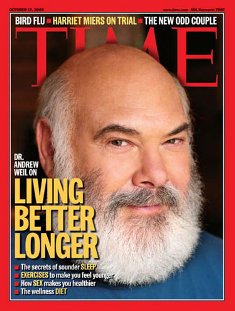
| Awards and recognition Weil appeared on the cover of Time magazine in 1997 and again in 2005, and Time named him one of the 25 most influential Americans in 1997 and one of the 100 most influential people in the world in 2005.[62] He was inducted into the Academy of Achievement in 1998.[17][63] His "Ask Dr. Weil" website was chosen by Forbes' Best of the Web Directory in 2009 for having offered "straightforward tips and advice on achieving wellness through natural means and educating the public on alternative therapies."[64] The Integrative Healthcare Symposium (IHS) awarded Weil as the recipient of its 2022 Leadership Award.[65] |
受賞歴と評価 ウェイルは1997年と2005年に『タイム』誌の表紙を飾り、同誌は1997年に彼を「最も影響力のあるアメリカ人25人」の1人に、2005年には 「世界で最も影響力のある100人」の1人に選出した。[62] 彼は1998年にアカデミー・オブ・アチーブメントの会員に選出された。[17][63] 彼のウェブサイト「Ask Dr. Weil」は、「自然な手段による健康増進に関する分かりやすいヒントやアドバイスを提供し、代替療法について一般の人々に啓蒙している」として、 2009年に『フォーブス』誌の「ベスト・オブ・ザ・ウェブ・ディレクトリ」に選出された。[64] インテグレーティブ・ヘルスケア・シンポジウム(IHS)は、2022年のリーダーシップ賞をワイルに授与した。[65] |
| Media appearances Weil blogs for the Huffington Post[66] and has been a frequent guest on Larry King Live on CNN,[67] Oprah,[68] and The Today Show.[69] Weil appeared in the 2012 documentary on the need for a "rescue" of American healthcare, Escape Fire.[70][71] He also appeared in the 2019 documentary Fantastic Fungi.[72] |
メディア出演 ウェイルは『ハフィントン・ポスト』にブログを寄稿しており[66]、CNNの『ラリー・キング・ライブ』[67]、『オプラ』[68]、『ザ・トゥデ イ・ショー』[69]にも頻繁にゲスト出演している。ウェイルは、米国の医療制度を「救済」する必要性をテーマにした2012年のドキュメンタリー映画 『エスケープ・ファイア』[70][71]にも出演した。また、2019年のドキュメンタリー映画『ファンタスティック・ファンギ』にも出演している。 [72] |
| References 01. Jameson, Marni (June 14, 2010). "The cult of celebrity doctors". Los Angeles Times. CSPI (January–February 2006). "Supplementing Their Income: How Celebrities Turn Trust Into Cash" (PDF). Nutrition Action Healthletter. Washington, DC: Center for Science in the Public Interest. Archived from the original (PDF) on March 4, 2016. Retrieved November 25, 2015. Gumpert, David E. (March 27, 2006). "Small Business: Dr. Weil, Heal Thyself". Bloomberg. Retrieved November 25, 2015. The editors of EB (2015). "Andrew Weil, American Physician", In Encyclopædia Britannica (online, 18 November), see [1], accessed 18 November 2015. "Andrew Weil, Shaman, M.D." The New York Times. Collins, Judy (February 28, 2017). "15 - Lives of the diet gurus; Dr. Andrew Weil". Cravings: How I Conquered Food. Knopf Doubleday Publishing Group. pp. 92ff. ISBN 978-0-385-54132-9. Lattin, Don (2010). The Harvard Psychedelic Club (Paperback ed.). New York, NY: HarperCollins. ISBN 9780061655944. Garner, Dwight (January 7, 2010). "Books of the Times: Tune In, Turn On, Turn Page [Review, "The Harvard Psychedelic Club: How Timothy Leary, Ram Dass, Huston Smith and Andrew Weil Killed the Fifties and Ushered In a New Age for America," by Don Lattin]". The New York Times. Retrieved November 17, 2015. Anon. (1962). "Writer: Andrew T. Weil". The Harvard Crimson. Retrieved November 17, 2015. 10. Smith, Robert E. (March 15, 1962). "Psychologists Disagree On Psilocybin Research". The Harvard Crimson. Retrieved November 17, 2015. Finnegan, John P.; Freed, David (May 27, 2013). "In Early 1960s, Experiments With Hallucinogenics Caused Major Uproar, Minor Shake-up". The Harvard Crimson. Retrieved November 17, 2015. Doblin, Richard Elliot (2000). "The Evolution of the Regulation of the Medical Uses of Psychedelic Drugs and Marijuana (Chapter 1)" (PDF). Regulation of the Medical Use of Psychedelics and Marijuana (June 2000) (PhD). Cambridge, MA: Harvard University. pp. 5–69, esp. 36. Retrieved November 18, 2015. Weil, Andrew T. (February 20, 1962). "Better Than a Damn". The Harvard Crimson: 2. Retrieved November 17, 2015. Subtitle: From the Bottle. Weil, Andrew T. (May 27, 1963). "Alpert Defends Drugs on 'Open End'". The Harvard Crimson: 1, 6. Weil, Andrew T. (May 29, 1963). "Investigation Unlikely in Dismissal of Alpert". The Harvard Crimson: 1. Retrieved November 17, 2015. Faculty Members Regret Lack of Details, But See No Issue of Academic Freedom. Russin, Joseph M.; Weil, Andrew T. (January 24, 1973). "The Crimson Takes Leary, Alpert to Task". The Harvard Crimson. Retrieved November 17, 2015. 'Roles' & 'Games' In William James. "Andrew Weil Biography and Interview". www.achievement.org. American Academy of Achievement. Baer, H.A. (2003). "The Work of Andrew Weil and Deepak Chopra—Two Holistic Health/New Age Gurus: A Critique of the Holistic Health/New Age Movements", Medical Anthropology Quarterly. 17 (2, June): 233-250, esp. 233f, 236, see [2] and [3] and [4], accessed 20 November 2015. Baer, H. A. (2004). "Deconstructing Andrew Weil and Deepak Chopra (Chapter 5)". Toward an Integrative Medicine: Merging Alternative Therapies with Biomedicine. Vol. 17. Walnut Creek, CA: Rowman & Littlefield/AltaMira. pp. 119–136, esp. 120, 132f, and passim. doi:10.1525/maq.2003.17.2.233. ISBN 978-0759103023. PMID 12846118. S2CID 28219719. Retrieved November 18, 2015. {{cite book}}: |journal= ignored (help) 20. Lasswell, Mark (September 25, 1995). "Mind Opener". People. 45 (13). Retrieved November 23, 2014. Relman, Arnold (March 8, 2002). "A Trip to Stonesville: Some Notes on Andrew Weil, M.D." Quackwatch. Archived from the original on January 24, 2017. Retrieved May 8, 2017. "Harm Reduction – Haight Ashbury & Free Clinic Archives". Retrieved August 31, 2025. ICWA (2015). "Past Fellows: Andrew T. Weil, Years: 1971-1975, Topic: Altered States of Consciousness, Area: Mexico, Guatemala, Panama, Colombia, United States". Washington, DC, US: Institute of Current World Affairs. Retrieved November 21, 2015. Integrative Oncology. Weil Integrative Medicine Library. Oxford University Press. September 3, 2014. ISBN 9780199329724. Retrieved November 21, 2015. {{cite book}}: |work= ignored (help) "Andrew Weil Center for Integrative Medicine, Leadership Team". Rogers, Kristen (March 14, 2023). "4-7-8 breathing: How to use this method for sleep or anxiety". CNN. Retrieved October 17, 2025. "4-7-8 Breathing Method For Sleep and Relaxation". Cleveland Clinic. September 6, 2022. Retrieved October 17, 2025. "What is 4-7-8 breathing? The benefits of mindful breathing on health and wellness". WebMD. Reviewed by Gabriela Pichardo, MD. June 27, 2023. Retrieved October 17, 2025. Landwehr, Julia (September 22, 2022). "The 4-7-8 Breathing Method May Help You Sleep Better". Health. Retrieved October 17, 2025. 30. Bell IR, Caspi O, Schwartz GE, Grant KL, Gaudet TW, Rychener D, Maizes V, Weil A (January 2002). "Integrative medicine and systemic outcomes research: issues in the emergence of a new model for primary health care". Arch. Intern. Med. 162 (2): 133–40. doi:10.1001/archinte.162.2.133. PMID 11802746. "Nonfiction Book Review: Spontaneous Happiness, Andrew Weil, author". Publishers Weekly. August 22, 2011. Anon (April 14, 2012). "Medicine and its rivals: The believers". The Economist. Retrieved November 17, 2015. Subtitle: Alternative therapies are increasingly mainstream. That means headaches for scientists—and no cure in sight. Jim Parker; Christina Dye (May–June 1983Z). "No Bad Drugs: Interview with Dr. Andrew Weil". Newservice: 22–31. Archived from the original on March 3, 2009. Huba, S. (April 2, 1997). "Holistic healing's new role". The Cincinnati Post. Archived from the original on October 23, 2012. Weil, A. (2011) [1995]. Spontaneous healing. New York, NY: Knopf. p. 35. ISBN 9780679436072. Subtitle: : How to discover and enhance your body's natural ability to maintain and heal itself. Weil, Andrew (October 30, 2011). "Culture: Andrew Weil's Spontaneous Happiness, Our Nature-Deficit Disorder". Newsweek. Retrieved November 17, 2015. Weil, Andrew (March 31, 2005). "Spotting Trans-Fatty Acids?". DrWeil.com. Archived from the original on March 23, 2022. Retrieved March 23, 2022. Stamets, Paul (2020). Fantastic Fungi. Simon and Schuster. p. 85. ISBN 978-1-64722-172-0. Weil, Andrew; Rosen, Winifred (2004). From Chocolate to Morphine: Everything You Need to Know About Mind-Altering Drugs. HMH. p. 100. ISBN 978-0-547-52566-2. 40. Weil & Rosen 2004, pp. 111–112 Maryles, Daisy; Riippa, Laurele (March 19, 2001). "How They Landed On Top". Publishers Weekly. Retrieved November 25, 2015. Subtitle: In fiction, selling what sells; in nonfiction, small became beautiful. "Search: 'Andrew Weil'". 2015. Retrieved November 25, 2015. "Bestselling Books of the Year, 1996-2007". Publishers Weekly. March 24, 2008. Retrieved November 25, 2015. Search Past Winners: James Beard Awards "Weil Integrative Medicine Library". oup.com. Retrieved November 21, 2015. E.g., for Integrative Cardiology, note absent tab at [5], and for Integrative Dermatology, note sole appearance of Doody's at [6] Plana, Ronald (October 15, 2014). "Integrative Oncology: Mind, Body, and More [Bookmark; Title: Integrative Oncology (Second Edition), Editors: Donald I. Abrams, MD, and Andrew T. Weil, MD, Publisher: Oxford University Press]". The ASCO Post. 5 (16). Cold Spring Harbor, NY: American Society of Clinical Oncology. Retrieved November 18, 2015. Simunek, Chris (September 8, 2003). "Grow: Interview, Dr. Andrew Weil". High Times. Archived from the original on March 3, 2009. Weil, Andrew (2011) "Foreword", in Paul Stamets, Psilocybin Mushrooms of the World: An Identification Guide, Illustrated Edition, Berkeley, CA: Crown/Ten Speed Press, ISBN 0898158397, see [7], accessed 17 November 2015. 50. Weil, Andrew (2011) "Foreword", in Lewis Mehl-Madrona, Coyote Medicine: Lessons from Native American Healing, p. 13f, New York, NY: Simon and Schuster, ISBN 1439144540, see [8], accessed 17 November 2015. "Andrew Weil, M.D." Time. December 11, 2006. Archived from the original on March 3, 2009. Retrieved June 5, 2013. Relman, Arnold S. (December 14, 1998). "A Trip to Stonesville: Andrew Weil, the boom in alternative medicine, and the retreat from science". The New Republic. Beyerstein, B. L. (2001). "Alternative Medicine and Common Errors of Reasoning". Academic Medicine. 76 (3): 230–237. doi:10.1097/00001888-200103000-00009. PMID 11242572. S2CID 41527148. Buckmaster, Bill (host) (2003). "[A discussion with Drs. Andrew Weil and Steven Knope on alternative medicine], (November 3, 2003)". Arizona Illustrated. Tucson, Arizona. PBS. KUAT-TV. Archived from the original on November 18, 2015. YouTube title (July 30, 2008): Dr. Steven Knope debates Andrew Weil on the merits of Integrative Medicine (Part I). Retrieved November 17, 2015. Singh, S. & Edzard, Ernst E. (2008). Trick or Treatment: The Undeniable Facts About Alternative Medicine. New York, NY: W. W. Norton. p. 256. ISBN 9780393337785. "Supplementing Their Income: How Celebrities Turn Trust Into Cash", (2006) Nutrition Action Newsletter, Center for Science in the Public Interest, January/February 2016, pp 3-6. Archived from the original on June 13, 2010. Accessed December 28, 2019. CSPI (June 19, 2006). "Time Runs Andrew Weil Advertorial". CSPI Newsroom: Integrity in Science Watch. Washington, DC: Center for Science in the Public Interest. Archived from the original on March 3, 2009. Retrieved November 17, 2015. Wadler, Joyce (October 20, 2005). "What Goes With Gray?". The New York Times. Retrieved November 23, 2014. Corriher, Sarah C. (2015) "Doctor Andrew Weil: Whose Side Is He Really On?", The Health Wyze Report, (online, undated), see [9], accessed 18 November 2015. 60. Torgoff, Martin (2004). Can't Find My Way Home: America in the Great Stoned Age, 1945-2000. New York, NY: Simon and Schuster. p. 431ff. ISBN 978-0743258630. Retrieved November 18, 2015. FDA (2009). "Inspections, Compliance, Enforcement, and Criminal Investigations: Compliance Actions and Activities: Warning Letters, Weil Lifestyle LLC [October 15, 2009]". Washington, DC: U.S. Food and Drug Administration. Archived from the original on March 3, 2009. Unapproved/Uncleared/Unauthorized Products Related to the H1N1 Flu Virus; and Notice of Potential Illegal Marketing of Products to Prevent, Treat or Cure the H1N1 Virus.[non-primary source needed][non-primary source needed] Gupta, Sanjay (April 18, 2005). "Andrew Weil - The 2005 Time 100". Time. Archived from the original on March 3, 2009. Retrieved January 30, 2014.[verification needed][verification needed] "Golden Plate Awardees of the American Academy of Achievement". www.achievement.org. American Academy of Achievement. "Ask Dr. Weil". Forbes Best of the Web Directory. 2009. Archived from the original on March 3, 2009. Retrieved November 17, 2015. "Andrew Weil accepts leadership award at IHSNY22". www.integrativepractitioner.com. Retrieved February 20, 2022. "Dr. Andrew Weil". The Huffington Post. 2015. Retrieved November 17, 2015. "CNN.com - Transcripts". Retrieved September 21, 2018. "Recipes for Your Heart". Retrieved September 21, 2018. Weil, Andrew (September 22, 2005). "Why should I take a vitamin for my health?". Retrieved September 21, 2018. 70. Catsoulis, Jeanette (October 4, 2012). "Review: Pitting Drug Regimens Against Prevention, 'Escape Fire: The Fight to Rescue American Healthcare' [NYT Critics' Pick]". The New York Times. Retrieved November 25, 2015. Turan, Kenneth (October 4, 2012). "Review: 'Escape Fire' Calls for Drastic Changes to U.S. Healthcare". Los Angeles Times. Retrieved November 25, 2015. Subtitle: Filmmakers Matthew Heineman and Susan Froemke not only deftly make the case that the system is ill but also effectively argue for a dramatic change in thinking. 72. "Fantastic Fungi: A film by Louie Schwartzberg on Mycelial Connection". Fantastic Fungi. |
参考文献 01. ジェームソン、マーニ(2010年6月14日)。「セレブ医師のカルト」。ロサンゼルス・タイムズ。 CSPI(2006年1月~2月)。「収入の補填:セレブが信頼を現金に変える方法」(PDF)。『ニュートリション・アクション・ヘルスレ ター』。ワシントンD.C.:公益科学センター。2016年3月4日にオリジナル(PDF)からアーカイブされた。2015年11月25日閲覧。 ガムパート、デビッド・E.(2006年3月27日)。「中小企業:ウェイル博士、自らを癒せ」。ブルームバーグ。2015年11月25日閲覧。 EB編集部 (2015). 「アンドルー・ワイル、米国の医師」、『ブリタニカ百科事典』(オンライン版、11月18日)、[1]を参照、2015年11月18日閲覧。 「アンドルー・ワイル、シャーマン、医学博士」『ニューヨーク・タイムズ』。 コリンズ、ジュディ(2017年2月28日)。「15 - ダイエットの教祖たちの生涯;アンドルー・ワイル博士」。『Cravings: How I Conquered Food』。ノフ・ダブルデイ出版グループ。92頁以降。ISBN 978-0-385-54132-9。 ラティン、ドン(2010年)。『ハーバード・サイケデリック・クラブ』(ペーパーバック版)。ニューヨーク州ニューヨーク:ハーパーコリンズ。ISBN 9780061655944。 ガーナー、ドワイト (2010年1月7日)。「Books of the Times: Tune In, Turn On, Turn Page [書評、『ハーバード・サイケデリック・クラブ:ティモシー・リアリー、ラム・ダス、ヒューストン・スミス、アンドルー・ワイルが50年代を終わらせ、ア メリカに新時代をもたらした方法』、ドン・ラティン著]」。『ニューヨーク・タイムズ』。2015年11月17日閲覧。 匿名(1962年)。「著者:アンドルー・T・ウェイル」。『ハーバード・クリムゾン』。2015年11月17日閲覧。 10. スミス、ロバート・E.(1962年3月15日)。「サイロシビン研究をめぐり心理学者たちの意見が分かれる」。『ハーバード・クリムゾン』。2015年11月17日閲覧。 フィネガン、ジョン・P.;フリード、デビッド(2013年5月27日)。「1960年代初頭、幻覚剤を用いた実験は大きな騒動と小さな変革を引き起こした」。『ハーバード・クリムゾン』。2015年11月17日閲覧。 ドブリン、リチャード・エリオット(2000年)。「サイケデリック薬物およびマリファナの医療利用に関する規制の変遷(第1章)」 (PDF)。『サイケデリック薬物およびマリファナの医療利用に関する規制』(2000年6月)(博士論文)。マサチューセッツ州ケンブリッジ:ハーバー ド大学。pp. 5–69、特に36頁。2015年11月18日閲覧。 ウェイル、アンドルー・T.(1962年2月20日)。「『ダム』よりまし」。『ハーバード・クリムゾン』:2。2015年11月17日閲覧。サブタイトル:ボトルから。 ウェイル、アンドルー・T.(1963年5月27日)。「アルパート、『オープン・エンド』で薬物を擁護」。『ハーバード・クリムゾン』:1、6。 ウェイル、アンドルー・T.(1963年5月29日)。「アルパートの解雇に関する調査は行われない見通し」。『ハーバード・クリムゾン』:1。2015年11月17日閲覧。教員らは詳細が不明なことを遺憾に思うが、学問の自由の問題とは見ていない。 ラッシン、ジョセフ・M.;ウェイル、アンドルー・T.(1973年1月24日)。「クリムゾン紙、リアリーとアルパートを厳しく批判」。『ハーバード・クリムゾン』。2015年11月17日閲覧。「ウィリアム・ジェームズにおける『役割』と『ゲーム』」。 「アンドルー・ウェイルの略歴とインタビュー」。www.achievement.org。アメリカン・アカデミー・オブ・アチーブメント。 ベア、H.A.(2003年)。「アンドルー・ウェイルとディーパック・チョプラの業績――2人のホリスティック・健康/ニューエイジの教祖:ホリス ティック・健康/ニューエイジ運動への批判」、『メディカル・アンソロポロジー・クォータリー』。17巻(2号、6月): 233-250、特に233f、236、[2]、[3]、[4]を参照、2015年11月20日閲覧。 ベア、H.A. (2004). 「アンドルー・ワイルとディーパック・チョプラの脱構築(第5章)」。『統合医療に向けて:代替療法と生物医学の融合』第17巻。カリフォルニア州ウォル ナット・クリーク:Rowman & Littlefield/AltaMira。pp. 119–136、特に120、132f、および随所。doi:10.1525/maq.2003.17.2.233。ISBN 978-0759103023。PMID 12846118。S2CID 28219719。2015年11月18日閲覧。{{cite book}}: |journal= が無視された (ヘルプ) 20. ラスウェル、マーク(1995年9月25日)。「マインド・オープナー」。People. 45 (13)。2014年11月23日閲覧。 レルマン、アーノルド(2002年3月8日)。「A Trip to Stonesville: Some Notes on Andrew Weil, M.D.」。Quackwatch。2017年1月24日にオリジナルからアーカイブ。2017年5月8日閲覧。 「ハームリダクション – ヘイト・アッシュベリー&フリー・クリニック・アーカイブス」。2025年8月31日閲覧。 ICWA (2015). 「過去のフェロー:アンドルー・T・ワイル、在籍期間:1971-1975年、テーマ:変性意識状態、活動地域:メキシコ、グアテマラ、パナマ、コロンビ ア、アメリカ合衆国」 . 米国ワシントンD.C.:Institute of Current World Affairs。2015年11月21日閲覧。 『統合腫瘍学』。Weil Integrative Medicine Library。オックスフォード大学出版局。2014年9月3日。ISBN 9780199329724。2015年11月21日閲覧。{{cite book}}: |work= が無視された (ヘルプ) 「アンドルー・ワイル統合医療センター、リーダーシップチーム」。 ロジャース、クリステン(2023年3月14日)。「4-7-8呼吸法:睡眠や不安にこの方法を活用する方法」。CNN。2025年10月17日閲覧。 「睡眠とリラクゼーションのための4-7-8呼吸法」。クリーブランド・クリニック。2022年9月6日。2025年10月17日閲覧。 「4-7-8呼吸法とは? マインドフルな呼吸が健康とウェルネスにもたらすメリット」。WebMD。ガブリエラ・ピチャード医師による監修。2023年6月27日。2025年10月17日閲覧。 ランドヴェール、ジュリア(2022年9月22日)。「4-7-8呼吸法は睡眠の質を向上させるかもしれない」。健康。2025年10月17日閲覧。 30. Bell IR, Caspi O, Schwartz GE, Grant KL, Gaudet TW, Rychener D, Maizes V, Weil A (2002年1月)。「統合医療とシステミック・アウトカム研究:プライマリ・ヘルスケアの新たなモデル出現における課題」。Arch. Intern. Med. 162 (2): 133–40. doi:10.1001/archinte.162.2.133. PMID 11802746. 「ノンフィクション書評:『Spontaneous Happiness』、著者:アンドルー・ワイル」。Publishers Weekly。2011年8月22日。 匿名(2012年4月14日)。「医学とそのライバルたち:信奉者たち」。『エコノミスト』。2015年11月17日閲覧。サブタイトル:代替療法はますます主流になりつつある。それは科学者たちにとって頭痛の種であり、解決策の見通しは立っていない。 ジム・パーカー、クリスティーナ・ダイ(1983年5月–6月)。「悪い薬はない:アンドルー・ワイル博士へのインタビュー」。ニュースサービス:22–31頁。2009年3月3日にオリジナルからアーカイブされた。 フーバ、S.(1997年4月2日)。「ホリスティック・ヒーリングの新たな役割」。『シンシナティ・ポスト』。2012年10月23日にオリジナルからアーカイブされた。 ウェイル、A.(2011年)[1995年]。『自然治癒』. ニューヨーク州ニューヨーク:ノップフ. p. 35. ISBN 9780679436072. 副題: 自己維持・自己治癒のための身体の自然な能力を発見し、高める方法. ウェイル、アンドルー(2011年10月30日).「カルチャー:アンドルー・ウェイルの『自然欠乏症候群』」.『ニューズウィーク』.2015年11月17日閲覧。 ウェイル、アンドルー(2005年3月31日)。「トランス脂肪酸を見分ける?」。DrWeil.com。2022年3月23日にオリジナルからアーカイブ。2022年3月23日閲覧。 スタメッツ、ポール(2020年)。『ファンタスティック・ファンギ』。サイモン・アンド・シュスター。p. 85. ISBN 978-1-64722-172-0. ウェイル、アンドルー;ローゼン、ウィニフレッド(2004年)。『チョコレートからモルヒネまで:精神作用薬について知っておくべきすべてのこと』。HMH。p. 100. ISBN 978-0-547-52566-2. 40. ウェイル&ローゼン 2004, pp. 111–112 メアリレス, デイジー; リーパ, ローレル (2001年3月19日). 「彼らが頂点に立った理由」. パブリッシャーズ・ウィークリー. 2015年11月25日閲覧. サブタイトル: フィクションでは売れるものを売り、ノンフィクションでは小規模が美徳となった。 「検索: 『アンドルー・ウェイル』」. 2015年。2015年11月25日閲覧。 「年間ベストセラー書籍、1996-2007年」。『パブリッシャーズ・ウィークリー』。2008年3月24日。2015年11月25日閲覧。 過去の受賞作を検索:ジェームズ・ビアード賞 「ウェイル統合医療ライブラリー」。oup.com。2015年11月21日閲覧。 例:統合心臓学については[5]にタブがない点に、統合皮膚科学については[6]にDoody'sが唯一掲載されている点に留意のこと プラナ、ロナルド(2014年10月15日)。「統合腫瘍学:心、体、そしてそれ以上 [ブックマーク;タイトル:Integrative Oncology (第2版)、編集者:ドナルド・I・エイブラムス医学博士、アンドルー・T・ウェイル医学博士、出版社:オックスフォード大学出版局]」。『The ASCO Post』5巻16号。ニューヨーク州コールド・スプリング・ハーバー:米国臨床腫瘍学会。2015年11月18日閲覧。 シムネク、クリス(2003年9月8日)。「Grow:インタビュー、アンドルー・ウェイル博士」。『High Times』。2009年3月3日にオリジナルからアーカイブされた。 ウェイル、アンドルー(2011)「序文」、ポール・スタメッツ編『Psilocybin Mushrooms of the World: An Identification Guide, Illustrated Edition』、カリフォルニア州バークレー:Crown/Ten Speed Press、ISBN 0898158397、[7]を参照、2015年11月17日閲覧。 50. ウェイル、アンドルー(2011)『ルイス・メル=マドロナ著『コヨーテ・メディシン:ネイティブ・アメリカンの癒しから学ぶ教訓』』への「序文」、p. 13f、ニューヨーク州ニューヨーク:サイモン・アンド・シュスター、ISBN 1439144540、[8]を参照、2015年11月17日閲覧。 「アンドルー・ウェイル医学博士」 『タイム』誌。2006年12月11日。2009年3月3日にオリジナルからアーカイブされた。2013年6月5日に取得。 レルマン、アーノルド・S.(1998年12月14日)。「ストーンズビルへの旅:アンドルー・ワイル、代替医療のブーム、そして科学からの後退」。『ニュー・リパブリック』。 バイヤースタイン、B. L. (2001年)。「代替医療と推論における一般的な誤り」。『アカデミック・メディシン』。76 (3): 230–237. doi:10.1097/00001888-200103000-00009. PMID 11242572. S2CID 41527148. バックマスター、ビル(司会)(2003)。「[アンドルー・ワイル博士およびスティーブン・ノープ博士との代替医療に関する討論] (2003年11月3日)」。『Arizona Illustrated』。アリゾナ州ツーソン。PBS。KUAT-TV。2015年11月18日にオリジナルからアーカイブされた。YouTubeタイ トル(2008年7月30日):スティーブン・ノープ博士が統合医療の利点についてアンドルー・ワイルと論争(第1部)。2015年11月17日に閲覧。 シン、S. & エドザード、エルンスト・E. (2008). 『トリック・オア・トリートメント:代替医療に関する否定できない事実』. ニューヨーク州ニューヨーク:W. W. ノートン. p. 256. ISBN 9780393337785. 「収入の補填:有名人が信頼を現金に変える方法」(2006年)『Nutrition Action Newsletter』、公益科学センター、2016年1月/2月号、pp 3-6。2010年6月13日にオリジナルからアーカイブされた。2019年12月28日にアクセス。 CSPI(2006年6月19日)。「タイム誌がアンドルー・ワイルの広告記事を掲載」。CSPIニュースルーム:Integrity in Science Watch。ワシントンD.C.:公益科学センター。2009年3月3日にオリジナルからアーカイブされた。2015年11月17日に取得。 ワドラー、ジョイス(2005年10月20日)。「 『What Goes With Gray?』」。『ニューヨーク・タイムズ』。2014年11月23日に閲覧。 コリハー、サラ・C.(2015)『ドクター・アンドルー・ワイル:彼は本当にどちらの味方なのか?』、『The Health Wyze Report』(オンライン、日付不明)、[9]を参照、2015年11月18日にアクセス。 60. トーゴフ、マーティン(2004年)。『Can't Find My Way Home: America in the Great Stoned Age, 1945-2000』。ニューヨーク州ニューヨーク:サイモン・アンド・シュスター。p. 431ff。ISBN 978-0743258630。2015年11月18日閲覧。 FDA(2009年)。「検査、コンプライアンス、執行、および刑事捜査:コンプライアンス措置および活動:警告書、Weil Lifestyle LLC [2009年10月15日]」。ワシントンD.C.:米国食品医薬品局。2009年3月3日にオリジナルからアーカイブされた。H1N1インフルエンザウ イルスに関連する未承認・未認可・無許可製品、およびH1N1ウイルスの予防、治療、または治癒を目的とした製品の違法販売の可能性に関する通知。[一次 資料が必要][一次資料が必要] グプタ、サンジェイ(2005年4月18日)。「アンドルー・ワイル - 2005年『タイム』誌の『タイム100』」。タイム誌。2009年3月3日にオリジナルからアーカイブされた。2014年1月30日に閲覧。[検証が必要][検証が必要] 「アメリカン・アカデミー・オブ・アチーブメントのゴールデン・プレート受賞者」。www.achievement.org。アメリカン・アカデミー・オブ・アチーブメント。 「ドクター・ウェイルに聞く」。フォーブス・ベスト・オブ・ザ・ウェブ・ディレクトリ。2009年。2009年3月3日にオリジナルからアーカイブされた。2015年11月17日に閲覧。 「アンドルー・ワイル、IHSNY22でリーダーシップ賞を受賞」。www.integrativepractitioner.com。2022年2月20日に閲覧。 「アンドルー・ワイル博士」。ザ・ハフィントン・ポスト。2015年。2015年11月17日に閲覧。 「CNN.com - 文字起こし」。2018年9月21日閲覧。 「心臓のためのレシピ」。2018年9月21日閲覧。 ウェイル、アンドルー(2005年9月22日)。「なぜ健康のためにビタミンを摂取すべきなのか?」。2018年9月21日閲覧。 70. キャツーリス、ジャネット(2012年10月4日)。「書評:治療と予防の対立、『エスケープ・ファイア:アメリカの医療を救う戦い』[NYT批評家推薦]」。ニューヨーク・タイムズ。2015年11月25日閲覧。 トゥーラン、ケネス(2012年10月4日)。「レビュー:『エスケープ・ファイア』は米国医療の抜本的な改革を訴える」。ロサンゼルス・タイムズ。 2015年11月25日閲覧。サブタイトル:映画監督のマシュー・ハイネマンとスーザン・フロームケは、制度が病んでいることを巧みに指摘するだけでな く、考え方の劇的な転換を効果的に主張している。 72. 「ファンタスティック・ファンギ:ルイ・シュワルツバーグによる菌糸体のつながりを描いた映画」。『ファンタスティック・ファンギ』。 |
| Further reading The editors of EB (2015). "Andrew Weil, American Physician", In Encyclopædia Britannica (online, 18 November), see Andrew Weil | Biography, Books, & Facts, accessed 18 November 2015. Anon (April 14, 2012). "Medicine and its rivals: The believers". The Economist. Retrieved November 17, 2015. Subtitle: Alternative therapies are increasingly mainstream. That means headaches for scientists—and no cure in sight. Garner, Dwight (January 7, 2010). "Books of the Times: Tune In, Turn On, Turn Page [Review, 'The Harvard Psychedelic Club: How Timothy Leary, Ram Dass, Huston Smith and Andrew Weil Killed the Fifties and Ushered In a New Age for America,' by Don Lattin]". The New York Times. Retrieved November 17, 2015. |
追加文献(さらに読む) EB編集部 (2015)。「アンドルー・ワイル、米国の医師」、『ブリタニカ百科事典』(オンライン版、11月18日)、アンドルー・ワイル | 略歴、著書、および事実を参照、2015年11月18日閲覧。 匿名(2012年4月14日)。「医学とそのライバルたち:信奉者たち」。『エコノミスト』。2015年11月17日取得。サブタイトル:代替療法はますます主流になりつつある。それは科学者たちにとって頭痛の種であり、解決策の見通しは立っていない。 ガーナー、ドワイト(2010年1月7日)。「Books of the Times:Tune In, Turn On, Turn Page [書評、『ハーバード・サイケデリック・クラブ:ティモシー・リアリー、ラム・ダス、ヒューストン・スミス、アンドルー・ワイルがいかにして50年代を終 わらせ、アメリカにニューエイジをもたらしたか』、ドン・ラティン著]」。『ニューヨーク・タイムズ』。2015年11月17日閲覧。 |
| https://en.wikipedia.org/wiki/Andrew_Weil |
効く・効かないについてのメモ → 類似 のページ「非西洋医学の有効性 をめぐる議論」
「いろいろなマジナイや御祓い、あるいは 祈祷がありますが、ほんとうに効くのでしょうか?」 呪術的医療について調査をおこなっている際に、しばしば人びとから、このような質問を受ける。
この問題に(正確に)答えることは、実は きわめて難しい。私自身は「効かないものもありますが、効くものもかなりあります」とお答え することにしている。これが、正直のところ、もっとも公平な見解だからである(→向精神性の薬物利用において、同じサブスタンスなのに人により「バッドト リップ」と「グッドトリップ」という二相性の効果があるのか?という応用問題を考えるのも重要である)。
この問題にかんして、大きな貢献をしたの が民族植物学者であると同時に薬理学者でもあるアンドリュー・ワイル(Andrew Weil, 1942- ) である。彼は、世界中で 行われているさまざまな伝統的、近代的、正統的、および非正統的——このなかにはニセ医術も含まれる——医療において行われている多くの療法について、そ の「治療効果」の有無を調べた。
その結果、次のようなことが明らかにされ た。すなわち、あらゆる治療法には、その程度の差こそあれ何らかの「効果」がある。その際、 治療を受けようとする人がその療法に抱く期待が高いほど、患者の生理学的な治癒に効果的に反映される、と。
すべての治療法に共通するもの(A・ワイル「人はなぜ治るのか」pp.258- 262)
ふつうの人びとが、ある治療法をもって、 効果があったと判断する状況を想像してみよう。そこでは、治療者、患者、患者を取り囲む家族 や人びとが、それぞれ各々の判断を下していることに気づかされる。世界のいろいろな伝統社会における治療においても、それは当てはまる。
患者本人がずいぶん良くなったと主張して も、呪術師はまだまだ完全には治ってないと判断したり、病人がいまだ苦しんでいるのに、呪術 師や周囲の者が治ったと大騒ぎすることもある。このように「効く」という言葉を正確に理解するためには——誰が効いたと判定したのか?——ということにつ いて 明確でなければならない。「呪術師」の代わりに「医師」という言葉を置き換えてみると、それは、まさに現代人にとっての治療効果云々の議論になる。
したがって、日常生活において頻繁に行な われている「効く/効かない」という判定は、判断する人間の尺度や基準が反映されることをあ らわしている。
近代医学では、このような偏りを除くよう な工夫がなされている。例えば、ある薬を与えることが、特定の病気に対して効果があるかない かを判定する手段として、二重盲検法が開発された。具体的には、効果を確かめたい薬でできた錠剤と、それと姿かたちはそっくりだが無害で薬効のない成分を 含む錠剤を、別々の患者たちのグループに与える。患者たちに対して効果があったか、なかったかを判定する者は、投与された内容について知らされていない医 療者がおこなう。要するに治療効果を判定する際に、人為的な偏りをなくし、より「客観性」を持たせようとしたものである。
しかしながら、この方法は、先に述べたよ うに、効く/効かないという判断の大半は、社会的な脈絡のなかで行なわれ、きわめて自由気ま まに(すなわち恣意的に)判断される、という状況を考慮しない。むしろ、二重盲検法が、そのような恣意性を排除するために開発された科学的方法と見なされ ているからである。
毒にも薬にもならない物質を、「よく効く 薬」として患者に与えると、生理学的な薬物作用(=薬効)がないにもかかわらず、しばしば「効果」があ らわれる。このような現象は、ラテン語の「喜ばせる」という動詞に由来して「プラシーボ効果」と言われ、そのような気休め薬を「プラシーボ」 と呼ぶ。
プラシーボは、薬物がどのような状況で用 いられるかによって、薬物の——総合的な——効力が変わりうることを我々に教えたが、これは重要 なことである。にもかかわらず、近代医療における薬の「客観的」判定をおこなう二重盲検法では、害を及ぼさないニセ薬のことをプラシーボとよんで、プラ シーボ効果については一般的に顧慮しない。
厄介なことに近代医学では、「病人に対し てある操作をおこなったときに、病人に一定の効果があらわれる」ということを証明するには、 煩雑な手続きが必要とされている。いっぱんに、近代医学では、人体に起こる現象を微少な物理化学的反応の積み重ねの結果として見なす傾向がある。
そのため、ある呪術的な治療が「効果を もつ」と近代医学の立場から評価される際に、その治療の要素は分解され、それらの断片に個別な 説明をもって臨むことになる。すなわち、ある薬草の主成分である××は、薬理学的には○○の作用がある、といった類の説明である。この種の説明は、伝統的 な医療の解説によく使われており、我々にお馴染みのものである。
例えば、呪術的治療の心理学的効果は、精 神的に落ち込んでいる病人に活力を与えたり、病気の原因が心理的なものに由来する時には直接 に作用すると説明される。また、心身医学的効果は、——こころ——が身体的な状態に影響を与えている——事実——を前提にする。すなわちストレス性の疾患 に対し て、ストレスを解消させる呪術的治療は効果的であると、説明されるのである。最近では精神のはたらきが、身体の防御機構である免疫の能力に効果を及ぼすと いう観察結果——精神免疫学という——が報告されており、これも呪術的治療が効果をもつことの有望な仮説として注目されている。 どのような説明が試みられるにせよ、人びとの関心は医療のあり方そのものにあるのではなく、具体的にどの医療や療法が「よく効くか」というところにある ようだ。 近代医療が医療の中心となった現在においても、「よく効く」ということに対する人びとの関心があるかぎり、人びとの健康に対する固有の態度や信条——す なわち健康フォークロア——は、維持されてゆくのである。
【覚書】
リンク
文献
Copyleft, CC, Mitzub'ixi Quq Chi'j, 1996-2099
++
Copyleft,
CC, Mitzub'ixi Quq Chi'j, 1996-2099